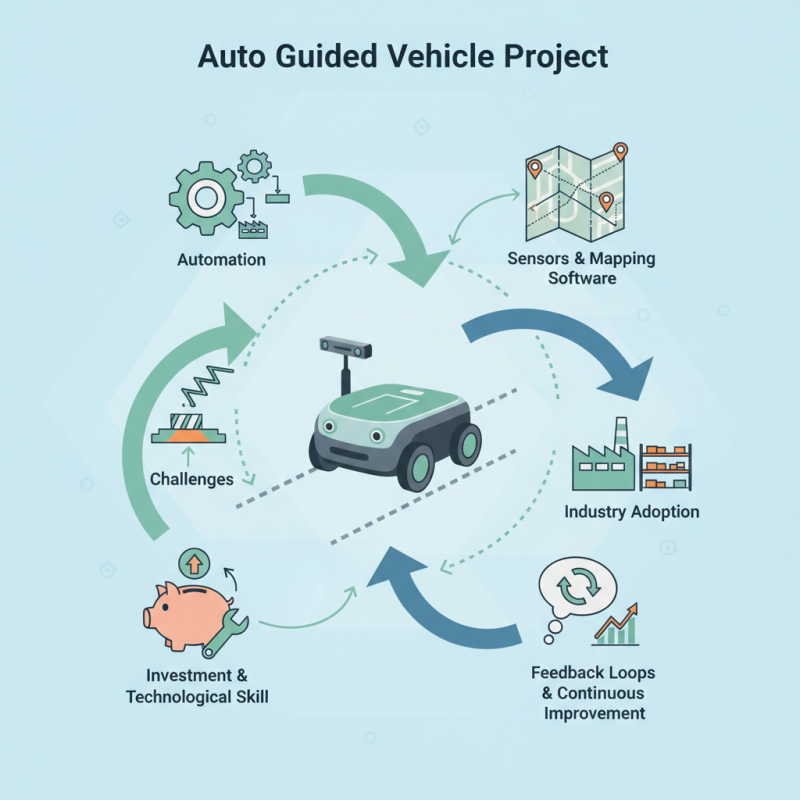
So, there's this thing called the Auto Guided Vehicle Project, and honestly, it's a pretty big step forward in automation. Basically, they're working on getting autonomous vehicles to operate smoothly in different environments. You'll see companies like Amazon and Tesla jumping into this technology—they’re all about making these vehicles smarter and more independent.
What’s cool is, these vehicles can maneuver around without someone steering them every second. They use a bunch of sensors and mapping software to figure out where they are and get where they need to go—safely, too. But, let’s be real, it’s not all smooth sailing; there are still challenges. Making sure they work reliably in all sorts of conditions is super important. And, of course, rolling out these projects isn’t cheap. It takes a lot of investment and some serious tech know-how.
As more industries start using these vehicles, gathering feedback and learning from initial tests becomes super important. It’s definitely not a straight shot to success—there’ll be bumps along the way. The key is to keep refining and improving. While the future looks pretty promising for this project, taking time to reflect and tweak as needed will really make a difference. All in all, it’s an exciting path, but yeah, it’s a journey with some twists and turns.
Definition of Auto Guided Vehicles (AGVs)
Auto Guided Vehicles (AGVs) are innovative machines designed for transporting goods. They operate in various industries such as warehouses, factories, and distribution centers. These vehicles navigate autonomously, removing the need for human operators. Using sensors and cameras, AGVs create a map of their surroundings. This allows them to avoid obstacles and follow designated paths efficiently.
AGVs can be customized for specific tasks. Some are equipped for heavy loads, while others are designed for smaller, lighter items. The technology behind these vehicles continuously evolves. However, there are concerns about reliability and safety. Instances of malfunctions can disrupt workflow and lead to accidents. Proper planning and training are essential to mitigate risks.
Incorporating CE Certification Auto Guided Vehicle Project guidelines ensures compliance with safety standards. Yet, organizations often overlook these regulations. Implementing them can be challenging but crucial for success. Without adequate certification, AGVs pose safety risks. Companies must prioritize thorough testing and regular maintenance for optimal performance.
Key Components of Auto Guided Vehicle Systems
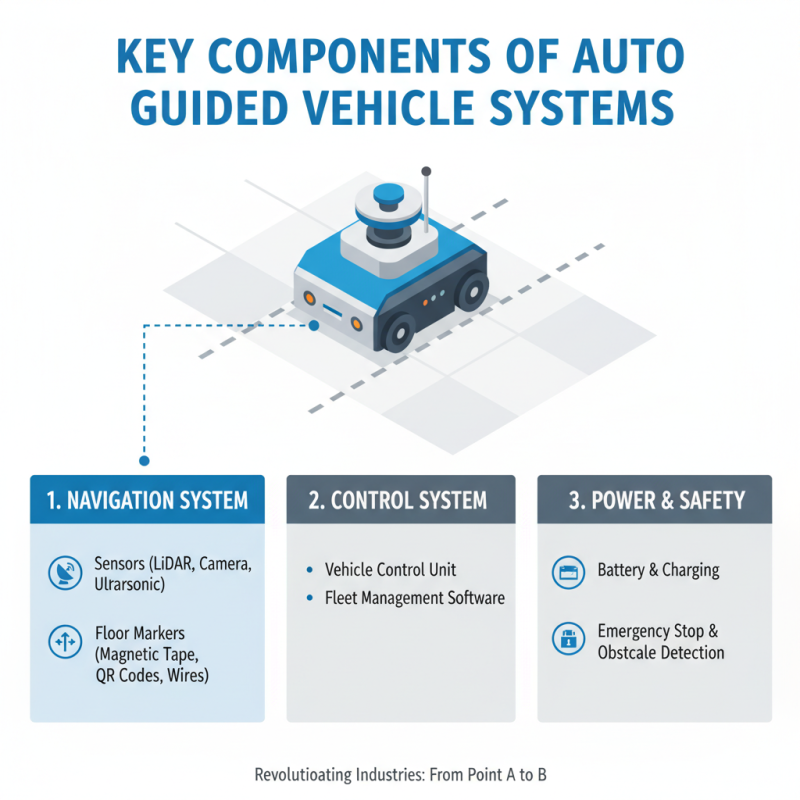
Auto Guided Vehicles (AGVs) are revolutionizing various industries. Understanding their key components is essential for effective implementation. One crucial part is the navigation system. This system determines how the AGV moves from point A to B. It uses sensors and markers on the floor to maintain accurate positioning.
Another important component is the control system. This computer system manages the AGV's path. It processes data from the navigation sensors and makes real-time decisions. Agv Control can be complex. It requires constant adjustments based on the environment.Auto Guided Vehicle Project Manufacturers focus on refining these systems for better efficiency.
Power supply is another aspect to consider. Most AGVs use batteries to operate. The type and capacity of the battery affect the vehicle's performance. Maintaining the battery is essential for operational success. Regular checks can prevent unexpected downtimes.
Tips: When implementing an AGV, ensure the environment is well-mapped. This reduces navigational errors. Training staff on AGV operation is equally important. Knowledge gaps can lead to inefficiencies. Adopting a proactive approach fosters a smoother integration of AGVs.
How Auto Guided Vehicles Navigate and Operate
Auto Guided Vehicles (AGVs) have transformed modern logistics. They navigate and operate using various technologies, including sensors, cameras, and magnetic strips. Many AGVs rely on laser-guided navigation, allowing them to map their surroundings accurately. According to a recent industry report, the AGV market is expected to grow by 37% over the next five years. This growth highlights the increasing reliance on automation.
To function effectively, AGVs must process information quickly. They use algorithms to analyze data in real-time, which is crucial for avoiding obstacles and ensuring safety. Yet, challenges remain. Not all environments are suitable for AGVs. In complex or cluttered spaces, their efficiency can decrease significantly. Companies often need to adapt their warehouses to accommodate these vehicles.
The implementation of a High-Quality Auto Guided Vehicle Project is not without its flaws. Some AGVs struggle with navigation accuracy in dynamic settings, which can lead to delays and increased operational costs. Continuous improvements in technology are necessary, and feedback loops from operators play a vital role in enhancing those systems. Ensuring reliability and efficiency in AGVs will be essential as they evolve.
Types of Auto Guided Vehicles and Their Applications
Auto Guided Vehicles (AGVs) come in various types, each designed for specific applications. For instance, automated guided carts (AGCs) are ideal for transporting materials within factories. They are versatile and can maneuver in tight spaces, making them popular in warehousing. Reports indicate that the market for AGVs is expected to grow by over 15% annually in the next few years. This rapid expansion highlights the increasing reliance on automation for efficiency.
Another category includes unit load carriers, which handle bulk items on pallets. These AGVs are commonly found in distribution centers and manufacturing environments. They can transport heavy loads without human intervention, showcasing a significant reduction in labor costs. However, integration challenges remain. Many facilities struggle to upgrade existing infrastructure to accommodate these advanced systems.
Automated forklifts are also a notable type. They are designed to lift and move goods, making them essential in logistics. However, safety remains a concern. Reports show that accidents still occur, highlighting the need for better training and safety protocols. As the industry evolves, it's crucial to address these shortcomings while embracing innovation.
What is an Auto Guided Vehicle Project and How Does it Work? - Types of Auto Guided Vehicles and Their Applications
| Type of Auto Guided Vehicle | Navigation Technology | Payload Capacity | Speed | Common Applications |
| Automated Guided Cart (AGC) | Magnetic Tape | Up to 500 kg | 1.5 m/s | Material Transport in Warehouses |
| Automated Forklift | Lidar | Up to 1500 kg | 1.2 m/s | Pallet Handling in Distribution Centers |
| Mobile Robot | Visual SLAM | Up to 200 kg | 2 m/s | Inventory Management and Order Fulfillment |
| Automated Guided Vehicle (AGV) | Laser Navigation | Up to 3000 kg | 1.0 m/s | Manufacturing Support and Assembly Line Transport |
Benefits of Implementing Auto Guided Vehicle Projects
Implementing Auto Guided Vehicle (AGV) projects offers numerous benefits that can transform operations. These vehicles automate the transportation of goods within facilities. They can effectively reduce manual labor costs. With less human involvement, the risk of workplace injuries is minimized. AGVs can operate continuously, providing reliable and efficient logistics solutions.
Moreover, consistency is a key advantage of AGVs. They perform routine tasks without variation. This reliability leads to predictable workflows. However, organizations must consider initial setup costs. Integrating AGVs may require extensive planning and adjustments. Staff training is also essential to ensure smooth transitions. Compatibility with existing systems can pose challenges.
Improved inventory management is another significant benefit. AGVs enable real-time tracking of products and materials. This efficiency can enhance overall supply chain performance. However, companies should regularly reevaluate the effectiveness of these systems. Are the expected gains being realized? Continuous assessment helps identify areas for improvement. AGVs hold the potential to elevate operational dynamics, but thoughtful implementation is crucial.
Benefits of Implementing Auto Guided Vehicle Projects
This bar chart illustrates the various benefits of implementing Auto Guided Vehicle (AGV) projects, highlighting increased efficiency, cost savings, improved safety, space optimization, and reduced labor costs. Each benefit is expressed in percentage terms, showcasing the significant impact of AGVs in various operations.
Challenges in Developing and Managing AGV Projects
Developing and managing Auto Guided Vehicle (AGV) projects involves several distinct challenges. One significant hurdle is the high initial investment cost. Reports suggest that companies can expect spending over $250,000 on an AGV system. This initial cost can create financial strain, especially for smaller businesses.
Another challenge lies in integrating AGVs with existing operations. Systems must communicate seamlessly with warehouse management software. Many organizations encounter issues due to outdated or incompatible technology. Communication gaps can lead to inefficiencies and operational delays. For instance, it’s common to see up to 30% of AGV project time lost due to integration problems.
Tips: Conduct a thorough feasibility study before starting an AGV project. This will help in identifying potential integration issues early on. Also, consider training your staff to manage these systems effectively. A well-trained team can optimize AGV performance and reduce downtime.
Unexpected obstacles also occur during implementation. For example, unanticipated site conditions can hinder vehicle navigation. Reports indicate that nearly 20% of AGV systems face delays due to unforeseen site assessments. Addressing these risks requires agility and a proactive approach. Regular assessments and updates should be part of the project management plan to adapt to changes efficiently.
Future Trends in Auto Guided Vehicle Technology
Auto Guided Vehicles (AGVs) are transforming industries. Their advanced technology handles logistics and material transport. Many sectors benefit from AGVs, including manufacturing, warehouses, and healthcare. Future trends show an increasing emphasis on efficiency and integration.
One notable trend is the rise of artificial intelligence in AGVs. AI enhances navigation and decision-making processes. More AGVs will operate in complex environments, adapting in real time. This shift demands better algorithms. AGVs will learn from experiences, increasing operational capabilities. Yet, challenges remain in ensuring safety and reliability.
Collaboration among developers is essential for future advancements. An Auto Guided Vehicle Project Manufacturer must prioritize communication and interoperability. The integration of drones and robotics can enhance functionality. Future AGVs may also require human oversight, raising questions about workforce adaptation. The balance of automation and human roles will shape the future of operations.
Innovative Solutions for Warehouse Efficiency: The Impact of Dual-Vehicle Linkage AGVs on Material Handling Operations
In today’s fast-paced logistics environment, optimizing warehouse efficiency is crucial for achieving operational excellence. The advent of innovative technologies such as Dual-Vehicle Linkage Automated Guided Vehicles (AGVs) is transforming material handling operations. These advanced AGVs are designed to work collaboratively, increasing throughput while reducing the need for human intervention. This synergy not only streamlines workflow but also enhances safety within the warehouse.
One of the standout features of Dual-Vehicle Linkage AGVs is their differential drive system, which allows them to maneuver with precision in tight spaces. This technology is complemented by a cutting-edge wireless power supply, ensuring that the AGVs remain operational throughout their tasks without the limitations of traditional charging methods. Additionally, their strong compatibility with various warehouse equipment enables seamless integration into existing workflows, making them a versatile solution for businesses seeking to enhance their material handling processes. By implementing such innovative solutions, warehouses can significantly improve efficiency and adapt to the ever-evolving demands of the supply chain.
FAQS
uto Guided Vehicles (AGVs)?
AGVs use sensors, cameras, and laser guidance to create maps of their surroundings to avoid obstacles efficiently.
They reduce manual labor costs, minimize workplace injuries, and improve workflow consistency across operations.
Initial setup costs and training needs can be significant. Compatibility with existing systems may also pose issues.
AGVs enable real-time tracking, improving efficiency in supply chain operations. Regular assessments of their effectiveness are needed.
Malfunctions can disrupt workflow and cause accidents. Companies need proper planning and maintenance to mitigate these risks.
Not always. Complex or cluttered settings can reduce their efficiency. Companies may need to adapt their spaces accordingly.
Essential. Feedback from operators helps enhance navigation accuracy and overall performance, ensuring they meet operational needs.
Compliance with safety standards and thorough testing are crucial. Organizations must prioritize regular maintenance for optimal performance.
Yes, but companies should evaluate if expected gains are realized. Continuous assessment is vital for achieving long-term efficiencies.
Conclusion
An Auto Guided Vehicle Project (AGV) involves the implementation of automated transportation systems that operate without human intervention, primarily used in industrial and logistics settings. These vehicles depend on key components including sensors, control systems, and navigation technologies to efficiently transport materials. The navigation methods utilized by AGVs can vary, allowing for flexibility in various operational environments, while applications range from warehouses to manufacturing facilities.
The benefits of AGV projects are significant, as they enhance efficiency, reduce labor costs, and minimize human error. However, developers face challenges related to integration with existing systems and ensuring reliable operation in diverse conditions. As technology advances, future trends in AGVs may include improved artificial intelligence and machine learning capabilities, further optimizing their navigation and operational efficiency. Overall, Auto Guided Vehicle Projects represent a crucial element in modern automation strategies, driving productivity in numerous industries.