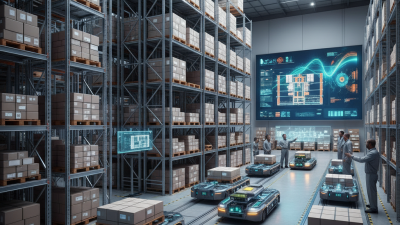
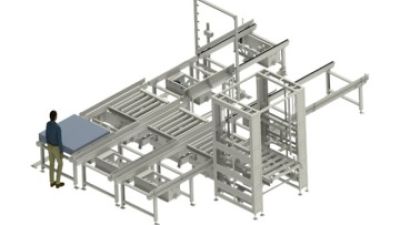
In today’s super busy world of logistics, everyone’s really feeling the need to be more efficient. More and more companies are turning to Automated Pallet Warehouse solutions — you know, those high-tech systems that make storing and grabbing pallets way smoother. They can handle huge volumes of goods, which makes them pretty much a must-have for modern warehouses these days.
A bunch of big players like Siemens and Dematic are rolling out some really advanced tech now. Their systems boost accuracy and keep things running reliably, especially when it comes to keeping track of inventory. But here’s the thing — not every business is the same, right? An Automated Pallet Warehouse isn’t a one-size-fits-all kind of deal. It can be pretty pricey upfront, and keeping everything in tip-top shape can be tricky too.
Thinking through all this, it’s clear how important it is to do your homework first. You gotta understand exactly what your operation needs before jumping in. Sure, these automated systems have tons of potential, but they also require careful planning and execution. The choices you make now could really shape how efficient and costly your warehouse will be down the line.

Overview of Automated Pallet Warehouse Solutions
Automated pallet warehouse solutions are transforming storage efficiency. These systems streamline the processes of packing, storing, and retrieving pallets. Guided vehicles, robotic systems, and automated storage and Retrieval Systems (AS/RS) are examples of technologies shaping the industry. Such innovations reduce labor costs and improve accuracy in inventory management.
When choosing an automated solution, think about your specific needs. Different systems cater to various warehouse sizes and layouts. Not all solutions suit every business. It's vital to assess your inventory types and throughput requirements. Ensure you have the technology that aligns with your operations.
Tips: Regular maintenance is crucial for optimal performance. Create a routine to inspect equipment. Sometimes, delays occur due to technical failures. Monitoring your automated systems can prevent major pitfalls. Also, include staff training as part of your implementation. Familiarity with the technology enhances efficiency and reduces mistakes. A knowledgeable team ensures smooth operations.
10 Best Automated Pallet Warehouse Solutions for Efficient Storage
| Solution | Features | Max Capacity (Pallets) | Automation Type | Ideal Use Case |
| Automated Storage & Retrieval System | High-speed retrieval, reduced labor | 2000 | Fully Automated | High-density warehousing |
|
Automated Guided Vehicles | Versatile transportation, real-time navigation | 1500 | Semi-Automated | Distribution centers |
| Conveyor Systems | Flexible layout, modular design | 1000 | Automated | Assembly lines |
| High-Density Pallet Racking | Maximized storage efficiency | 2500 | Manual & Automated | Cold storage |
| Pallet Robotics | Robotic load handling, enhanced safety | 800 | Fully Automated | Manufacturing plants |
| Inventory Management Software | Real-time tracking, demand forecasting | N/A | Software-Based | All industries |
| Automated Inventory Storage | Space optimization, energy-efficient | 1800 | Fully Automated | Retail operations |
| Mobile Shelving Systems | Compact storage, easy access | 950 | Manual/Semi-Automated | Office archives |
| Robotic Palletizing | Increased speed, consistent quality | 1250 | Fully Automated | Packaging facilities |
| Vertical Carousel Systems | Space-saving, quick access | 600 | Automated | Small item storage |
Key Features of Efficient Automated Storage Systems
Automated Storage Warehouse solutions have revolutionized logistics in recent years. These systems incorporate cutting-edge technologies to maximize space and streamline operations. Key features that enhance efficiency include high-density storage, real-time inventory tracking, and automated retrieval systems. These elements work together to reduce labor costs and minimize human error.
One main advantage is space optimization. Automated Storage Warehouses allow for tighter stacking of goods. They utilize advanced algorithms to determine the best storage locations. Moreover, inventory management becomes instantaneous, enhancing accuracy. However, challenges remain. Transitioning from traditional storage methods can be complex. Staff may require training to adapt to new technologies.
Real-time data access is also essential. This feature enables managers to track inventory levels and forecast demands efficiently. Yet, reliance on technology can lead to vulnerabilities. System failures or outages can disrupt operations. Organizations must develop contingency plans to address these potential risks while leveraging the benefits of an Automated Storage Warehouse.
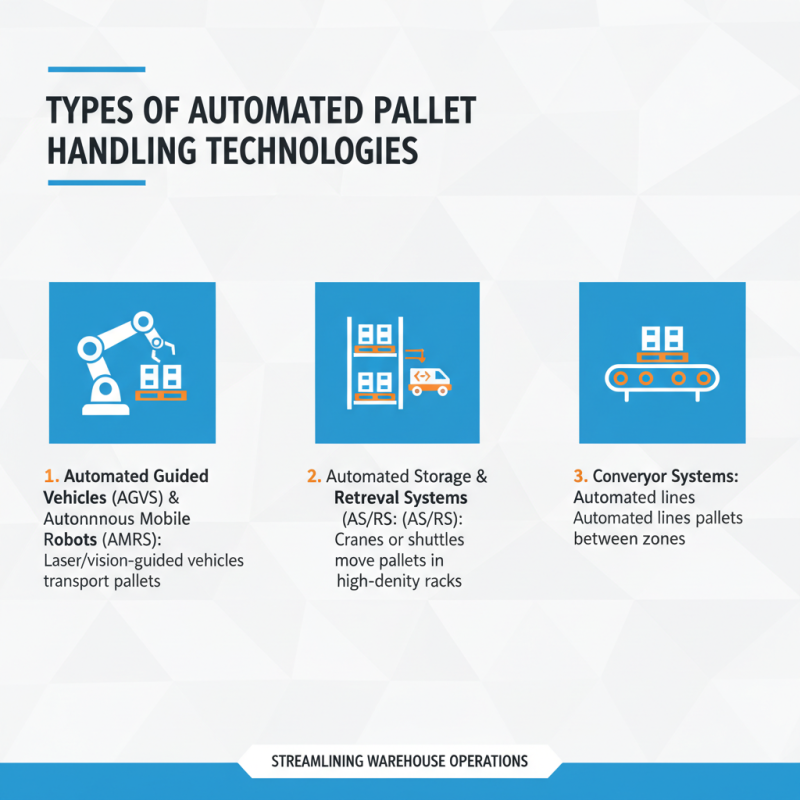
Types of Automated Pallet Handling Technologies
Automated pallet handling technologies have revolutionized warehouse operations. These systems streamline storage and retrieval processes, enhancing efficiency. Various technologies are available, each with unique advantages.
Automated storage and retrieval systems (AS/RS) are popular options. They utilize shuttles or cranes to move pallets, maximizing storage density. AS/RS can minimize labor costs, yet require a significant upfront investment. Another option is automated guided vehicles (AGVs). AGVs navigate through facilities, transporting pallets where needed. Their flexibility allows for easy adaptation to changing layouts. However, the reliance on battery life raises concerns about uptime.
Lastly, robotic palletizers are gaining traction. They automate the process of stacking pallets, improving speed and accuracy. These robotic systems can be configured for various load sizes. Still, programming and maintenance are challenging. Understanding these technologies helps warehouses make informed decisions. Each option presents benefits and challenges that require careful consideration.
Benefits of Implementing Automated Pallet Warehousing
Implementing automated pallet warehousing offers numerous advantages that enhance efficiency and productivity. One major benefit is the optimization of space. Automated systems allow for vertical storage, maximizing every inch of your warehouse. This leads to an increase in storage capacity, which is crucial for businesses looking to expand without moving to larger facilities. Furthermore, these solutions reduce the footprint of operations. Less space means lower overhead costs.
Another aspect is improved accuracy. Automated Warehouse Storage systems utilize precise technology to handle inventory. This minimizes human error, ensuring that items are stored and retrieved correctly. The automation speeds up the fulfillment process, allowing for faster order processing. Employees can focus on higher-value tasks, such as quality control and customer service, rather than manual handling.
While the transition to automation can be complex and costly, the long-term benefits often outweigh initial challenges. Businesses may face a steep learning curve and potential software integration issues. Addressing these obstacles is essential for successful implementation. With careful planning and training, organizations can unlock the full potential of automated pallet warehousing, driving efficiency and reducing operational risks.
Considerations for Choosing an Automated System
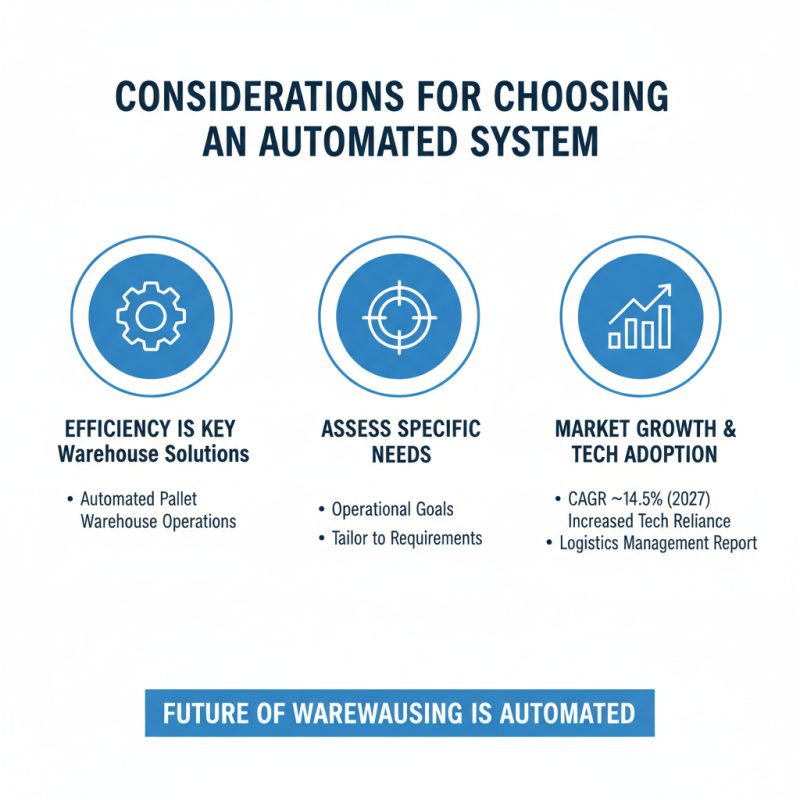
When considering automated pallet warehouse solutions, efficiency is key. It’s essential to assess specific needs and operational goals. The market for automated warehousing is projected to grow significantly, with a report from Logistics Management predicting a CAGR of around 14.5% through 2027. This demonstrates the increasing reliance on technology for improving warehouse systems.
Key factors must be evaluated when choosing an automated system. Look at the layout of your warehouse. A well-optimized design facilitates seamless Stacking Pallets In A Warehouse. This ensures quick access and minimizes wasted space. Additionally, consider the scalability of the solution. A flexible system allows you to adapt as business needs change. Over 30% of warehouses report the need to adjust their storage solutions frequently, highlighting the importance of adaptability.
Integrating advanced technology, such as AI, can enhance inventory management. However, not all systems prove effective for all types of products. Different items require varied handling methods. Poor alignment can lead to inefficiencies. In fact, a study by the Warehouse Management Association found that poor storage practices increase operational costs by as much as 20%. Evaluate how each solution aligns with your business model before making a decision.
Top 10 Automated Pallet Warehouse Solutions Reviewed
Automated pallet warehouse solutions are revolutionizing the logistics industry. These systems enhance efficiency and reduce operational costs significantly. According to a recent industry report, automating warehouse operations can cut labor costs by up to 30%. Additionally, these technologies utilize vertical space effectively. This is crucial in optimizing storage capacities.
One popular system involves Vertical Lift Module Warehouses. These systems feature automated lifts that transport pallets vertically. They save floor space and allow for faster retrieval of items. Reports indicate that facilities using this technology have seen up to a 50% reduction in average order picking times. However, while the upfront cost may be high, the long-term gains in productivity are notable. Some companies face challenges during the initial setup. Ensuring proper integration with existing warehouse management systems is often overlooked.
Another area of interest is system adaptability. Not all automated solutions offer the same level of flexibility. Some may struggle to accommodate varying pallet sizes or weights. Companies need to evaluate their specific needs. Failing to consider this could lead to inefficient operations, counteracting the benefits of automation. Each solution comes with its unique strengths and potential drawbacks. Thorough research and realistic goal-setting are essential for successful implementation.
Top 10 Automated Pallet Warehouse Solutions - Efficiency Ratings
Future Trends in Automated Pallet Storage Solutions
The future of automated pallet storage solutions is evolving rapidly. Advanced robotics and artificial intelligence are transforming conventional warehousing. Smart systems are now capable of real-time inventory management. This development helps reduce human error and operational costs. Enhanced sensors ensure better tracking of pallets. This increased accuracy improves order fulfillment rates.
Integration with IoT technology is another trend gaining traction. Machines can communicate with each other, meaning smoother workflows. However, implementing these systems is a challenge. Companies must invest in training staff to use new technologies effectively. There’s also the need for regular upkeep to avoid technical issues. Many businesses struggle with the balance between automation and personal oversight.
Sustainability is becoming a focus for automated storage solutions. Using environmentally friendly materials is crucial. Companies are exploring energy-efficient designs to cut down waste. Yet, achieving sustainability isn't straightforward. Many systems still rely on non-renewable energy sources. This contradiction indicates that ongoing reflection on industry practices is essential. As trends shift, adaptability will be key to success in automated pallet storage solutions.
Optimizing Logistics Efficiency: A Comprehensive Guide to the Intelligent Three-Dimensional Warehouse Conveying System
The modern logistics landscape increasingly demands innovative solutions to enhance efficiency and reduce operational costs. Central to this transformation is the intelligent three-dimensional warehouse conveying system, which integrates state-of-the-art technologies to optimize storage and retrieval processes. According to a recent industry report by the Research Institute of Logistics Efficiency, the adoption of automated conveyor systems, such as chain conveyors and roller conveyors, can increase warehouse productivity by up to 30%, dramatically transforming supply chain capabilities.
Key components of these systems include dismantling and stacking machines, top lifting and transplanting machines, and advanced software algorithms. These technologies work in tandem to facilitate efficient item handling, ensuring goods are stored optimally and retrieved swiftly. A study conducted by the International Warehousing and Logistics Association highlights that smart warehousing solutions can minimize labor costs by nearly 40% while improving accuracy in inventory management. The integration of advanced hardware and comprehensive software systems enables businesses to manage their stock levels with unparalleled precision, driving both operational efficiency and customer satisfaction.
As businesses continue to evolve, investing in an intelligent warehouse conveying system is no longer a luxury but a necessity. Industry experts predict that warehouses implementing such advanced systems will see significant improvements in order fulfillment rates and overall service delivery. Embracing these innovations not only fosters supply chain resilience but also positions organizations to meet the demands of a fast-paced market environment.
FAQS
: They are systems that enhance storage efficiency by automating packing, storing, and retrieving pallets.
AS/RS utilize shuttles or cranes to move pallets, maximizing space and reducing labor costs.
Evaluate your warehouse layout, specific needs, and expected growth in storage requirements.
Regular maintenance prevents technical failures, ensuring optimal performance and reducing delays.
AGVs transport pallets through facilities, providing flexibility but rely on battery life for uptime.
Programming and maintenance can be complex, and improper setup may lead to inefficiencies.
A knowledgeable team reduces mistakes and ensures smoother operations when using advanced technology.
AI can enhance inventory management, but effectiveness varies by product handling needs.
Initial investments can be significant, and systems may not suit every business or product type.
Over 30% of warehouses report that they often need to adapt their storage methods.
Conclusion
Automated pallet warehouses are revolutionizing storage efficiency in modern logistics. These systems utilize advanced technology to enhance pallet handling, streamline operations, and optimize space usage. Key features of efficient automated storage systems include real-time inventory tracking, high-speed retrieval, and minimal human intervention. Understanding the various types of automated pallet handling technologies, such as robotic systems and automated guided vehicles, is essential for selecting the right solution.
Implementing an automated pallet warehouse can lead to significant benefits, including reduced labor costs, increased accuracy, and improved safety in the workplace. When choosing an automated system, considerations such as scalability, ease of integration, and cost-effectiveness are crucial. As the industry evolves, future trends point toward even more intelligent systems that leverage AI and IoT, further enhancing the efficiency of automated pallet storage solutions.