Leave Your Message
0%

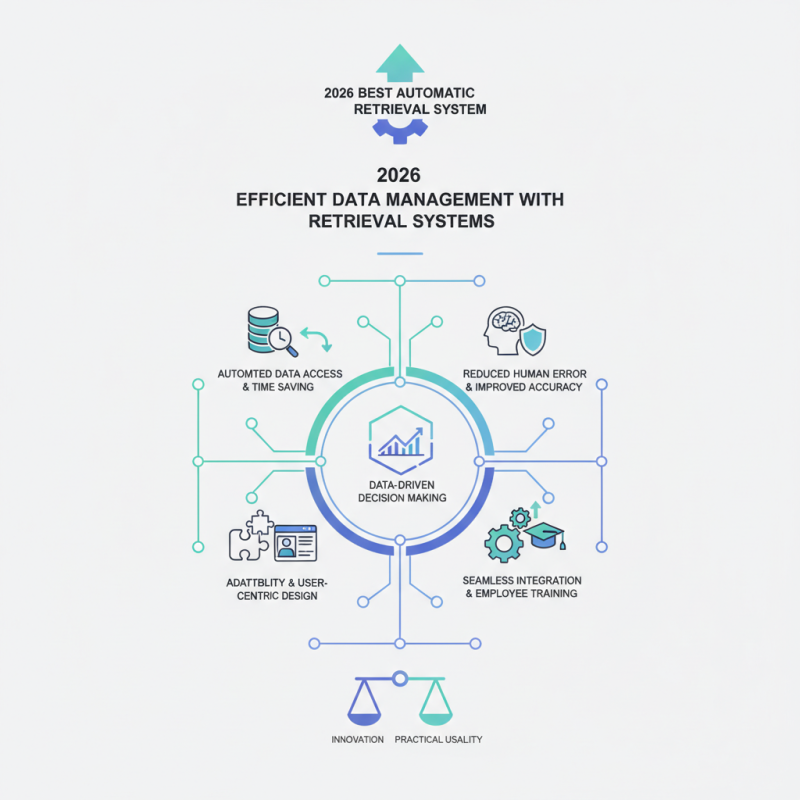
In the ever-changing world of data management, everyone’s really gunning for more efficiency these days. Experts like Dr. Emily Foster over at DataSift often talk about how crucial the Automatic Retrieval Systemhas become in changing the game for organizations. She once mentioned, "A well-designed Automatic Retrieval System can be the backbone of data-driven decision-making," which really drives home just how important it is.

Basically, a good Automatic Retrieval System helps you access and handle huge heaps of data without the hassle. It automates the whole retrieval process, saving tons of time and cutting down on mistakes humans might make. But here’s the thing— not all systems are built the same. Some can be a total pain because they don’t adapt well or aren’t user-friendly enough. That’s why companies really gotta do their homework and pick something that actually fits their needs, instead of just going for the latest shiny thing.

And let’s not forget, setting up these systems isn’t always smooth sailing. There can be some headaches related to integrating them into the existing tech and training staff properly. Those human factors matter just as much as the tech itself. It’s all about finding that sweet spot: embracing new tech without losing sight of what’s practical and user-friendly. That’s the secret to choosing the right system—not just for 2026, but beyond that too.
2026 Best Automatic Retrieval System for Efficient Data Management?

Overview of Automatic Retrieval Systems in Data Management

Automatic Retrieval Systems play a crucial role in data management. They facilitate efficient storage and access to vast amounts of information. With the growing volume of data, the need for robust systems has never been more apparent. From improving search accuracy to reducing retrieval time, these systems can enhance productivity significantly.

However, not all automatic retrieval systems are created equal. Some do not live up to user expectations. Issues like user interface complexity or slow response times can hinder effectiveness. It’s essential to conduct regular evaluations. Refinement and updates can lead to better alignment with user needs.

The CE Certification Automatic Retrieval System stands as an example of how standards impact functionality. Yet, many organizations fail to fully harness its potential. They may overlook proper training for their teams. Without comprehensive understanding, even the best systems may underperform. Investing in knowledge and adaptation will yield better results and meet evolving demands in data management.

2026 Best Automatic Retrieval System for Efficient Data Management

System Type Key Features Efficiency Rating Data Handling Capacity User Satisfaction Score
Cloud-Based Retrieval Automated Backup, Scalability, Multi-user Access 95% Unlimited 4.8/5
On-Premises Solution Customizable Interface, High Security, Offline Access 88% Up to 1TB 4.5/5
Hybrid System Best of Both Worlds, Flexible Storage Options, Seamless Integration 90% 2TB 4.6/5
AI-driven Retrieval Machine Learning Insights, Predictive Analysis, Smart Sorting 93% 1.5TB 4.7/5

Key Features of the Best Automatic Retrieval Systems in 2026

In 2026, automatic retrieval systems have evolved greatly. They now offer unique features tailored for efficient data management. Users can expect lightning-fast search speeds. Information retrieval is simpler than ever before. Intuitive interfaces guide users seamlessly. A dashboard displays search results clearly. Prioritizing user-friendly design is key to success.

One crucial aspect is data indexing. Effective indexing makes information retrieval faster. Monitor redundancy in data sources. Redundant data can slow down performance. Regularly refining the database enhances speed. Aim to keep your data organized. User feedback often highlights areas for improvement.

Another feature is cross-platform compatibility. Systems that function well on various devices are valuable. Users appreciate uniform access across smartphones, tablets, and desktops. Seamless integration with other software is important, too. The learning curve should be low, but mistakes can happen. Be prepared to adapt based on user needs and usage patterns.

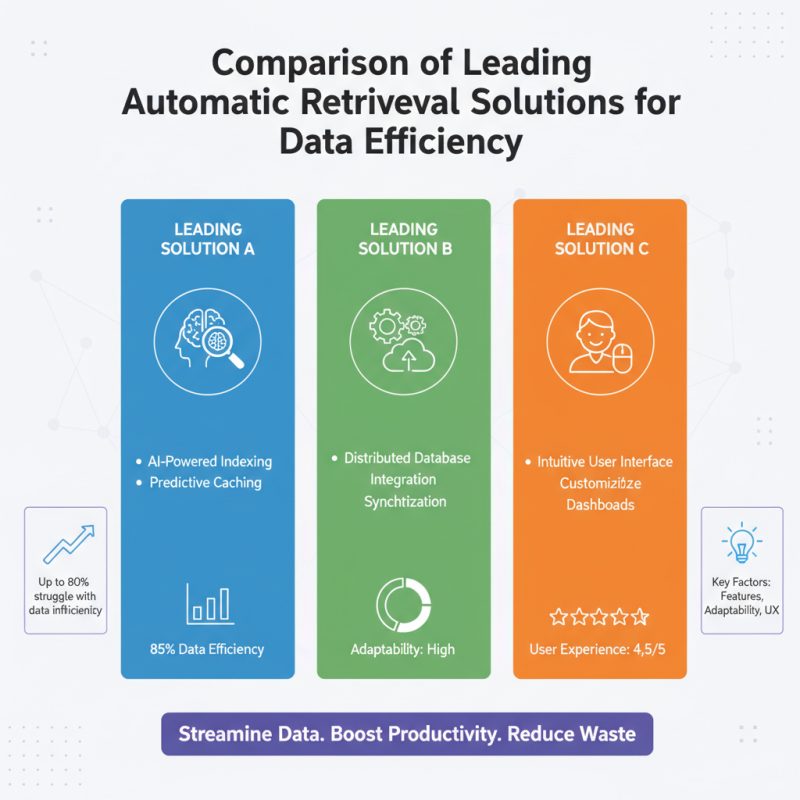
Comparison of Leading Automatic Retrieval Solutions for Data Efficiency

2026 Best Automatic Retrieval System for Efficient Data Management?

As organizations increasingly rely on data, the importance of efficient retrieval systems has grown. A recent report indicates that up to 80% of businesses struggle with data management. This inefficiency can lead to lost opportunities and wasted resources. The right automatic retrieval systems can streamline these processes. Choosing a solution requires careful comparison of features, adaptability, and user experience.

In evaluating different systems, one must consider the total cost of ownership. According to industry analysts, businesses lose around $2 trillion annually due to ineffective data management practices. Automatic Retrieval System Manufacturers often promote their solutions based on speed and accuracy. However, not all claims align with real-world outcomes. Some tools may excel in one area but fall short in others.

Adoption rates of these systems fluctuate widely. A study found that 55% of users find current solutions do not meet their needs. This gap highlights the need for further innovation. Organizations must prioritize security and compliance when selecting a retrieval system. Many companies report issues integrating new solutions with legacy systems. Evaluating these aspects ensures that chosen systems will support growth effectively.

Impact of AI and Machine Learning on Data Retrieval Systems

AI and machine learning are transforming data retrieval systems. These technologies enhance efficiency and accuracy. They analyze vast amounts of data quickly. As a result, businesses can access information without delays. A High-Quality Automatic Retrieval System saves time, allowing teams to focus on analysis rather than searching.

When implementing AI, consider the quality of your data. Poor data can lead to inaccurate results. Regularly update and clean your database. This ensures the AI makes sound recommendations.

Think about user experience too. A system should be intuitive and easy to navigate. Users may resist change if the interface is complicated. Gather feedback to improve usability regularly. Balance innovation with practicality to create a truly effective data retrieval system.

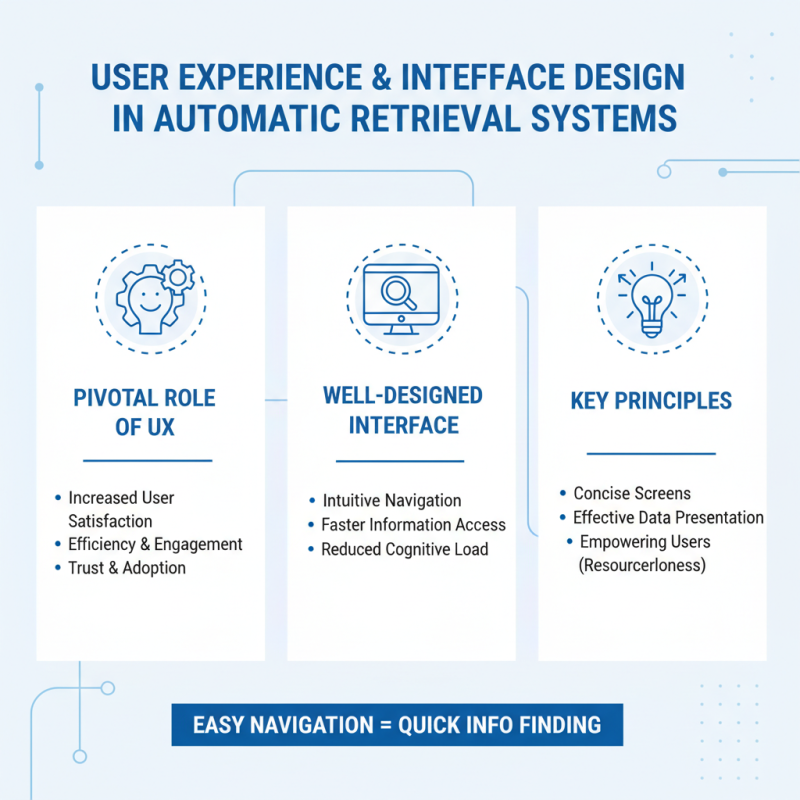
User Experience and Interface Design in Automatic Retrieval Systems

2026 Best Automatic Retrieval System for Efficient Data Management?

User experience plays a pivotal role in automatic retrieval systems. A well-designed interface can significantly improve user satisfaction. Users need easy navigation to find information quickly. Cluttered screens can frustrate users, leading to inefficiency. Intuitive layouts matter. Each element should serve a purpose and guide the user effortlessly.

Colors and fonts impact users' perceptions too. A calming palette can create a better mood. Clear fonts enhance readability. Users often overlook design nuances but their effects are profound. Simplicity is key. Too many options can overwhelm. The right balance between functionality and minimalism is essential. Feedback mechanisms should be incorporated to help users refine their search.

Finding a perfect system remains a challenge. Many automatic retrieval systems fall short in personalization. Users want tailored results based on previous interactions. Without understanding user needs, systems can become obsolete. Continual testing and adaptation are needed for improvement. Engaging users in the design process can yield better insights. Their feedback is invaluable in crafting responsive designs.

Challenges and Limitations in Current Automatic Retrieval Technologies

Automatic retrieval systems have made significant strides in data management. However, they face several challenges and limitations. One major issue is the inability to accurately understand context. Current technologies often struggle with ambiguous queries. This leads to irrelevant search results and user frustration.

Another challenge is data quality. Automatic retrieval systems rely heavily on the data they access. If the data is incomplete or outdated, the retrieval becomes ineffective. Users encounter a barrage of inaccuracies. This highlights the need for constant data curation and validation, which can be resource-intensive.

Moreover, the integration of various data sources poses a significant hurdle. Many systems operate in silos, limiting their effectiveness. Users often cannot retrieve comprehensive information seamlessly. This fragmentation disrupts the user experience and diminishes trust in the technology. Addressing these issues is crucial for advancing automatic retrieval systems in the future.

Future Trends in Automatic Data Retrieval Systems Beyond 2026

As we look towards the future of data management, automatic data retrieval systems will become more essential. By 2026, significant advancements are expected. These systems will likely utilize artificial intelligence, enhancing their capabilities. Users can expect faster responses and more accurate data retrieval. Trends indicate a focus on customization and user-centric designs.

While these systems evolve, it's crucial to highlight some weaknesses. Not all automatic retrieval systems can adapt seamlessly to changing data environments. Challenges with integration and compatibility may arise. It's essential for businesses to critically evaluate their needs before investing in these technologies. An essential tip: always ensure the chosen system aligns with your unique operational requirements.

Data security will remain a hot topic. Future systems must prioritize safeguarding sensitive information. Users should be aware of potential vulnerabilities in data retrieval processes. Seeking insights from an Automatic Retrieval System Manufacturer can provide valuable guidance. Always be proactive in assessing your data management strategies.

2026 Best Automatic Retrieval System for Efficient Data Management

This chart displays the key performance indicators for the best automatic retrieval systems as we look towards 2026. The indicators include Speed, Accuracy, Scalability, Cost-Effectiveness, and User-Friendliness, providing a visual comparison of their expected performance levels.

FAQS

: What is the role of automatic retrieval systems in data management?

: They facilitate efficient storage and access to large amounts of information.

Why is regular evaluation important for these systems?

Regular evaluations can help refine and update systems to better meet user needs.

What issues can affect user experience with retrieval systems?

Complexity of user interface and slow response times can significantly hinder effectiveness.

How can organizations enhance the effectiveness of these systems?

Investing in team training and knowledge adaption is essential for better results.

What impact do outdated or incomplete data have on retrieval systems?

It leads to inaccuracies, making the retrieval process ineffective and frustrating for users.

What challenges do current automatic retrieval technologies face?

They struggle with context understanding and integration of various data sources.

What do businesses lose due to ineffective data management practices?

Companies may lose up to $2 trillion annually due to inefficiencies in data management.

How does the total cost of ownership factor into choosing a retrieval system?

It’s essential to consider this to avoid overspending on solutions that may not meet needs.

Why can many users find it hard to adopt current retrieval solutions?

A significant portion finds that available solutions do not meet their specific requirements.

What is a common frustration users experience with automatic retrieval systems?

Users often face irrelevant search results due to ambiguous queries that systems fail to interpret.

Conclusion

The article titled "2026 Best Automatic Retrieval System for Efficient Data Management" explores the evolving landscape of Automatic Retrieval Systems, emphasizing their crucial role in streamlining data management processes. It delves into the key features that define the most efficient systems for 2026, highlighting advancements in AI and machine learning that enhance data retrieval capabilities. A comparative analysis of leading solutions showcases how these technologies improve data efficiency and user experience, focusing on interface design that prioritizes accessibility and usability.

Furthermore, the article addresses the challenges and limitations currently faced by Automatic Retrieval Systems, such as data security and integration issues. As the field progresses, it also outlines future trends that could shape data retrieval strategies beyond 2026, ensuring that organizations remain adaptive and efficient in an increasingly data-driven world. Overall, the insights presented underscore the transformative impact of Automatic Retrieval Systems on data management and their potential to revolutionize how organizations handle information.

Sophie

Sophie

Sophie is a dedicated marketing professional at Linyi Linggong Intelligent Information Technology Co., Ltd., where she leverages her extensive knowledge of the company's products to drive effective marketing strategies. With a strong focus on innovation and technology, Sophie plays a vital role in......
Previous What is an Auto Guided Vehicle Project and How Does it Work?