Navigating the world of material handling can be pretty overwhelming, especially when you're trying to pick out the right Vertical Lift Module (VLM) for your warehouse. I mean, with so many options out there, it’s easy to get lost. Industry expert John Smith from Innovative Storage Solutions puts it simply: "Choosing the right VLM can totally change how your warehouse runs — making things more efficient and boosting productivity." He stresses just how important it is to really understand what each model can do before making a call.
Vertical Lift Modules are designed to make the most of your space and give you quick, easy access to your stored stuff. As companies are trying to squeeze every bit of capacity out of their warehouses, this tech seems like a game-changer. But honestly, a lot of buyers find themselves stuck, trying to decide which one is best. The sheer number of options can be pretty intimidating, even for the pros in procurement. And, of course, every model has its own pros and cons, so you’ve got to weigh them carefully.
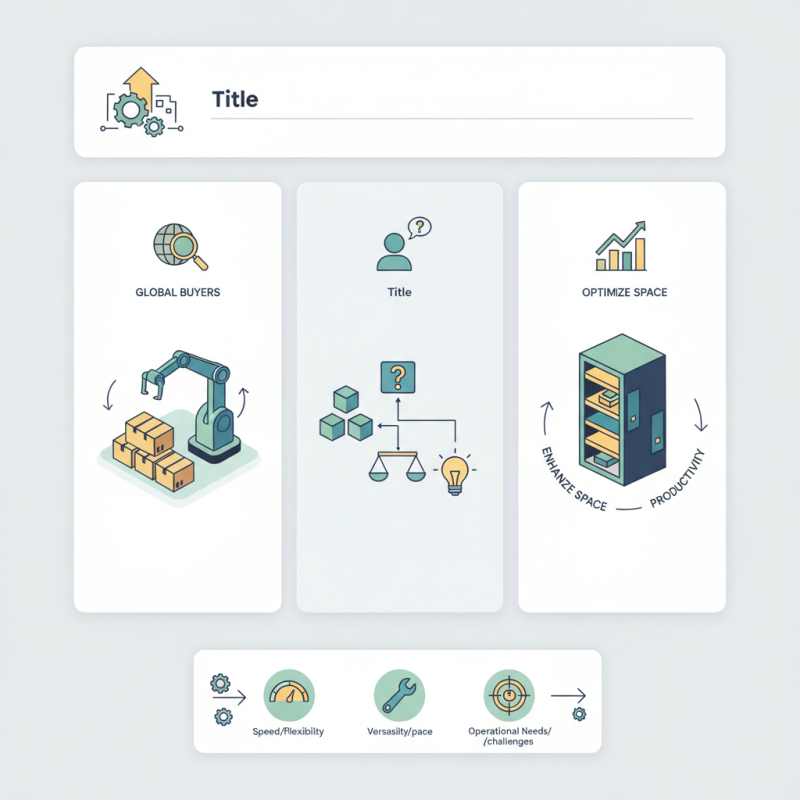
When you’re figuring out which VLM is right for your warehouse, it’s super important to think about what your operations really need. Some units might be blazing fast but lack flexibility, while others are more versatile but might not be as speedy. Thinking through these aspects can really help you make a smarter investment. The goal isn’t just to turn your warehouse into a productivity powerhouse, but also to tackle the specific challenges you’re facing — which you can learn more about at the Vertical Lift Module Warehouse. Striking the right balance between these factors usually leads to a better understanding of how to improve overall efficiency and streamline your operations.
What is a Vertical Lift Module (VLM) and its Functionality
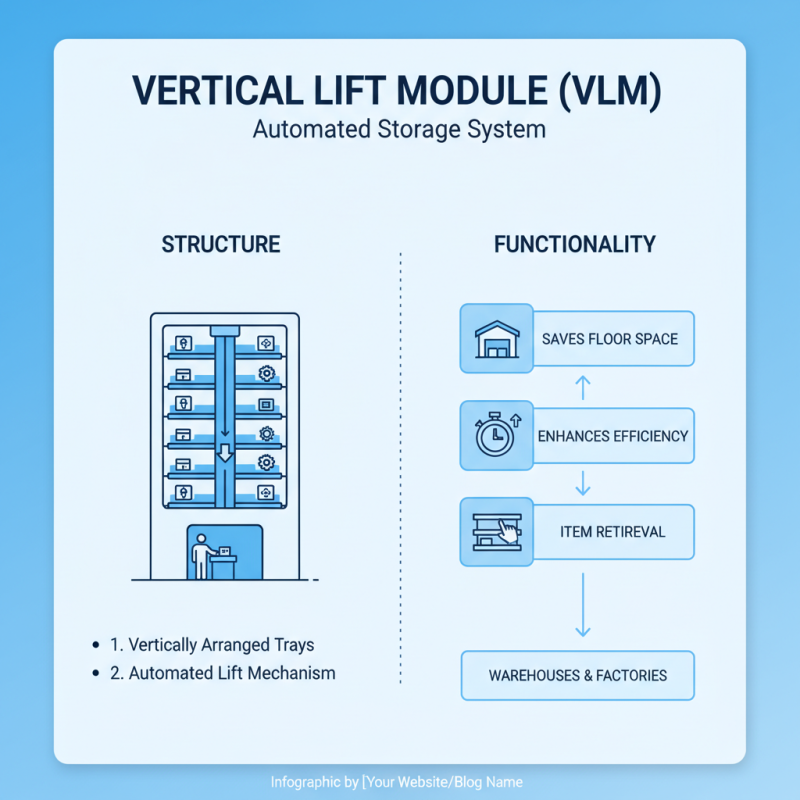
A Vertical Lift Module (VLM) is an Automated Storage system. It uses vertically arranged trays that move up and down. This design saves floor space and enhances efficiency in warehouses and factories. Items are stored in trays, and a lift mechanism retrieves them when needed.
VLMs operate on a simple principle. They use a series of rotating and lifting components to deliver goods precisely to the operator. This system minimizes manual handling. Operators can quickly access items, improving workflow. The design accommodates various products, from small parts to heavy items.
However, choosing the best VLM requires careful consideration. Users must evaluate their storage needs. The height and weight of stored items impact the decision. While VLMs offer great benefits, they also present challenges. Maintenance can be complex, and staff training is essential. Striking a balance between automation and human skill is crucial for optimal performance.
Key Features to Consider When Choosing a VLM
When selecting an Automated Vertical Lift Module (VLM), several key features warrant attention. First, consider the storage capacity and dimensions. A VLM should efficiently accommodate your specific inventory. The height and weight limits matter significantly. You need to ensure it fits your operational needs without compromise.
Next, evaluate the ease of integration with existing systems. The right VLM should communicate seamlessly with your warehouse management software. This ensures smooth operation and data transfer. User-friendliness is essential. Staff should find it intuitive to operate. Training time should be minimal, maximizing productivity from day one.
Lastly, maintenance requirements cannot be overlooked. A reliable VLM should offer straightforward maintenance schedules and procedures. Regular checks can prevent costly downtime. Consider the service and support options. Availability of quick assistance can be a game changer in emergencies. Reflect on these aspects before making a decision. Each feature plays a role in optimizing your storage efficiency and boosting productivity.
Market Share Analysis of Leading VLM Manufacturers
In the competitive landscape of vertical lift modules (VLMs), market share analysis reveals intriguing trends. Various manufacturers are vying for dominance, each contributing unique innovations to the sector. Notably, certain companies emphasize energy efficiency while others focus on maximizing storage capacity. These differences cater to diverse customer needs and operational requirements.
The data indicates a shift in consumer preferences. Buyers are increasingly looking for modular systems that can be customized. This flexibility allows companies to adapt VLMs for specific applications, enhancing overall operational efficiency. However, not all manufacturers offer the same level of support and expertise. Some businesses struggle to provide sufficient training and integration solutions for their VLMs.
Understanding the strengths and weaknesses of leading manufacturers is crucial. A thorough analysis can guide buyers toward making informed decisions. Factors such as reliability, ease of use, and long-term maintenance play pivotal roles in these choices. Yet, there is always room for improvement in service quality and customer engagement. Companies must reflect on their strategies to better cater to this evolving market.
Comparative Review of Top VLM Models for Global Buyers
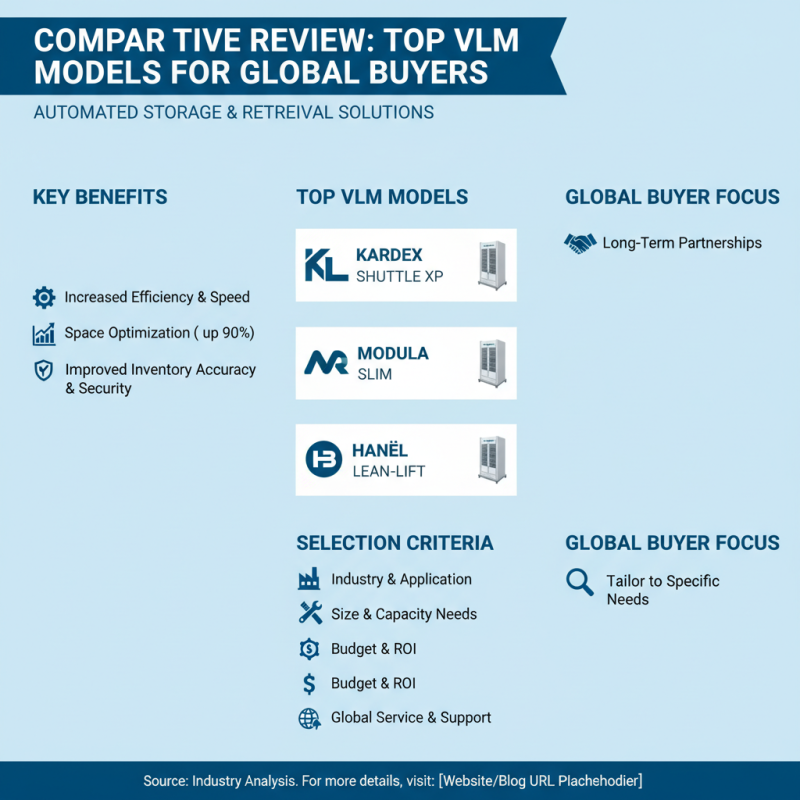
Vertical Lift Modules (VLMs) have transformed warehouse efficiency. They offer automated storage and retrieval solutions for various industries. Selecting the right model can be overwhelming for global buyers. Each model presents unique features, benefits, and limitations.
When comparing top VLM models, consider factors like load capacity, size, and speed. Some models excel in compact design, making them ideal for limited spaces. Others prioritize speed and offer rapid retrieval times, boosting productivity. Look for systems with user-friendly interfaces. This aspect aids operators in training and reduces errors.
Reliability is a crucial factor in the long-term performance of VLMs. Buyers must examine maintenance requirements and access to support. Models with extensive warranty coverage may suggest greater durability. However, not all high-capacity units necessarily outperform smaller ones. Balancing capacity, speed, and maintenance can lead to clearer insights.
Cost-Benefit Analysis of Implementing a VLM in Warehousing
The cost-benefit analysis of implementing a Vertical Lift Module (VLM) in warehousing presents compelling insights. According to recent industry reports, automating storage with systems like the Modula Vertical Lift Module can reduce labor costs by up to 40%. This is a significant saving, especially for businesses handling high volumes of inventory. However, the initial investment and installation costs can be daunting. Companies often hesitate, weighing short-term expenses against long-term benefits.
In a survey, 60% of warehouse managers noted improved space utilization after adopting VLMs. This improvement leads to decreased operational costs and enhanced efficiency. Yet, it's crucial to recognize the challenges. Not every warehouse layout suits a VLM installation. Some facilities may find it difficult to integrate these systems without significant restructuring. This can negate some benefits, leading to additional costs.
When considering the implications of VLMs, one must also reflect on employee training. An estimated 30% of operational disruption stems from inadequate training programs. Hence, while automation offers efficiency, it requires a thoughtful approach to workforce adaptation. Balancing these facets is essential for maximizing the return on investment in systems like the Modula Vertical Lift Module.
Technological Advancements Impacting VLM Efficiency
In the rapidly evolving landscape of logistics and warehousing, the efficiency of Vlm Vertical Lift Modules is becoming crucial. Recent studies highlight that advancements in automation and artificial intelligence significantly enhance VLM operations. For instance, research from the Automation Federation indicates that incorporating AI can boost operational efficiency by up to 30%. This is particularly beneficial for global buyers seeking to optimize inventory management.
Technological improvements extend to safety features as well. Enhanced sensor technologies allow for real-time monitoring, which reduces downtime and minimizes errors. Reports show that automated systems with intelligent diagnostics led to a 25% reduction in maintenance costs. Such statistics underscore the importance of integrating advanced technology to ensure the VLM remains reliable and effective.
**Tips**: Always assess the specific needs of your warehouse before investing in a VLM Vertical Lift Module. Not all modules suit every environment. Consider conducting a pilot study with small-scale implementations to identify potential issues early. Embracing technology may seem daunting, but the long-term benefits make it worthwhile. However, remember that not every technological upgrade will yield immediate efficiency gains; patience is essential for successful integration.
Case Studies: Successful VLM Implementations in Various Industries
Vertical Lift Modules (VLMs) have transformed how industries manage storage and retrieval. In a busy automotive supply chain, a VLM helped reduce retrieval time by half. Workers previously spent excessive time locating parts. With the implementation of a VLM, efficiency soared. The machine housed numerous components in a compact space, allowing quick access.
In the healthcare sector, a VLM addressed inventory management challenges. Hospitals often struggle with space and medication organization. By utilizing a VLM, one hospital improved its medication retrieval process. Staff spent less time searching, which enhanced patient care. However, not all implementations go perfectly. Some users reported initial training difficulties. A solid training program can alleviate these issues.
In the retail industry, VLMs have streamlined stock management. One store reduced stock discrepancies dramatically through automated inventory tracking. However, balancing automation with personal touch remains a challenge. Customers still appreciate individualized attention, even in a digitized inventory environment. Overall, the diverse applications of Vertical Lift Modules showcase their potential while highlighting the need for mindful implementation.
What is the Best Vertical Lift Module for Global Buyers? - Case Studies: Successful VLM Implementations in Various Industries
| Industry | VLM Type | Implementation Goal | Results Achieved | Comments |
| Pharmaceutical | Standard VLM | Improve storage efficiency | 30% increased storage capacity | Enhanced order accuracy |
| Automotive | Heavy-duty VLM | Reduce retrieval time | 50% reduction in pick time | Improved workflow efficiency |
| Electronics | Compact VLM | Maximize small parts storage | Increased inventory visibility | Decreased floor space usage |
| Retail | Vertical Carousel | Enhance customer service | Faster product retrieval | Increased customer satisfaction |
| Healthcare | Modular VLM | Optimize medical supply storage | 25% improvement in storage organization | Better inventory management |
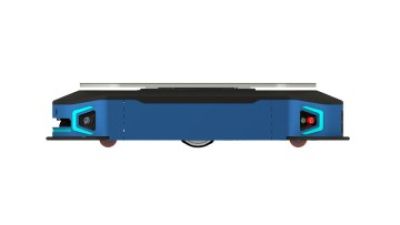
Maximizing Efficiency and Safety: The Benefits of LGIM 1-Ton Piggyback Lift AGV in Modern Warehousing
In the fast-paced world of modern warehousing, maximizing efficiency and safety is paramount. The introduction of advanced automated guided vehicles (AGVs), particularly those equipped with an automatic lifting function, represents a significant leap forward in logistics operations. These vehicles can autonomously navigate, pick up, transport, and unload items, streamlining processes that were once labor-intensive and time-consuming. As a result, warehouses can optimize space, reduce operational costs, and maintain a high level of productivity.
The integration of an AGV dispatching system further enhances the capabilities of this technology. By enabling seamless communication between multiple units, it allows for coordinated operations, meaning that items can be moved swiftly across varying warehouse zones. This not only minimizes the risk of accidents associated with manual handling but also ensures that goods are transported efficiently. With autonomous operation, human workers can focus on value-added tasks, enhancing overall workplace safety while reducing the potential for repetitive strain injuries. The evolution of AGV technology is paving the way for smarter, safer, and more efficient warehouse environments.
FAQS
: Manufacturers are competing, each with unique innovations. Some focus on energy efficiency, while others prioritize storage capacity.
Modular systems allow customization for specific applications, enhancing operational efficiency and meeting diverse customer needs.
Some struggle with training and integration solutions, which can hinder customer satisfaction and support.
Businesses should reflect on their strategies. Learning from customer feedback can enhance engagement and support.
While VLMs can reduce labor costs significantly, initial investment and installation expenses can be high.
About 60% reported better space utilization, reducing operational costs and improving efficiency.
Yes, some warehouse layouts are not suitable for VLMs. Integrating these systems may require significant structural changes.
Very important. Inadequate training can cause 30% of operational disruptions, affecting overall efficiency.
Companies need to balance the initial costs with long-term benefits and ensure proper training for staff.
Enhancing training programs is crucial for reducing operational disruptions and ensuring efficient use of VLMs.
Conclusion
The article "What is the Best Vertical Lift Module for Global Buyers?" explores the functionality and key features of Vertical Lift Modules (VLMs), highlighting their crucial role in enhancing warehouse efficiency. It discusses important considerations for buyers when selecting a VLM, including market share analysis of leading manufacturers and a comparative review of top models available globally. Additionally, the article delves into the cost-benefit analysis of VLM implementation in warehousing and examines technological advancements that are improving VLM efficiency.
Furthermore, the article presents case studies showcasing successful VLM applications across different industries, demonstrating their versatility and impact on operational productivity. Overall, the insights provided equip global buyers with essential knowledge to make informed decisions regarding the integration of Vertical Lift Modules in their operations.