In today's super competitive market, picking the right Intelligent Warehouse System can really make a big difference in how smoothly your operations run. Honestly, studies show that businesses that go for more advanced warehouse solutions often see around a 25% boost in efficiency — which is pretty huge! It just goes to show how important it is to make smart, informed choices.
Experts like Dr. Emily Carter, who’s pretty much a boss in warehouse automation, always say, "Choosing the right system can totally transform your supply chain." That rings true because, honestly, a lot of companies get overwhelmed with all the options out there. While these systems come with their perks, not every single one is a perfect fit for every business.
A common hiccup is trying to match what the system offers with what your company really needs. Things like scalability, how well it integrates, and how easy it is for people to use — those are super important. Skip over these or ignore them and you might end up making costly mistakes. Finding the right Intelligent Warehouse System often involves a bit of trial and error, you know? But at the end of the day, you want a solution that not only works for you right now but can also grow alongside your business."

Understanding Intelligent Warehouse Systems and Their Benefits
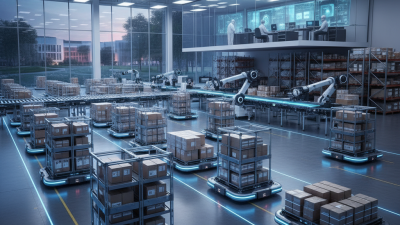
Intelligent warehouse systems integrate advanced technology to streamline operations. They use automation, artificial intelligence, and data analytics to enhance efficiency. Understanding these systems can transform warehouse management.
These systems offer numerous benefits. First, they optimize inventory control. Real-time data reduces stock discrepancies and minimizes waste. Automated picking processes speed up order fulfillment. This speeds up delivery times significantly. Moreover, it frees up employees for more strategic tasks.
However, not all intelligent systems fit every business. Implementation can be costly and complex. Training staff requires time and resources. Some systems may not seamlessly integrate with existing processes. Businesses must evaluate their specific needs. Without a clear understanding, investments may lead to challenges down the road.
Key Features to Look for in an Intelligent Warehouse System
When choosing an intelligent warehouse system, it’s vital to consider key features. Inventory management is crucial. Accurate tracking reduces errors, which can lead to significant savings. According to a report by Logistics Management, companies using advanced inventory systems have seen a 30% reduction in stock discrepancies. An effective system should provide real-time visibility of stock levels.
Another essential feature is automation capability. A recent study by McKinsey shows that warehouses employing automation increase efficiency by 20% on average. Picking and packing become seamless with automated processes. The need for human intervention decreases, but it also introduces challenges. For example, training workers to manage technology can be complex.
Data analytics is also critical. An intelligent system capable of analyzing shipping trends can enhance decision-making. Predictive analytics can help anticipate demand. Research from Gartner indicates that businesses using data analytics achieve sales growth three times higher than those that don’t. However, not all systems deliver actionable insights. Some require ongoing adjustments. The best solutions offer a blend of innovation and practicality, like those seen in Stacking Intelligent Warehouse models.
Assessing Your Business Needs for Warehouse Automation
Assessing your business needs is crucial when selecting an intelligent warehouse system. Begin by identifying core operations that require automation. Inventory management, order processing, and shipping tasks are key areas to consider. Automating these functions can save time and increase accuracy.
Tips: Evaluate your current warehouse processes. Note where delays often occur. Engage your team to gather insights on pain points. This information is invaluable.
Look at scalability too. Your business may grow, and so should your system. A modular design allows for easy expansion. Flexibility in updates is essential, as technology evolves quickly.
Tips: Anticipate future needs. What volume of orders do you expect to handle? Invest in systems that adapt over time. Regularly revisit your assessments. Your needs will change as your business grows.
Evaluating Vendor Reputation and Support Services
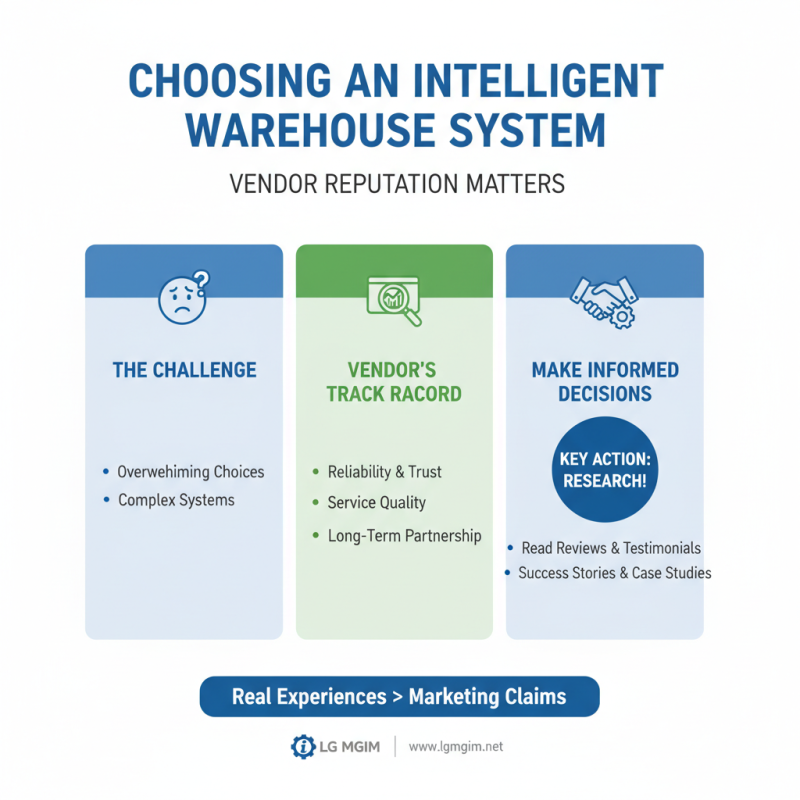
Choosing an Intelligent Warehouse system can be overwhelming. Vendor reputation plays a crucial role in this decision. A provider's track record can offer insights into their reliability. Look for reviews or testimonials from other businesses. Real experiences tell a clearer story than marketing claims.
Support services are equally important. How quickly can the vendor resolve issues? Examine their customer service options. Will you have access to a dedicated support team? Ask about response times for critical issues. Flexibility is key. The best vendors will adapt to your specific needs.
Pay attention to the long-term relationship. A good vendor shouldn't just sell software. They should provide ongoing training and updates. Think about future needs. An intelligent warehouse system should grow with your business. Regular communication is vital for ensuring satisfaction. Don't settle for less just because the price is right.
Budgeting for an Intelligent Warehouse Solution
Budgeting for an intelligent warehouse solution requires careful consideration. You must assess the specific needs of your operations first. What features do you need? Think about space, speed, and automation. A Warehouse Stacking System can enhance efficiency but will add to the cost.
Consider different budgeting strategies. One effective tip is to create a detailed list of essential features versus nice-to-have ones. Prioritize them accordingly. This helps you avoid overspending on functionalities that may not be crucial for your business. Another tip is to consult with experts. They can provide insights on potential hidden costs.
Be mindful of ongoing expenses as well. Maintenance, upgrades, and training can significantly affect your budget. Reflect on which aspects you can manage internally and which you should outsource. Regular evaluation of your budget will also ensure that you’re on track. This might prevent unexpected financial strains in the future.
How to Choose the Best Intelligent Warehouse System for Your Business? - Budgeting for an Intelligent Warehouse Solution
| Feature | Importance Level (1-5) | Estimated Cost ($) | Implementation Time (Weeks) |
| Inventory Management | 5 | 25000 | 6 |
| Order Fulfillment | 4 | 30000 | 8 |
| Integration Capabilities | 5 | 20000 | 5 |
| Real-time Analytics | 4 | 15000 | 4 |
| User Training | 3 | 5000 | 2 |
| Maintenance & Support | 5 | 12000 | 1 |
Implementation Process: Steps for Integration and Optimization
Implementing an intelligent warehouse system involves several critical steps. An effective integration process begins with assessing current warehouse operations. Many businesses discover that 20-30% of their processes are outdated or inefficient. Identifying these areas is essential for successful optimization.
Next, gather all stakeholders for input. Communication ensures that everyone understands the goals. According to recent industry studies, organizations that engage team members during implementation see a 25% improvement in system adoption rates. Mapping out the new processes can help visualize changes, but remember that flexibility is key. Be prepared to adjust your plans based on real-time feedback.
Testing is a crucial phase before full deployment. Simulation can expose potential issues without disrupting daily operations. Reports indicate that 70% of businesses experience unforeseen challenges during this phase. Consequently, it is important to allocate time for iterative testing. Learn from these experiences and refine your approach. Adopting an intelligent warehouse system is a journey, not merely a destination.
Monitoring and Evaluating System Performance Post-Implementation
After implementing an intelligent warehouse system, monitoring its performance is crucial. Regular assessments can reveal areas of improvement. Many businesses rely on metrics like order accuracy and inventory turnover. These are practical indicators of system efficiency. However, relying solely on data can be misleading. The context matters too.
For instance, an Asrs System Warehouse may show high throughput but low accuracy. This could stem from user error or outdated training. Engaging employees in feedback can uncover deeper insights. They often notice issues not reflected in the data. Additionally, experimenting with different configurations can highlight potential optimizations. A change in layout or workflow might boost performance unexpectedly.
It's essential to periodically review system goals. Over time, these goals can shift. What worked initially may no longer be relevant. Keeping the system aligned with business objectives requires vigilance. Testing new techniques can lead to breakthroughs, or you may find that some methods do not yield the expected results. Embrace this uncertainty as part of the journey.
Enhancing Warehouse Efficiency: The Role of Stacking Intelligent Unmanned Forklifts in Modern Logistics
In the fast-paced world of modern logistics, enhancing warehouse efficiency is crucial for meeting the ever-growing demands of customers. One of the most innovative solutions to achieve this is the integration of stacking intelligent unmanned forklifts, such as those from the MF16L/MF20L series. These advanced pallet stacking forklifts are designed to handle a range of tasks, including flatbed handling, high-rise stacking, and the efficient management of medium to long-distance transportation between standard and non-standard pallets.
With a rated load capacity of 1600-2000kg and impressive lifting heights of up to 2844mm, these forklifts are ideal for high-level transportation operations. They facilitate seamless access to goods stored on elevated shelves, optimizing space utilization in increasingly compact warehouses. According to the Logistics Management Association, efficient pallet handling can increase productivity by up to 30%, underscoring the significant impact that intelligent forklifts can have on operational efficiency.
Furthermore, the automatic cross-floor transportation capabilities of these forklifts ensure that goods can be easily moved on and off elevators, further streamlining warehouse processes. In fact, research from the Material Handling Industry (MHI) indicates that automation in material handling systems can yield a return on investment of 25% to 40% within the first two years. As logistics industries continue to prioritize efficiency and cost-effectiveness, the adoption of stacking intelligent unmanned forklifts represents a pivotal step toward revolutionizing warehouse operations.
FAQS
: Intelligent warehouse systems use advanced technology to streamline warehouse operations and improve efficiency.
They provide real-time data, reducing stock discrepancies and minimizing waste in inventory management.
Automation speeds up order fulfillment, allowing quicker delivery times and freeing employees for strategic tasks.
No, not all systems fit every business. Needs vary based on complexity and cost of implementation.
Assess your operational needs, including essential features, space, speed, and potential integration costs.
Create a list of must-have features and prioritize them based on your business needs.
Maintenance, upgrades, and training can impact your budget. Plan for these costs to avoid surprises.
They can provide insights on hidden costs and help optimize your budget for better financial planning.
Regular evaluation ensures you stay on track and can prevent unexpected financial strains in your operations.
Conclusion
Choosing the best Intelligent Warehouse System for your business involves a comprehensive understanding of its key benefits and functionalities. First, it’s essential to grasp what an Intelligent Warehouse System offers, which includes automating inventory management and optimizing workflows to enhance efficiency and accuracy. Businesses need to assess their specific requirements for warehouse automation, determining what features are crucial for their operations such as real-time tracking, integration capabilities, and user-friendly interfaces.
Additionally, evaluating vendor reputation and support services is critical to ensure reliable assistance post-implementation. Budget considerations should also be a priority, as understanding the total cost of ownership will aid in making informed financial decisions. Finally, navigating the implementation process requires careful planning; steps should be taken to integrate the Intelligent Warehouse System effectively while monitoring and evaluating its performance to achieve optimal functionality in the long run. This holistic approach will help businesses make an informed decision that aligns with their operational goals.