Leave Your Message
Picking out a Differential Steering Robotin 2026 isn’t just about glancing at wheel sizes or trusting marketing buzz. You really need to consider if the platform fits the floor type, payload needs, duty cycle, and the environment it’ll be navigating. For instance, a robot in a warehouse might need strong torque and super-accurate encoders. On the other hand, a hospital robot has to move quietly, have surfaces that are easy to clean, and be great at avoiding obstacles reliably. Outdoor Robots face their own set of challenges—dust, slopes, rain, and uneven terrain are all part of the game.
Sebastian Thrun, a top robotics researcher and co-founder of Google X, once said, “Robots are designed to do things that are difficult, dangerous, or just plain boring for humans.” That’s still spot-on. But here’s the thing: a differential steering robot should help reduce operational risks, not end up with its own set of headaches like maintenance nightmares. Make sure to check how it handles tight turns in narrow aisles, and test how quickly it stops with a full load. Don’t just rely on lab results—see how long the battery lasts in real-world conditions. And yeah, pay attention to things like ROS 2 compatibility, LiDAR setup, remote diagnostics, and how easy it is to get replacement parts.
Numbers can be deceiving sometimes. A high payload capacity might hide weak acceleration or cause motors to overheat. And a low purchase price might seem attractive at first, but that can turn into an expensive deal when you’re replacing tires, batteries, or gearboxes a lot. So, it’s smart to ask for test videos, detailed interface docs, service histories, and clear warranty info from vendors like Clearpath Robotics, MiR, or OTTO Motors. Even the most experienced teams might overlook tricky spots like floor transitions or dead zones in wireless signals. I’ve seen specs that look great until the robot hits a wet ramp or a busy corridor. That’s why I think it’s crucial to look beyond just the specs—practical performance, real technical evidence, and long-term support all matter a lot before jumping into a decision for a robot in 2026.
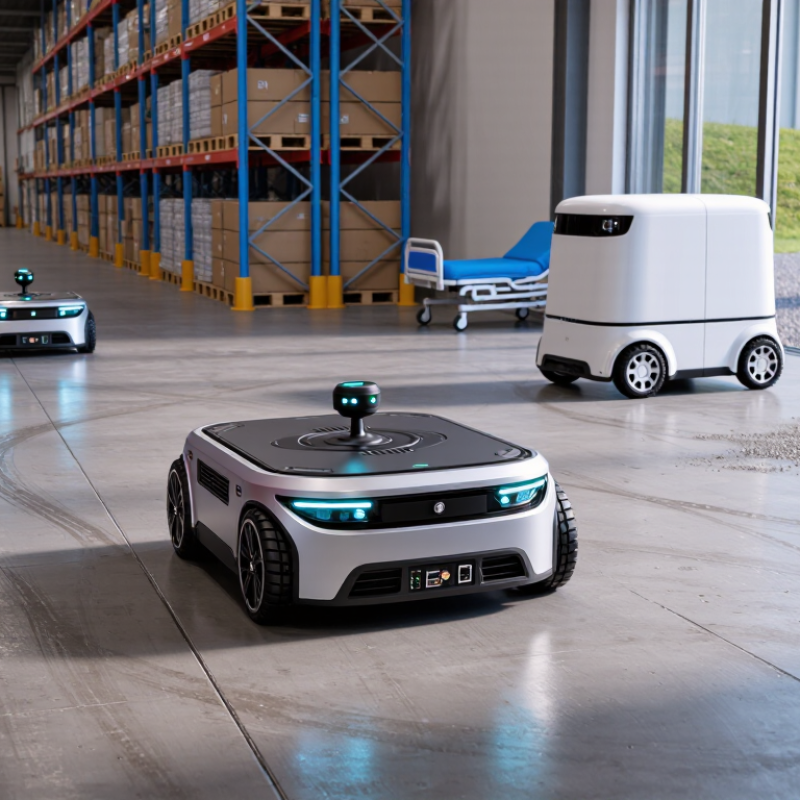
A differential steering robot uses two independently powered wheels, usually placed on the left and right sides. It turns by changing their speeds, not by rotating a front axle. If the left wheel moves faster, the robot curves right. If both wheels rotate in opposite directions, it can turn almost in place. This design removes complex steering linkages and suits narrow aisles, factory floors, hospitals, and research spaces.
The IFR World Robotics 2024 report recorded almost 205,000 professional service robots sold in 2023. Transport and logistics remained a leading application. That growth makes careful selection more important. Check the payload at the robot’s center, not only its maximum rating. A 200-kilogram load can shift during braking. Small caster vibration may then disturb sensors or damage fragile goods. Floor gaps, slopes, wheel wear, and battery temperature also affect real movement.
For a CE Certification Differential Steering Robot, review the technical file, risk assessment, emergency stop response, and conformity documentation. CE marking is a conformity indication, not a universal performance guarantee. Safety requirements should match the robot’s operating environment. ISO 3691-4 offers useful guidance for driverless industrial trucks, although every application still needs engineering judgment. In field evaluations, a robot may pass a flat-floor test but fail near a ramp. That is easy to overlook. Measure stopping distance, turning accuracy, noise, and network recovery before purchase. A simple design is not always a simple system.
| Evaluation Dimension | What It Means | Typical Data or Range | Why It Matters | Recommended Selection Guidance |
|---|---|---|---|---|
| Steering Principle | A differential steering robot changes direction by varying the speed and direction of its left and right drive wheels. | Two independently driven wheel sides; zero-radius turning is possible when the wheels rotate in opposite directions. | This design provides simple motion control and excellent maneuverability in confined spaces. | Choose differential steering when the robot must turn in narrow aisles, rooms, corridors, or work areas with limited clearance. |
| Drive Configuration | The number and arrangement of powered wheels, idlers, or support casters used to move the robot. | Common configurations include two powered wheels with one or more support wheels, or four independently powered wheels. | Drive configuration affects traction, stability, floor contact, mechanical complexity, and maintenance requirements. | Use two main drive wheels for simpler platforms and four-wheel drive when higher traction or heavier payload handling is required. |
| Turning Radius | The minimum circular path required for the robot to change direction. | Approximately 0 m for in-place rotation; the practical radius depends on wheel spacing, control accuracy, and floor friction. | A small turning radius improves navigation in congested or space-limited environments. | Verify that the robot can rotate within the narrowest aisle, doorway, workstation, or operating area. |
| Typical Operating Speed | The normal travel speed used during safe and stable operation. | About 0.3–1.5 m/s for many Indoor Mobile Robot applications; lower speeds are common near people or obstacles. | Higher speed increases productivity but also requires stronger braking, better sensing, and larger safety margins. | Select speed according to traffic density, floor conditions, payload, stopping distance, and applicable safety requirements. |
| Payload Capacity | The maximum mass the robot can carry while maintaining reliable motion and braking performance. | Common platform classes range from approximately 20 kg to more than 500 kg, depending on structure and drive system. | Payload affects acceleration, motor torque, battery consumption, wheel load, and floor pressure. | Choose a rated capacity at least 20% above the expected working load to accommodate uneven distribution and future requirements. |
| Drive Wheel Diameter | The diameter of the powered wheels that transfer motor torque to the floor. | Often approximately 100–300 mm for indoor platforms; larger wheels are used for thresholds and uneven surfaces. | Larger wheels generally improve obstacle crossing and reduce sensitivity to small floor irregularities. | Match wheel diameter to thresholds, expansion joints, ramps, floor gaps, and the required ground clearance. |
| Floor Compatibility | The types of surfaces on which the robot can operate while maintaining traction and localization accuracy. | Smooth concrete, epoxy, tile, and industrial floors are typically suitable; loose gravel, deep carpeting, and wet surfaces may reduce performance. | Surface friction and unevenness influence wheel slip, odometry accuracy, braking, and energy consumption. | Test the robot on the actual route, especially where floors change material or include ramps, joints, or surface contamination. |
| Climbing Ability | The maximum ramp angle or obstacle height the robot can negotiate safely. | Many indoor platforms support roughly 5–10° slopes; obstacle-crossing capability is commonly limited to a small fraction of wheel diameter. | Insufficient climbing capability can cause wheel slip, loss of localization, motor overheating, or immobilization. | Check the rated slope with the intended payload and confirm performance at the steepest ramp and highest threshold on the route. |
| Localization Method | The system used to estimate the robot's position and heading. | Wheel encoders are commonly combined with inertial sensors, laser scanning, cameras, markers, or external positioning references. | Differential drive naturally accumulates odometry error when wheel slip occurs, particularly during turning. | Use sensor fusion for long routes, repetitive environments, slippery floors, or applications requiring accurate docking. |
| Navigation Environment | The physical and operational conditions in which the robot must move. | Indoor, structured environments are generally easiest; dynamic traffic, outdoor areas, reflective surfaces, and changing layouts increase complexity. | Navigation performance depends on lighting, obstacles, people, floor markings, map stability, and sensor visibility. | Document aisle width, obstacle density, lighting, reflective materials, pedestrian traffic, and route changes before choosing the platform. |
| Battery Runtime | The operating time available between charging sessions under a defined workload. | Approximately 4–12 hours is common for many mobile platforms; actual runtime depends on payload, speed, surface, sensors, and duty cycle. | Runtime determines operational availability and whether charging can occur during planned breaks or shift changes. | Compare runtime under the expected payload and route profile rather than relying only on no-load laboratory figures. |
| Charging Strategy | The method used to restore battery capacity. | Manual charging, scheduled charging, opportunity charging, and automatic docking are commonly used approaches. | Charging strategy affects labor requirements, uptime, battery life, and fleet scheduling. | Use automatic or opportunity charging for continuous operations; provide adequate docking space and alignment tolerance. |
| Obstacle Detection | The robot's ability to identify people, equipment, walls, and unexpected objects. | Typical systems combine safety scanners, proximity sensors, bumpers, cameras, or depth sensors. | Reliable detection reduces collision risk and supports controlled speed reduction or stopping. | Confirm detection coverage at low obstacles, overhanging objects, transparent surfaces, and different lighting conditions. |
| Control Accuracy | How precisely the robot follows a commanded path, heading, or docking position. | Performance is influenced by encoder resolution, wheel alignment, tire wear, control-loop tuning, and floor traction. | Accurate control is important for material transfer, conveyor handoff, charging, and narrow-lane navigation. | Evaluate repeatability at docking points and after extended operation, not only during initial commissioning. |
| Robot Footprint | The overall length and width occupied by the robot and its payload. | Compact indoor platforms may be under 600 mm wide; larger load carriers can exceed 1,000 mm in width. | Footprint determines aisle clearance, turning space, access through doors, and usable floor area. | Keep sufficient clearance from walls and equipment, and account for payload overhang and emergency stopping space. |
| Safety Functions | Hardware and software functions that reduce hazards during autonomous movement. | Common functions include emergency stops, protective fields, speed limits, warning indicators, braking control, and manual recovery modes. | Safety design is essential when robots operate near workers, vehicles, machinery, or public access areas. | Assess the complete application against relevant local regulations and recognized mobile-robot safety standards before deployment. |
| Maintenance Requirements | The inspection, replacement, calibration, and cleaning needed to keep the robot reliable. | Routine tasks may include wheel and tire inspection, encoder checks, sensor cleaning, battery care, fastener checks, and software updates. | Maintenance affects availability, total operating cost, and long-term navigation accuracy. | Prefer accessible components, clear diagnostic tools, documented service intervals, and readily replaceable wear parts. |
| Best-Fit Applications | Tasks that benefit most from differential steering. | Indoor material transport, warehouse delivery, laboratory logistics, inspection, security patrol, and service automation. | Differential steering is particularly effective where compact dimensions and high maneuverability are more important than high-speed travel. | Choose another drive type only when the application requires sideways movement, very high outdoor mobility, or specialized terrain capability. |
It uses two independently powered wheels on the left and right sides. Different wheel speeds create turns without a front steering axle. Equal speeds produce straight travel. Opposite wheel directions allow near-in-place rotation. The design is compact, but turning may scrub the floor.
It suits narrow aisles, factory floors, hospitals, warehouses, and research areas. It needs enough traction and clearance for the actual site. A polished floor may increase wheel slip. Small floor gaps can disturb movement.
Check the payload at the robot’s center, not only the maximum rating. A 200-kilogram load may shift during braking. That movement can affect stability, sensors, and fragile goods. Test the robot with its full working load.
Test flat floors, ramps, gaps, dusty areas, and smooth surfaces. Mark a turning circle on the real floor. Measure stopping distance and turning accuracy. Wheel wear and battery temperature can change performance. Small errors matter.
Wheel encoders measure wheel movement, but slip can create position errors. An IMU helps detect rotation and vibration. Two-dimensional lidar supports wall and shelf mapping. Depth cameras detect low objects. Ultrasonic sensors help near dark surfaces.
Usually not. Bright sunlight can disturb cameras. Reflective surfaces may confuse lidar. Dust can weaken sensor reliability. Overlapping sensor coverage often creates safer behavior. I would not trust one expensive sensor alone.
Look for mapping, continuous localization, and dynamic obstacle avoidance. The robot should slow before blind corners. It should stop when localization becomes uncertain. Maps should be easy to edit, save, and restore. Recovery instructions must be clear.
Review the technical file, risk assessment, emergency-stop response, and conformity documents. Safety requirements must match the operating environment. A conformity mark does not guarantee perfect performance. Test the finished system, not just its paperwork.
Compare commanded distance with measured distance after ten repeated runs. Check noise, battery runtime, network recovery, and stopping distance. Test full payload operation. Ask for encoder and battery data. A spreadsheet may miss charging delays and maintenance work.
Choosing a Differential Steering Robot in 2026 requires more than comparing speed or price. These robots move by independently controlling the wheels on each side, allowing them to turn by varying wheel speeds or rotating in place. This design can be highly maneuverable and suitable for warehouses, factories, research facilities, and other structured environments. The right drive configuration depends on floor conditions, required turning space, traction, load distribution, and whether the robot must operate indoors, outdoors, or across mixed surfaces.
Before selecting a model, evaluate payload capacity, travel speed, battery life, charging needs, and expected operating cycles. Consider sensors such as cameras, laser scanners, proximity detectors, and inertial systems, along with navigation functions for mapping, localization, obstacle avoidance, and route planning. Safety features, emergency stopping, protective monitoring, and reliable fault reporting are equally important. Finally, compare maintenance access, component durability, software support, energy consumption, and long-term ownership costs to ensure the Differential Steering Robot remains dependable and cost-effective throughout its service life.