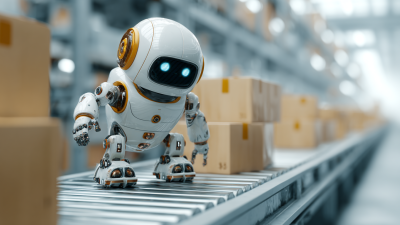
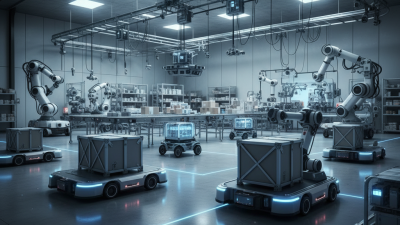
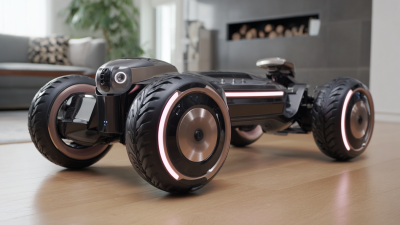
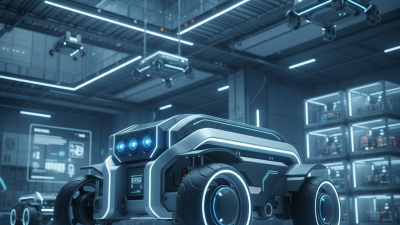
Mobile Robots have really changed the game across so many industries, bringing in fresh solutions for some pretty complicated tasks. These machines are pretty impressive—they can move around and work in real-world environments, navigating through busy spaces and tricky spots. Big names like Boston Dynamics and iRobot are definitely leading the charge and setting pretty high standards in the mobile robot scene. An example that’s caught some attention is theOmni Directional Mobile Robot. That thing can glide smoothly in multiple directions, which makes it super handy—especially in crowded or tight spaces.
Now, let’s talk about what’s awesome about mobile robots. For starters, they boost efficiency and can cut down on labor costs—that’s a win-win, right? Plus, when you have robots handling the tough or repetitive stuff, your human team can focus on the more strategic, creative tasks. But, and this is important, not all robots are built the same. If you’re thinking about getting one, you really need to consider what your specific needs are and what kind of environment it’s going to operate in.
Getting a good grip on what these robots can do is key. Think about things like how much weight they can carry (payload capacity), how long their batteries last, and what kind of navigation systems they have. Of course, while the potential benefits are huge, don’t forget about the challenges like maintenance and figuring out how to weave these new machines into your current systems. Taking the time to do a proper assessment really pays off—it helps make sure you’re making the right call with your investment.
What is a Mobile Robot: Definition and Key Characteristics
Mobile robots are fascinating machines designed to navigate autonomously in various environments. They can vary in size and functionality, offering solutions for multiple industries. A mobile robot often features sensors, cameras, and advanced software to understand its surroundings. These elements enable them to make decisions and carry out tasks.
Key characteristics of mobile robots include their ability to move freely and adapt to different terrains. They can operate indoors or outdoors, whether in warehouses, factories, or hospitals. This flexibility is crucial for enhancing efficiency. Many mobile robots are equipped with obstacle detection systems, ensuring safe navigation. However, challenges remain in complex environments. For instance, distinguishing between stationary and moving obstacles can be difficult.
In practical applications, mobile robots can perform tasks such as material transport, surveillance, and even customer service. Businesses see substantial benefits from these robots, including reduced labor costs and increased productivity. While the technology continues to advance, the future may hold improved reliability and capabilities, addressing current limitations.
Overview of Mobile Robot Technologies and Components
Mobile robots are transforming various industries with their advanced technologies and components. These robots are designed for automation in tasks such as manufacturing, warehousing, and delivery. They can navigate autonomously using sensors, cameras, and algorithms, making them efficient problem solvers.
One critical component is the navigation system. This allows a mobile robot to understand its environment. Lidar and ultrasonic sensors help map surroundings accurately. These technologies enable precise movement. However, some users may find learning to operate mobile robots daunting. Training is often necessary for effective use.
Tips: Start with simple tasks. Gradually move to complex operations. This approach eases the learning curve. Another essential element is communication. Mobile Phone Controlled Robots can receive instructions remotely. This feature offers flexibility in operation. Users should ensure a reliable network connection to avoid interruptions.
While mobile robots offer numerous benefits, challenges exist. Maintenance of components can be tricky. Users may need technical knowledge for troubleshooting. Regular updates on software are also crucial for optimal performance. Embracing these nuances helps in making informed decisions.
Market Trends: Growth and Adoption of Mobile Robots in Industries
Mobile robots are becoming increasingly popular in various industries. Their adoption is driven by the need for efficiency and cost savings. Many organizations are replacing traditional labor-intensive processes with these automated solutions. As industries seek to enhance productivity, mobile robots are stepping into roles such as inventory management and material transport.
In logistics and warehousing, mobile robots streamline operations. They navigate through aisles, transporting goods from one location to another. This reduces manual labor, and errors, and improves speed. However, implementing these systems is not without challenges. Integrating robotics into existing workflows can be complex. Training employees to work alongside robots requires time and resources.
Healthcare is another domain witnessing a surge in mobile robot use. These robots assist with tasks like deliveries and cleaning. They help minimize human contact, promoting safety, especially in sensitive environments. Yet, reliance on technology also raises concerns. What happens if a robot malfunctions? How do we ensure patient safety? These are critical questions that the industry must address as it embraces mobile automation.
Benefits of Mobile Robots in Manufacturing and Warehousing Operations
Mobile robots are transforming manufacturing and warehousing operations. Their agility has made them indispensable. One key advantage is increased efficiency. For instance, a Differential Mobile Robot can navigate around obstacles quickly, optimizing the flow of goods. This helps reduce downtime and enhances productivity in busy settings.
Another benefit is their ability to handle repetitive tasks. Mobile robots can perform the same actions without fatigue. For example, they can transport materials continuously throughout a warehouse. This consistency allows human workers to focus on more complex tasks. In manufacturing, mobile robots gather materials just-in-time for production lines, minimizing delays.
Tips: Consider the layout of your facility before implementation. Understanding the environment helps in choosing the right robot. Also, ensure staff receives proper training. Familiarity with mobile robots increases safety and efficiency. Note that integration can present challenges. Regularly review and adjust your operations for maximum benefit.
Applications of Mobile Robots in Healthcare and Service Industries
Mobile robots have gained significant traction in healthcare and service industries. These Intelligent Mobile Robots can assist in various tasks, making operations smoother and more efficient. In hospitals, they transport medication, supplies, and even meals. This reduces human workload and increases delivery speed. Moreover, they can navigate complex hallways, showcasing advanced pathfinding algorithms.
In the service sector, mobile robots enhance customer experience. They can greet guests or provide information at hotels and restaurants. However, challenges exist. Not all robots can handle unexpected obstacles. Some may struggle with recognizing human emotions, which is essential in hospitality. This gap in emotional intelligence can lead to less satisfying interactions.
Despite these hurdles, the potential for intelligent mobile robots continues to grow. They help reduce labor costs while maintaining quality service. Organizations must invest in training and update software to enhance their capabilities. As technology evolves, so will the applications of these robots, allowing for more dynamic roles in various sectors.
Applications of Mobile Robots in Healthcare and Service Industries
Impact of AI and Machine Learning on Mobile Robot Efficiency
Artificial Intelligence (AI) and Machine Learning (ML) are reshaping the efficiency of mobile robots. The integration of these technologies allows robots to learn from their environment and improve over time. According to a recent study by the International Federation of Robotics, AI-enhanced robots can increase operational efficiency by up to 30%. This impressive figure highlights the significant impact of smart technology in logistics and manufacturing.
For instance, these intelligent systems enable robots to navigate complex spaces effectively. They can adapt to changing environments, reducing downtime and human intervention. However, the reliance on AI also raises concerns. Data security is paramount, and operators must ensure that sensitive information remains protected. As reported in a technology adoption study, 42% of businesses cited cybersecurity as a significant barrier to AI implementation in robotics.
Moreover, the capabilities of AI are not without limitations. The technology can sometimes misinterpret data or fail to adequately predict outcomes in unpredictable situations. This unpredictability can lead to operational inefficiencies. Developers must continuously refine algorithms to address these challenges. Balancing the benefits of AI with its limitations is essential for maximizing mobile robot deployments in various industries.
Future Prospects: Innovations and Challenges in Mobile Robotics
The landscape of mobile robotics is evolving rapidly. Innovations in artificial intelligence and sensor technology are driving this change. Mobile Manipulator Robots, for example, combine mobility with dexterous manipulation. Their applications span various industries such as healthcare, logistics, and agriculture. McKinsey reports that automation could increase global productivity by up to 1.4% annually, underscoring the importance of these robots in enhancing operational efficiency.
However, challenges accompany these innovations. Developing cost-effective solutions remains a barrier for many businesses. According to a recent report by MarketsandMarkets, the mobile robotics market is expected to reach $59 billion by 2026, yet the significant initial investment can deter smaller companies. Additionally, the integration of these robots with existing systems is complex. Adaptability is an issue many organizations face as they transition to automation.
Addressing ethical and safety concerns is also crucial. Ensuring that mobile robots operate safely alongside humans can be daunting. The technology needs continuous refinement to avoid accidents and failures. A study from the IEEE highlights that 30%of robotics projects face significant delays due to unforeseen technical issues. This reality necessitates ongoing investment in testing and improvement. Mobile Manipulator Robots hold great promise, but the path forward requires thoughtful innovation and careful consideration of challenges.
Harnessing Efficiency: The Impact of Mobile Intelligent Unmanned Forklifts on Warehouse Automation and Supply Chain Optimization
The advent of mobile intelligent unmanned forklifts marks a significant shift in warehouse automation and supply chain optimization. These advanced machines offer a powerful solution to meet the challenges of modern logistics, enhancing efficiency and reducing operational costs. Among these innovations, the transportation-type unmanned forklift has proven particularly effective for point-to-point transport across flat surfaces. With a robust capacity of 2000 kg, these forklifts can seamlessly handle various loads, including standard pallets and specialized tooling.
By facilitating automatic cross-floor transportation, these intelligent forklifts enhance workflow in warehouses and distribution centers. They not only minimize manual labor but also improve safety by reducing the likelihood of human errors during loading and unloading processes. This automation allows businesses to streamline their operations, as goods can be moved efficiently between different areas, including through elevators, which is crucial for multi-level facilities. The integration of such technology into supply chains is pivotal; it optimizes resource allocation and speeds up delivery times, ultimately leading to improved customer satisfaction and competitive advantage.
FAQS
: Mobile robots automate tasks in manufacturing, warehousing, and delivery. They enhance efficiency through advanced technologies.
They use sensors and cameras to understand their surroundings. Lidar and ultrasonic sensors help with accurate mapping.
Yes, training is often necessary. Users may find initial operation challenging without proper guidance.
Maintenance can be tricky, and technical knowledge is sometimes needed for troubleshooting. Regular software updates are essential.
Yes, they assist in hospitals by transporting medication and supplies, which reduces human workload and increases efficiency.
Some robots struggle with recognizing human emotions. This can lead to less satisfying interactions, especially in hospitality.
AI enables robots to learn from their environment, increasing operational efficiency by up to 30% in some cases.
Protecting sensitive information is crucial. Many businesses view cybersecurity as a barrier to implementing AI in robotics.
Yes, AI can misinterpret data or fail in unpredictable situations. Continuous refinement of algorithms is necessary.
By balancing the benefits of AI with its limitations and investing in training and software updates.
Conclusion
Mobile robots are autonomous machines designed to navigate and perform tasks in various environments, characterized by their ability to move and operate with minimal human intervention. These robots are equipped with advanced technologies and components, including sensors, cameras, and AI-driven software, enabling them to efficiently perform a wide range of applications. The current market shows a significant growth trend, particularly in sectors such as manufacturing, warehousing, healthcare, and service industries, where mobile robots enhance operational efficiency and reduce labor costs.
Moreover, the integration of AI and machine learning continues to improve mobile robot capabilities, allowing for more sophisticated task execution and real-time decision-making. Looking ahead, innovations in mobile robotics promise to further revolutionize industries, although challenges such as technological limitations and safety concerns remain. Overall, mobile robots are proving to be essential assets in modern operational frameworks, driving automation and efficiency across various sectors.