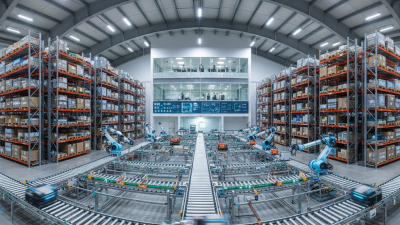
In today’s fast-moving warehouse world, getting your Automated Pallet Racking right is kinda crucial if you want things to run smoothly. This system can really boost how much stuff you can store and cut down the time it takes to find things. But here’s the thing—lots of companies miss some pretty important details that can actually make or break the performance.
You’ve gotta take a good look at your current racking setup. If it’s not really optimized, you’re probably wasting space and wasting time, too. Automated Pallet Racking isn’t just about being convenient; it’s gotta fit your workflow perfectly. And don’t forget—regular maintenance is super important but often gets overlooked.
Also, investing in proper training for your team can make a big difference. When your staff really understand how to work with the system, it runs a lot smoother. So, the real secret to making Automated Pallet Racking work for you isn’t just about installing it and forgetting about it. It’s a continuous process—small tweaks and improvements over time. Thinking about these things and making adjustments can seriously boost productivity and efficiency down the line.

Automated pallet racking systems offer numerous advantages for modern warehousing. They maximize storage space while enhancing retrieval efficiency. These systems can reduce labor costs significantly. With automation, workers spend less time searching for products. Instead, they focus on other essential tasks.
Tip: Regularly evaluate your automation setup. Are you using all available space effectively? Consider the height of your racking. Proper configuration can lead to even greater efficiency.
Automated systems also improve inventory accuracy. They minimize human error during order picking. This leads to better customer satisfaction. But, issues can arise. Not all products are suited for automation. Odd-sized or fragile items may require special handling.
Tip: Continuously monitor system performance. Track retrieval times and order accuracy. Adjust your processes as necessary. Automation should evolve with your inventory needs. Experiment with your racking layouts when changes happen. Always look for improvement.
To measure efficiency in automated pallet racking systems, key metrics play a crucial role. These metrics help firms understand space utilization, order accuracy, and throughput rates. According to the Warehouse Optimization Report 2023, effective utilization of vertical space can enhance storage capacity by up to 50%. However, this optimization often comes with challenges in maintaining accurate stock levels.
Order accuracy is another vital metric. A recent survey revealed that approximately 72% of warehouses struggle with picking errors. This not only affects customer satisfaction but also increases operational costs. Implementing technology like RFID can improve accuracy by reducing human error. Adopting such solutions requires investment and training, which some organizations may overlook.
Throughput rates define how quickly goods move through the system. A peak efficiency rate can be as high as 95%, yet many facilities fall short. Factors like staff training, equipment maintenance, and layout adjustments significantly impact these rates. Without regular assessments, companies may find themselves operating below potential, missing out on substantial operational improvements.
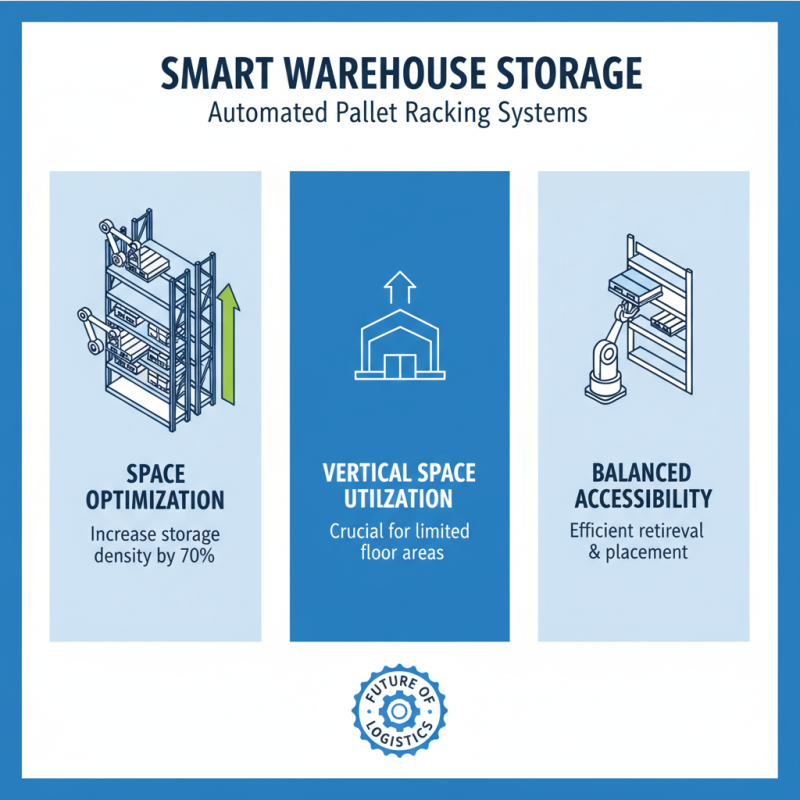
Designing an automated pallet racking system requires careful consideration of space optimization. A recent industry report highlights that systems can increase storage density by 70% when designed effectively. This space-saving feature is crucial for warehouses facing limited floor areas. Utilizing vertical space helps significantly, but it must be balanced with accessibility.
Adjusting shelf heights based on inventory turnover is essential. High-demand items should be placed at eye level. This reduces picking time. A study from the Warehousing Education and Research Council shows that optimizing picking paths can decrease travel time by 30%. However, poorly designed layouts can lead to inefficiencies, such as unnecessary congestion and longer retrieval times.
It's also vital to consider the equipment used in these systems. Forklift designs vary, and some might not suit your specific racking layout. An incompatible design can cause safety hazards or slow down operations. Regular audits and reviews of system performance provide insights into inefficiencies. These adjustments can lead to improved workflows and higher productivity.
Automated pallet racking systems are evolving swiftly. Robotics integration enhances efficiency but comes with challenges. According to a recent industry report, companies using robotics in warehousing can increase productivity by 30%. However, implementing this technology is not without its issues. Regular maintenance is crucial. An unexpected breakdown can disrupt operations for hours.
Integrating robotics with Automated Racking means ensuring compatibility. Not all systems work seamlessly together. The layout of the warehouse affects efficiency too. A report from the Warehousing Education and Research Council indicates that optimizing space can lead to a20% increase in storage capabilities. Yet, without careful planning, companies may find their robotic systems underutilized. Regular assessments are vital.
Employee training also cannot be overlooked. Human oversight is essential, even in automated environments. A study found that warehouses with well-trained staff see 40% fewer errors. While automation promises speed, relying solely on it may lead to mistakes. Balancing technology and human input remains a priority. This is where the real challenge lies.
Optimizing automated pallet racking can significantly enhance warehouse efficiency. A vital part of this process is the role of inventory management software. This software helps track inventory levels in real time. It offers valuable insights into stock movement. When implemented correctly, it can reduce retrieval times and ensure better space utilization.
Tips for improving efficiency with software include regularly updating stock data. Incorrect data can lead to confusion, causing delays. Also, integrate mobile scanning solutions to streamline the process. Employees can quickly locate products with ease. Clear training on using this software can also minimize errors.
It’s essential to analyze the current setup. Many warehouses overlook how layout impacts efficiency. If the racking system is too complex, it might slow down operations. Regularly review inventory turnover rates. If items sit too long, adjustments may be necessary. Adapting to these reflections can lead to significant improvements in workflow.
Automated pallet racking systems can greatly enhance warehouse efficiency. Case studies provide valuable insights into successful implementations. One example is a distribution center that increased storage capacity by 30% using automated solutions. They were able to decrease retrieval times significantly, leading to faster order fulfillment.
Tips for optimizing these systems often emphasize proper layout. Ensure aisles are wide enough for the machinery. This prevents bottlenecks and reduces the risk of accidents. Another key aspect is regular maintenance. Neglecting this can lead to unforeseen downtime that hampers efficiency.
Not all implementations are successful at first. One facility struggled with their initial setup. The automated system did not align with their inventory flow. They had to reconfigure their layout to maximize functionality. Reflecting on your processes is crucial. Adjustments may be needed for optimal results. Continuous improvement is the path to efficiency.
The future of automated pallet racking is intertwined with emerging technology and efficiency trends. Smart systems will lead the way. These systems use sensors and AI to optimize storage space and retrieval processes. In warehouses, real-time data is essential. Managers can make quick decisions, reducing downtime and improving workflow.
However, efficiency isn't just about technology. Human factors must also be considered. Training staff to work effectively with advanced systems is crucial. Mistakes can occur due to lack of understanding. Moreover, it’s vital to evaluate these systems regularly. Sometimes, changes may not yield the expected outcomes. Fine-tuning processes can enhance overall productivity.
Future trends include the integration of robotics. Automated Guided vehicles can transport pallets seamlessly. Yet, relying too heavily on automation carries risks. Technical failures can disrupt operations. Balancing automation with human oversight remains a challenge. Continuous reflection on these aspects will help shape a more efficient future in automated pallet racking.
| Dimension | Current Value | Expected Improvement (%) | 2026 Target Value |
|---|---|---|---|
| Cycle Time (minutes) | 15 | 20 | 12 |
| Storage Density (units/m²) | 10 | 30 | 13 |
| Energy Consumption (kWh) | 2000 | 15 | 1700 |
| Order Picking Accuracy (%) | 95 | 5 | 98 |
| Maintenance Downtime (hours/year) | 100 | 50 | 50 |
: The content aims to inform and educate readers on specific topics.
Engaging with various resources and practicing regularly can help.
Yes, overlooking details or rushing through practice can hinder progress.
Online courses, tutorials, and community forums can be very helpful.
Consistent daily practice, even for a short time, is beneficial.
Yes, beginners can learn effectively with the right approach and resources.
Frustration and confusion are common but can lead to growth.
Absolutely, struggling is part of the learning process.
Setting small goals and celebrating achievements can maintain motivation.
Taking breaks and revisiting basics can help ease feelings of overwhelm.
Automated Pallet Racking systems have revolutionized modern warehousing by enhancing efficiency and maximizing space utilization. Key benefits include improved inventory management, reduced labor costs, and increased operational speed. To measure the effectiveness of these systems, organizations must focus on essential metrics that reflect their operational performance.
Design considerations play a critical role in optimizing these racking solutions, ensuring that space is utilized effectively while facilitating seamless integration of robotics and automation into the workflow. Additionally, advanced inventory management software enhances the accuracy and speed of operations within Automated Pallet Racking systems. Case studies demonstrate successful implementations that have significantly improved efficiency, while future trends indicate ongoing advancements that promise even greater optimization in this field.