You know, in the fast-changing world of logistics and supply chain management, bringing Autonomous Warehouse Robots (or AWRs) into the mix has really become a game-changer for companies looking to boost efficiency. I read in a report from Logistics Management that by 2026, the warehouse automation market could hit around $30 billion — that’s a huge jump, showing just how much businesses are leaning on these robotic solutions. These tech advancements aren’t just about making inventory management smoother; they also help cut down on labor costs, which, according to some McKinsey stats, can make up as much as 65% of total warehouse expenses — no small potatoes.
Looking ahead to 2025, it’s clear that deploying AWRs is set to shake up the old-school warehousing game. Deloitte recently analyzed this trend and found that companies using autonomous tech could see their productivity shoot up by nearly 50%. Plus, these robots aren’t here to replace humans—they’re designed to work alongside us, making the whole supply chain more efficient. This is especially important given the labor shortages we’ve seen post-pandemic. All in all, smartly integrating Autonomous Warehouse Robots isn’t just an exciting opportunity for businesses — it’s also laying the groundwork for a more flexible, resilient logistics system down the road.
The Rise of Autonomous Warehouse Robots: A 2025 Market Overview
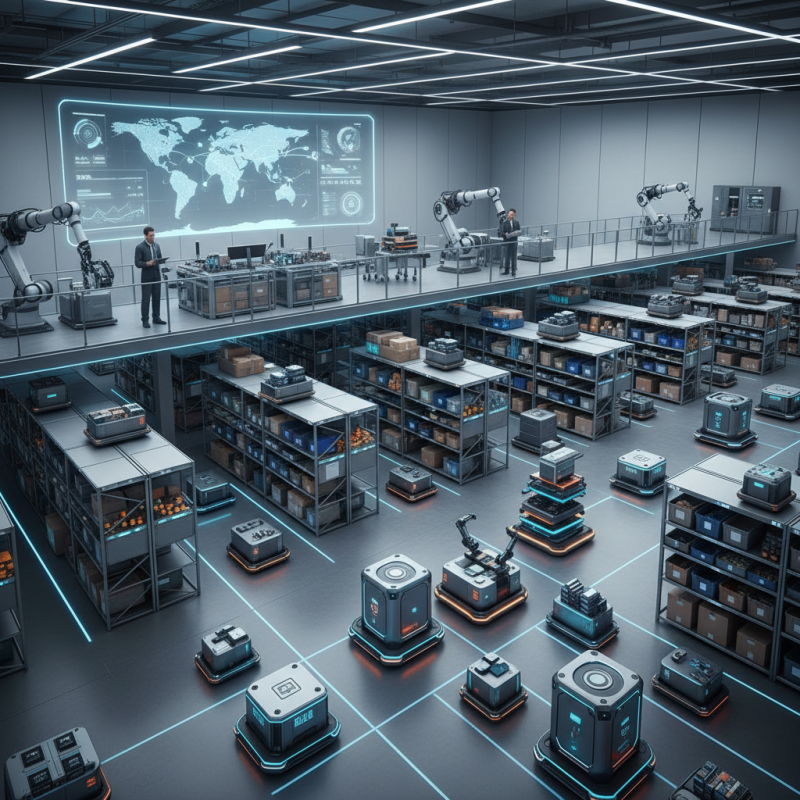
The rise of autonomous warehouse robots marks a transformative shift in the logistics and supply chain sectors. With advancements in artificial intelligence and robotics, these automated systems are becoming integral to warehouse operations. By 2025, the market for autonomous robots is projected to witness exponential growth, driven by the need for efficiency and the reduction of labor costs. These robots are designed to handle a range of tasks including sorting, picking, and packing, enabling warehouses to operate with unprecedented speed and accuracy.
As businesses increasingly adopt these technologies, the landscape of inventory management is poised for significant change. Autonomous warehouse robots not only enhance operational efficiency but also improve safety by reducing the risk of accidents associated with manual labor. Furthermore, they enable real-time data collection and analysis, allowing for better decision-making and inventory control. The integration of these robots into supply chains will likely lead to streamlined processes, lower operational costs, and improved service levels, positioning companies to meet the demands of a fast-evolving market. The future of warehousing is not just about automation; it's about creating smarter and more adaptive supply chains.

Key Technologies Enabling Autonomous Warehouse Robotics in Supply Chains
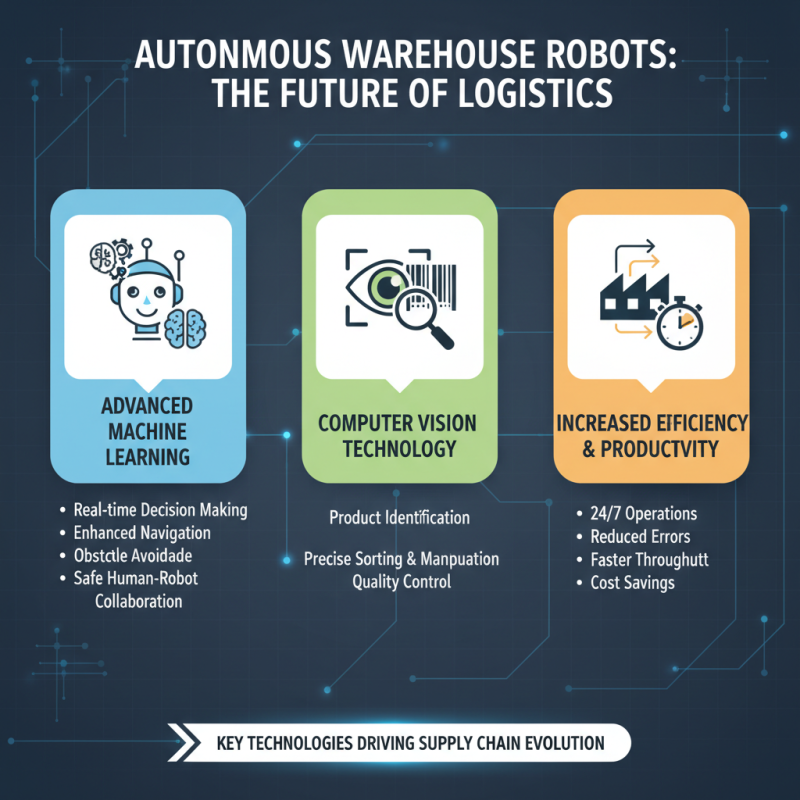
As supply chains evolve, autonomous warehouse robots are becoming essential for efficiency and productivity. Key technologies driving this transformation include advanced machine learning algorithms that allow robots to better understand their surroundings and make real-time decisions. These algorithms enhance navigation and obstacle avoidance, enabling robots to operate safely alongside human workers and other automated systems. Additionally, computer vision technology plays a crucial role, allowing robots to identify, sort, and manipulate a diverse range of products with precision.
Another critical technology is the Internet of Things (IoT), which enables seamless communication between robots and the warehouse management system. This connectivity provides real-time data on inventory levels, shipment statuses, and equipment performance, facilitating smarter logistics and more responsive supply chain operations. Furthermore, advancements in robotics hardware, such as improved sensors and more robust actuators, have led to greater flexibility and scalability in warehouse automation, allowing businesses to adapt quickly to changing market demands while optimizing operational costs.
Together, these enabling technologies not only enhance the capabilities of autonomous warehouse robots but also create a more resilient supply chain that can better withstand disruptions and fluctuating consumer demands. By leveraging these innovations, companies can streamline their logistics processes, reduce labor costs, and ultimately improve their overall competitiveness in the marketplace.
Impact of Robotics on Warehouse Efficiency and Productivity Metrics
The integration of autonomous warehouse robots is transforming the logistics landscape, with a pronounced impact on efficiency and productivity metrics. According to a report by McKinsey & Company, automation in warehousing can enhance operational efficiency by up to 30%. These robots streamline various processes such as inventory management, order picking, and material handling, significantly reducing the time required for these tasks. For instance, robots equipped with advanced AI algorithms can locate and pick items more quickly than human workers, decreasing the cycle time for fulfilling customer orders.
Moreover, a study from the Warehouse Education and Research Council (WERC) indicates that warehouses utilizing autonomous robots report a productivity increase of approximately 20-35%. This surge in productivity arises from the robots’ ability to operate 24/7 without fatigue, thus maximizing throughput. The use of robots also minimizes human error, leading to improved accuracy in order fulfillment and inventory tracking. With such remarkable metrics, the adoption of autonomous robots in warehouses is poised to redefine operational benchmarks in the logistics sector. By 2025, as these technologies become more prevalent, companies that leverage autonomy in their supply chains are likely to gain a significant competitive edge.
How to Optimize Your Supply Chain with Autonomous Warehouse Robots in 2025
| Metric | Current Value (2023) | Projected Value (2025) | Impact of Robotics |
| Order Fulfillment Time (Hours) | 48 | 30 | Reduction of 37.5% |
| Inventory Accuracy (%) | 85 | 98 | Increase of 15% |
| Labor Costs ($/hr) | 20 | 15 | Decrease of 25% |
| Throughput (Orders/Hour) | 100 | 150 | Increase of 50% |
| Operating Costs (% of Revenue) | 15 | 10 | Decrease of 33.3% |
Cost-Benefit Analysis: Investing in Autonomous Robots vs. Manual Labor
Investing in autonomous warehouse robots can transform logistics operations, but a thorough cost-benefit analysis is crucial. On one hand, the up-front investment in robots can be substantial, potentially straining initial budgets. However, the long-term savings can be significant, as autonomous robots can operate continuously, reducing labor costs and minimizing human error. Additionally, their ability to optimize inventory management and streamline processes can lead to increased productivity.
Tips for evaluating this investment include assessing the scale of your warehouse operations and the complexity of tasks that robots would handle. Consider conducting a pilot program with a small fleet of robots to gauge the return on investment before fully committing. Additionally, factor in the potential for enhanced worker safety, as robots can take on heavy lifting and repetitive tasks, allowing human workers to focus on more strategic roles.
When comparing costs, it's essential to include not only the purchase and maintenance of robots but also savings on labor and operational efficiencies gained over time. Calculate the projected downtime savings and increased accuracy in order fulfillment to better understand the financial upside. Investing in autonomous robots requires a shift in thinking, but the long-term benefits can outweigh the initial costs, making it a worthy consideration for any forward-thinking supply chain.
Integrating Autonomous Robots with Existing Warehouse Management Systems
The integration of autonomous robots within existing warehouse management systems (WMS) is poised to revolutionize supply chain efficiency by 2025. These robots can seamlessly align with current systems, enhancing operational workflows while minimizing disruptions. Warehouse management systems are crucial for overseeing inventory levels, order processing, and logistics. By employing robots that utilize advanced algorithms and machine learning, organizations can ensure real-time data synchronization, which helps in optimizing inventory management and reducing picking errors.
 Moreover, the collaborative nature of autonomous robots allows for dynamic interaction with human workers. This partnership not only improves task allocation but also enables a more flexible response to changing demands and unexpected challenges in warehouse environments. As these robots can easily adapt to existing software platforms, they facilitate smoother operations, ensuring continuity and reliability. This integration fosters an agile supply chain capable of adjusting quickly to market fluctuations, ultimately leading to greater customer satisfaction and improved bottom-line performance for businesses embracing this technology.
Future Trends: Predictive Analytics and AI in Warehouse Robotics
The integration of predictive analytics and artificial intelligence (AI) in warehouse robotics is set to revolutionize supply chain operations by 2025. According to a report by McKinsey, the implementation of AI in supply chain management can lead to a 30% reduction in logistics costs and a 20% increase in service levels. This shift is driven by the ability of predictive analytics to analyze vast data sets in real-time, allowing businesses to anticipate inventory needs, optimize storage layouts, and streamline order fulfillment processes.
To harness the full potential of these technologies, companies should begin by investing in training their workforce to understand AI-driven tools. Collaborating with tech providers can also facilitate seamless integration into existing systems. Implementing a pilot program for robotics in your warehouse can serve as a valuable testing ground to identify the most efficient workflows before full-scale deployment.
Another vital aspect is maintaining data integrity. As noted by Gartner, poor data quality costs organizations an average of $15 million per year. Therefore, employing robust data management practices will ensure that analytics yield accurate insights, helping optimize operations effectively. Regular audits of data inputs and processes will enhance reliability, leading to more informed decision-making and improved overall performance within the supply chain ecosystem.
Warehouse Robotics in 2025: Adoption Rates of Technologies
Case Studies: Companies Successfully Implementing Autonomous Robots in 2025
In 2025, companies across various sectors have increasingly turned to autonomous warehouse robots to streamline operations and enhance productivity. One notable example is a logistics provider that implemented a fleet of autonomous vehicles that navigate through complex warehouse environments without human intervention. By utilizing advanced machine learning algorithms, these robots can efficiently sort, store, and retrieve products, drastically reducing the time and labor costs associated with traditional warehousing methods. The integration of these robots has not only improved operational efficiency but has also enabled the company to scale its services rapidly in response to fluctuating demand.
Another case study showcases a retail giant that adopted autonomous robots to manage inventory. These robots conduct real-time stock checks and organize merchandise within the warehouse, ensuring optimal inventory levels and reducing the incidence of stockouts. The automation of these repetitive tasks has allowed employees to focus on higher-value activities such as customer service and strategic planning. The positive impact of these robots is evident in the improved accuracy of order fulfillment and reduced operational delays, which ultimately enhance customer satisfaction and loyalty. As these success stories demonstrate, the deployment of autonomous warehouse robots in 2025 is a transformative step towards achieving a more efficient and responsive supply chain.
Optimizing Logistics Efficiency with Intelligent Three-Dimensional Warehouse Conveying Systems
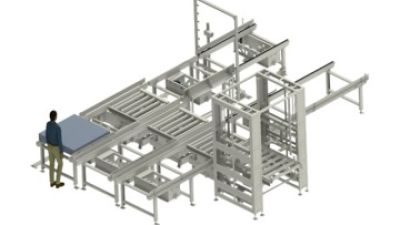
In the modern logistics landscape, the optimization of warehouse operations has become paramount for businesses striving to maintain a competitive edge. The intelligent three-dimensional warehouse conveying system stands at the forefront of this evolution, comprising essential components such as chain conveyors, dismantling and stacking machines, top lifting and transplanting machines, and roller conveyors. This sophisticated system leverages advanced hardware and software technologies, alongside intelligent algorithms, to enhance storage efficiency, expedite retrieval processes, and ensure meticulous inventory management.
According to a report by the Logistics Management Association, the integration of intelligent conveying systems can boost warehouse space utilization by up to 30%, while significantly reducing order processing times. This is crucial as the demand for faster and more accurate fulfillment solutions rises; research indicates that 70% of companies consider improvements in warehouse automation vital to stay relevant. The intelligent three-dimensional design of these systems not only maximizes vertical space but also minimizes the footprint of traditional storage modes, allowing for higher-density storage solutions that adapt to various inventory types.
Moreover, cases in point illustrate that companies implementing these advanced systems report a notable decrease in operational costs—averaging around 20%—and a decrease in labor dependency, contributing to consistent productivity enhancements. By embracing intelligent technologies within their warehouses, businesses are set to achieve remarkable gains in efficiency and accuracy, heralding a new era in logistics management.
FAQS
: Key technologies include advanced machine learning algorithms for real-time decision-making, computer vision for product identification and manipulation, and the Internet of Things (IoT) for enabling seamless communication between robots and warehouse management systems.
Machine learning algorithms allow robots to better understand their surroundings, enhancing navigation and obstacle avoidance, which enables safe operation alongside human workers and other automated systems.
Computer vision technology enables robots to identify, sort, and manipulate a wide range of products with precision, significantly improving operational efficiency.
The IoT allows for real-time data communication between robots and warehouse management systems, providing crucial information on inventory levels, shipment statuses, and equipment performance to enhance logistics operations.
Improvements in sensors and actuators are leading to greater flexibility and scalability in warehouse automation, allowing businesses to adapt quickly to market changes while optimizing costs.
Autonomous robots can align with current warehouse management systems, enhancing operational workflows and ensuring real-time data synchronization to optimize inventory management and reduce picking errors.
This collaboration improves task allocation and enables more flexible responses to changing demands and unexpected challenges in the warehouse environment.
By facilitating smoother operations and ensuring reliable continuity, the integration of autonomous robots fosters an agile supply chain that can quickly adjust to market fluctuations and enhance customer satisfaction.
Businesses can streamline logistics processes, reduce labor costs, and improve overall competitiveness by embracing the innovations provided by autonomous warehouse robotics.
Conclusion
The article "How to Optimize Your Supply Chain with Autonomous Warehouse Robots in 2025" highlights the transformative potential of Autonomous Warehouse Robots in modern supply chains. As we look towards 2025, these robots are set to play a crucial role, driven by advancements in key technologies such as AI and predictive analytics. The integration of Autonomous Warehouse Robots can significantly enhance warehouse efficiency and productivity, offering a compelling cost-benefit analysis when compared to traditional manual labor.
Furthermore, the article emphasizes the importance of successfully integrating these autonomous systems with existing warehouse management frameworks. By showcasing case studies of companies that have effectively implemented Autonomous Warehouse Robots, it illustrates the future trends and capabilities that will shape the logistics landscape, ultimately transforming how businesses operate and optimize their supply chain processes.