In today’s fast-moving business world, using an Automated Retrieval System has become pretty much essential if you want to keep things running smoothly. I mean, a report from MarketsandMarkets estimates the global warehouse automation market will hit around $30 billion by 2026. That’s a huge jump, and honestly, it shows how much companies are leaning on tech to handle data more efficiently. Just look at Amazon—they’re pretty much setting the bar, showing everyone how automated systems can really up their inventory game.
That said, getting an Automated Retrieval System up and running isn’t always smooth sailing. Many organizations bump into issues like integrating the new tech with existing systems or training staff on how to use it properly. A McKinsey study even pointed out that about 70% of digital transformation efforts end up failing. That’s a reminder—success isn’t just about having the latest gadgets; it’s about planning carefully and making sure everyone understands what’s going on.
Paying attention to the little details really matters if you want your Automated Storage And Retrieval System to work well. Regularly checking how users are interacting with the system can give you helpful hints on what might need fixing. And honestly, companies need to stay flexible and open to feedback—that’s how you really make improvements. To get the most out of these systems, you’ve gotta find that sweet spot between the tech itself and human insight—because at the end of the day, it’s not just about gadgets, but about people working smarter, too.

Understanding Automated Retrieval Systems and Their Functionality
Automated Retrieval Systems (ARS) play a crucial role in efficiently managing and accessing data. These systems utilize algorithms to sift through vast amounts of information and retrieve relevant content based on user queries. According to recent industry reports, about 60% of organizations leverage automated systems for data retrieval, underscoring their significance. However, their efficiency hinges on proper understanding and usage.
To use ARS effectively, users should specify their queries clearly. Vague queries often lead to irrelevant results. Setting precise keywords improves retrieval accuracy. Remember, ARS cannot interpret user intent fully. Therefore, refining your queries is essential.
Another tip is to continuously evaluate the outcome of searches. Regularly assessing retrieved data helps in adjusting parameters for better performance. Many users overlook this aspect. They accept results without question. By analyzing what works and what doesn’t, you can refine your approach over time. Moreover, staying updated on ARS capabilities and limitations is vital. Understanding that these systems are not infallible encourages users to manage their expectations accordingly.
Benefits of Using Automated Retrieval Systems in Information Management
Automated retrieval systems revolutionize information management. They reduce time spent searching for items. Users can quickly access records, documents, or products. Efficiency increases, but it comes with challenges. Training staff to use these systems effectively is crucial. Without proper training, users may feel overwhelmed.
Another benefit lies in improved accuracy. An Automated Item Retrieval System minimizes human error. This leads to better data management. However, relying too heavily on automation can create blind spots. Staff may miss critical information in their reports. They should always supplement automated processes with manual checks.
Integrating these systems also supports data analysis. Trends become easier to identify over time. Teams can develop insights based on retrieval patterns. Yet, organizations must be cautious when interpreting data. Misleading conclusions can arise from misconfigurations. Continuous evaluation of data quality is essential for success.
Key Features to Look for in an Automated Retrieval System
When selecting an automated retrieval system, consider essential features that enhance efficiency. A strong keyword search capability is crucial. It should allow users to input phrases and receive relevant results without extensive effort. This feature saves time and reduces frustration.
Another vital aspect is user-friendly interface design. A complex system can hinder productivity. Systems that offer customizable dashboards stand out. Users should access data with ease. A clear layout can streamline the retrieval process, making it less overwhelming.
Also, integration with existing tools is ideal. Systems should work with other applications seamlessly. This integration minimizes disruptions and enhances workflow. However, it's important to reflect. Are all features truly necessary? Can an overly complex system create confusion? Assessing these points can lead to more effective usage.
Best Practices for Setting Up Automated Retrieval Systems
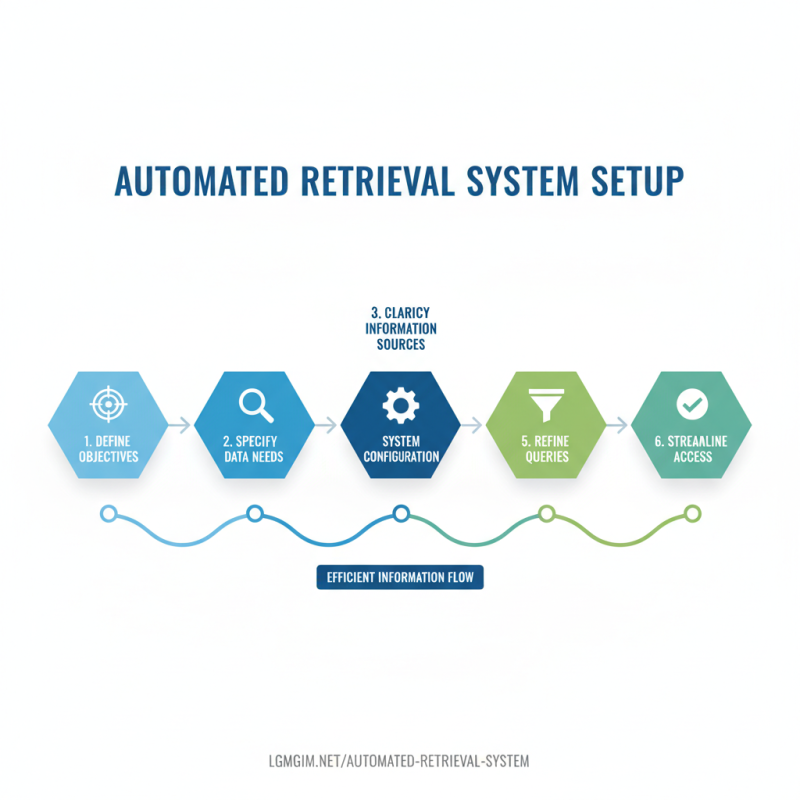
Setting up an Automated Retrieval System can streamline information access. Begin by clearly defining your objectives. Knowing what data you need will guide your system's configuration. This step is critical. Without clarity, you may end up with irrelevant results. Be specific about the sources of information. This helps narrow down your queries effectively.
Next, select the right tools and technologies. Not every tool fits every need. Some may offer advanced features but could be too complex. Test different systems before full deployment. Make sure your team is comfortable using the system. User training is often overlooked. Untrained staff can lead to ineffective system usage. Encourage feedback from users to improve the setup. Mistakes will happen. Examine them and adapt your processes accordingly.
Automation does not eliminate oversight. Regularly review the data being retrieved. Ensure it aligns with your expectations. You might find that the initial setup needs adjustments. Refine your settings based on user feedback and data accuracy. The goal is to create a seamless experience with your Automated Retrieval System. Stay flexible and open to improvement.
Strategies for Optimizing Search Queries in Retrieval Systems
Automated retrieval systems have transformed how we manage information. To optimize search queries, it's essential to grasp the strategies at hand. According to a 2022 study, nearly 70% of users experience frustration with retrieval accuracy. This highlights the need for refined search techniques.
Focus on keyword variations. Use synonyms and related terms to enhance search results. A study by the International Fact-Checking Network in 2023 found that including various forms of keywords improved retrieval success by 40%. This approach is crucial for systems like CE Certification Automated Storage And Retrieval System, where specificity matters.
Consider context as well. Queries should reflect the user’s intent. Sometimes, a simple keyword will not suffice. Instead, phrases that capture the meaning behind a query yield better outcomes. A report by the Search Engine Research Group showed that users who refined their context achieved 50% more accurate results.
Don’t overlook testing. Experiment with different query formats. Analyze which combinations yield the best results. This iterative process is vital. The landscape of automated retrieval is always changing, and continuous adaptation is necessary.
Top Tips for Using Automated Retrieval Systems Effectively
| Tip | Description | Benefit |
| Use Specific Keywords | Refine your search by including specific terms relevant to your subject. | Increases accuracy of search results. |
| Utilize Boolean Operators | Combine keywords with AND, OR, NOT for better query precision. | Enhances the relevance of search results. |
| Apply Filters Effectively | Narrow down results using filters such as date, type, or subject. | Saves time by showing only relevant information. |
| Review Advanced Search Options | Explore advanced search features to make the most of the retrieval system. | Maximizes the potential of search queries. |
| Save Successful Queries | Keep a record of effective queries for future searches. | Facilitates quicker access to valuable data. |
Common Challenges and Solutions in Automated Retrieval Systems
Automated retrieval systems offer tremendous potential for efficiency. However, they also face common challenges that can hinder effectiveness. A study from AI Insights indicates that nearly 40% of users struggle with data accuracy. Often, the algorithms fail to retrieve relevant information, leading to frustration. Additionally, over 50% of organizations report issues with user training. Employees may not fully understand the system, which results in underutilization.
Another significant challenge is the integration of automated systems with existing technologies. According to Tech Innovations Report, 35% of companies find this integration process daunting. Redundant processes can arise, wasting time and resources. Meanwhile, data security remains a top concern. The Cybersecurity Institute notes that 45% of organizations fear potential breaches when implementing automated systems.
Feedback from users is crucial in addressing these challenges. Regular system updates and training sessions can enhance understanding and reduce errors. Personalizing retrieval systems based on user needs also proves effective. Ultimately, combating these issues requires a proactive approach and continuous improvement.
Continuous Improvement: Monitoring and Evaluating System Performance
Monitoring and evaluating system performance is crucial for effective use of automated retrieval systems. Regular checks can reveal bottlenecks and inefficiencies. Are employees trained properly? Are there data entry errors? Evaluating these factors can lead to improvements. Gathering feedback from users is also essential. Their insights can uncover hidden issues that numbers alone may not show.
Continuous improvement involves setting measurable goals. If you want to enhance your High-Quality Automated Storage And Retrieval System, consider metrics like retrieval speed and accuracy. Analyze patterns over time. Are retrieval times increasing? A decline might indicate a need for system adjustments. Additionally, testing different configurations can provide lessons for optimization.
Reflections on failure are important, too. Not every attempt will yield the desired results. Experimentation might sometimes lead to unexpected outcomes. Document these instances for future learning. By fostering an environment of continuous evaluation and adaptation, organizations can maximize the benefits of automated systems effectively.
Enhancing Warehouse Efficiency: Insights from Industry Reports on the Linyi Lingong Intelligent Shelf System's Impact on Inventory Management
In the quest for enhancing warehouse efficiency, the integration of advanced shelving systems has proven to be pivotal. The Linyi Lingong Intelligent Shelf System exemplifies how innovative storage solutions can significantly impact inventory management. This system leverages technology to optimize space utilization, streamline operations, and reduce the time required for inventory retrieval. By employing intelligent algorithms, it not only organizes stock more effectively but also provides real-time data analytics, allowing warehouse managers to make informed decisions that enhance logistical efficiency.
Among the various shelving options available, cow leg shelving stands out as a practical choice. Characterized by its robust construction, this storage solution consists of multi-layer boards supported by uniquely designed feet resembling cow legs. The use of steel for the columns and beams ensures high load-bearing capacity and long-lasting durability, making it suitable for diverse storage needs. This design facilitates easy access and maximizes vertical space, while its sturdy build ensures that warehouses can handle heavy-duty items without compromising safety or performance. Such features are integral to modern inventory management, where efficiency and reliability are paramount.
FAQS
: The product aims to simplify daily tasks and enhance productivity.
Anyone looking to improve efficiency can find value in it.
It offers intuitive features and real-time feedback, but may require adjustment time.
Some users may encounter a learning curve. Not all features may suit every user.
Occasionally, users report technical glitches. Patience is key when troubleshooting.
Users can share insights via online forums or customer support channels.
Users are encouraged to reflect on their needs and explore alternative solutions.
Conclusion
Automated Retrieval Systems play a crucial role in enhancing information management by streamlining the process of data retrieval and improving access to relevant information. Understanding their functionality is essential for leveraging their benefits, which include increased efficiency and reduced manual effort in information handling. When selecting an Automated Retrieval System, key features such as user-friendly interfaces, advanced search capabilities, and robust security measures should be prioritized.
To maximize the effectiveness of these systems, best practices must be followed during setup, including clear indexing and categorization of data. Additionally, optimizing search queries is vital for obtaining accurate results and improving user experience. Common challenges such as system integration and data accuracy can be addressed through strategic planning and continuous monitoring. Regular evaluation allows for ongoing improvements, ensuring the Automated Retrieval System remains effective and aligned with organizational needs.