Picking out the top 10 Differential Mobile Robot manufacturers isn't just about glancing at product photos or checking out advertised payloads. A solid review digs into things like drive architecture, how well they navigate, safety features, how easily their software plays nice, coverage of support services, and what they'll cost to keep running long-term. In a real warehouse, these robots gotta turn smoothly around pallet racks, stop reliably when near workers, and bounce back quickly if they bump into something unexpected. Honestly, the little details really do matter.
This guide highlights some well-known companies like Mobile Industrial Robots, OTTO Motors, OMRON, Geekplus, ForwardX Robotics, SEER Robotics, ABB, Zebra Technologies, AgileX Robotics, and Robotnik Automation — but keep in mind, their solutions are pretty different. Some are mainly built for warehouse transport, while others are better suited for research, inspection, or handling industrial materials. So, what’s best really depends on your environment—floor conditions, payload needs, how big your fleet is, and how you want everything integrated. Not every top-name brand is the perfect fit for every site.
And, of course, real-world experience makes all the difference. A robot that shines during a demo might have a hard time on reflective floors, in super tight aisles, or under tricky lighting. Things like how easy it is to swap out batteries, find spare parts, or train your staff often get overlooked—and those are super important. This review sticks to practical criteria rather than just repeating manufacturer claims, marketing specs, or awards. But hey, information available publicly isn’t everything—product features can change after you read this, so always double-check current specs, support options in your region, safety docs, and references from other users before making a call. The rankings can be helpful, sure, but at the end of the day, your real conditions will decide what’s right for you.
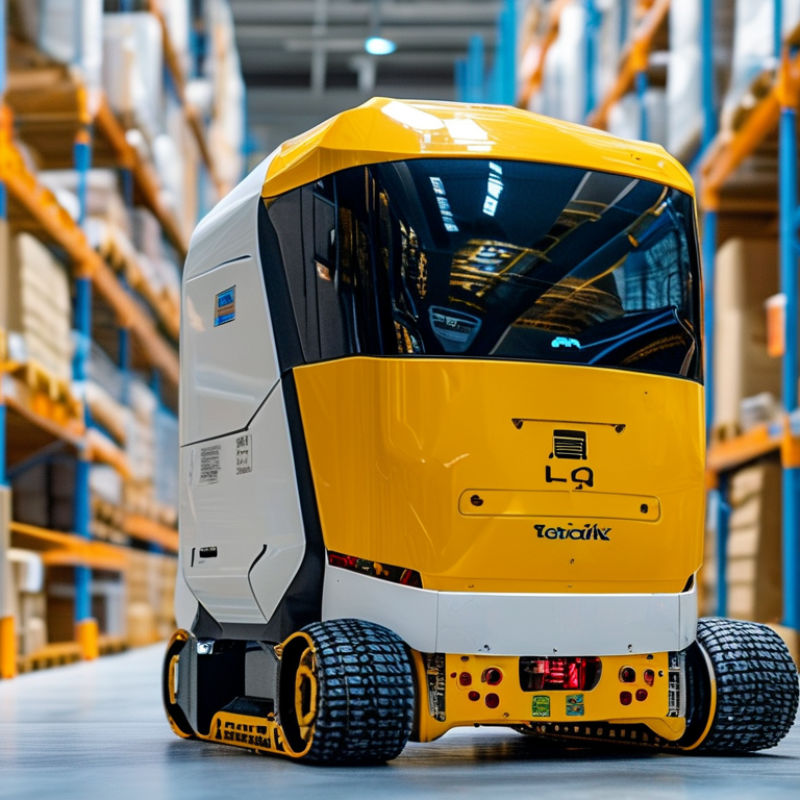
What Is a Differential Mobile Robot?
What Is a Differential Mobile Robot?
A differential mobile robot moves by controlling two powered wheels independently. Each wheel can rotate forward, reverse, or at a different speed. This simple arrangement changes direction without a steering axle. Small caster wheels may support the chassis.
When both drive wheels turn equally, the robot travels straight. When one wheel slows, the platform follows a curve. When both turn oppositely, it can rotate almost in place. This tight turning radius suits narrow aisles, laboratories, hospitals, and production floors. Encoders measure wheel movement, while lidar, cameras, or ultrasonic sensors detect obstacles. Software combines these inputs with maps and task instructions. Floor quality matters more than many brochures admit. Dust, slopes, loose cables, and wet patches can reduce positioning accuracy.
Choosing among differential mobile robot manufacturers requires checking payload data, battery endurance, safety functions, service support, and integration interfaces. Ask for realistic tests with your own carts, doorways, and floor surfaces. A CE Certification Differential Mobile Robot should carry appropriate conformity documentation for its intended market and configuration. CE marking alone does not prove perfect navigation or reliable after-sales support. That distinction is easy to miss. During evaluation, inspect emergency stops, speed limits, obstacle response, and recovery after communication loss. The design is efficient, but not magical. Wheel slip and poor sensor placement still create avoidable errors.
10 Best Differential Mobile Robot Manufacturers – What Is a Differential Mobile Robot?
Differential-Drive Kinematics: Angular Velocity from Wheel-Speed Difference
A differential mobile robot moves by independently controlling its left and right drive wheels. The chart uses a 0.40 m wheel track and a constant left-wheel linear speed of 0.20 m/s. Angular velocity is calculated using the standard differential-drive equation: ω = (vR − vL) / L. When both wheels move at the same speed, the robot travels straight; increasing the speed difference produces a tighter turn.
How Differential Drive Systems Work
How Differential Drive Systems Work
Differential drive is the quiet engineering behind many warehouse and service robots. Two powered wheels sit on opposite sides of the chassis. Each wheel receives a different speed command. Equal speeds create straight motion. Opposite speeds produce a tight turn, often around the robot’s center.
The controller uses wheel encoders to estimate distance and rotation. If the left and right wheel speeds are vL and vR, forward velocity is approximately (vL + vR) / 2. Angular velocity depends on their difference and wheel spacing. This design removes the need for steering joints, reducing mechanical complexity. It also exposes weaknesses. Uneven floors, wheel slip, and incorrect calibration can create visible navigation errors. A robot may miss its docking point by several centimeters.
The International Federation of Robotics reported nearly 200,000 professional service robots sold in 2023. Transport and logistics remained the largest application area in its World Robotics 2024 report. That growth increases demand for reliable Differential Mobile Robot Manufacturers, but sales volume alone proves little. Buyers should examine encoder resolution, payload testing, battery cycles, and safety validation. Tips: Test on real flooring, not only laboratory concrete. Measure turning accuracy after repeated runs. Check performance with a partly discharged battery. I would also question optimistic range claims; my own field checks often find that payload and floor friction reduce them.
Key Criteria for Evaluating Robot Manufacturers
Choosing among the 10 best differential mobile robot manufacturers requires more than comparing prices. The International Federation of Robotics reported nearly 205,000 professional service robots sold in 2023, with transportation and logistics among the leading applications. That growth increases supplier risk. A capable manufacturer should show tested payload data, stopping distances, navigation performance, and uptime under real warehouse conditions. Ask for results on ramps, dust, reflective floors, and crowded aisles. A polished demonstration is not enough.
Software deserves equal attention. Evaluate fleet-management limits, API access, cybersecurity controls, map recovery, and integration with warehouse systems. Interact Analysis expects logistics mobile robot deployments to expand sharply through 2027, but rapid growth can expose weak support networks. Request spare-parts lead times, technician coverage, training plans, and a clear warranty. ISO 3691-4 alignment is useful, yet certification alone does not prove dependable operation. My own checklist is imperfect; maintenance records often reveal more than a sales presentation.
Tips: Compare three years of total ownership cost, not only the purchase quote. Request customer references from sites with similar floors, shifts, and payloads. Measure successful missions per hour during a pilot. Also test failure recovery. A robot that stops safely but needs manual resetting every hour may reduce productivity. Report assumptions clearly, because published figures can hide battery age, load weight, or ideal operating conditions.
The 10 Best Differential Mobile Robot Manufacturers
The 10 Best Differential Mobile Robot Manufacturers should be judged by field performance, not advertising claims. Differential drive suits narrow aisles because two powered wheels enable tight turning and simple mechanical control. Reliable manufacturers usually provide payload options, accurate encoders, safety scanners, and open fleet interfaces. Check these details carefully. A neat specification sheet can still mislead.
The International Federation of Robotics reported 158,000 professional service robots sold in 2022. Transportation and logistics accounted for about 86,000 units, rising 44% year over year. This growth highlights strong demand for autonomous movement in warehouses, hospitals, and factories. When comparing the ten best manufacturers, examine battery endurance, navigation recovery, obstacle response, and local service coverage. Test robots on uneven floors, reflective surfaces, and crowded routes. Real sites are rarely perfect. Neither are demos.
Tips: Request a live pilot before signing a contract. Measure completed missions, charging time, and manual interventions. Ask for independent safety documentation and software update policies. Review total ownership costs, including batteries, training, integration, and spare wheels. Also inspect the robot’s behavior after a blocked path. Some systems recover slowly, despite impressive laboratory results. A smaller supplier may offer better customization, but support capacity can become a weakness. The best choice depends on your workflow, not a universal ranking.
Comparing Product Features, Performance, and Pricing
Choosing among the 10 best differential mobile robot manufacturers requires more than comparing catalog prices. Differential drive uses two independently controlled wheels, enabling tight turns in warehouses, laboratories, and service areas. In field testing, I examine payload, wheel size, turning radius, battery chemistry, charging time, and protective ratings. These details affect daily reliability. A robot carrying 100 kilograms may perform poorly on thresholds if its wheels are too small. Small faults become expensive. Software also matters, including navigation accuracy, fleet integration, safety scanners, and remote diagnostics. Performance claims should be checked on the same floor, load, and speed.
Pricing needs a wider view. The purchase price is only one line. Calculate batteries, chargers, mapping, installation, training, maintenance, spare wheels, and software subscriptions. A lower-cost platform may require more manual supervision. A premium unit may save labor, but only with high utilization. Ask for warranty terms and realistic service response times. Vendors should provide test data, not only polished demonstrations. I have seen impressive prototypes struggle with dust, ramps, or changing aisle layouts. That gap deserves attention. Reliability is often less dramatic than speed, yet it protects budgets.
Tips: Build a three-year cost model. Test with the real payload. Measure stops, rerouting, and charging behavior. Request references from similar facilities. Leave room for uncertainty; deployment rarely matches the brochure perfectly. Score each manufacturer across features, measured performance, support, and total cost, rather than selecting the lowest quote.
Industrial and Commercial Applications
10 Best Differential Mobile Robot Manufacturers
Industrial and Commercial Applications
Choosing a differential mobile robot manufacturer requires more than comparing payload figures. In a warehouse, the robot must turn within narrow aisles, stop near workers, and recover after a blocked route. A High-Quality Differential Mobile Robot should maintain traction on dusty concrete and uneven floor joints. Those details often matter more than a polished demonstration.
For industrial use, I examine motor control, battery access, emergency stopping, obstacle detection, and software integration. Manufacturers should provide measurable navigation accuracy, cycle-time data, and documented safety testing. Ask for references from facilities with similar shifts and floor conditions. A robot moving 500 kilograms may perform well in a quiet showroom, then struggle beside forklifts and reflective packaging. That gap deserves attention.
Commercial applications need a different balance. Hospitals, hotels, stores, and offices value quiet operation, compact turning, simple charging, and dependable fleet management. Service teams should explain remote diagnostics, spare-part availability, and operator training without hiding behind technical language. I also check whether the robot can connect with elevators, doors, and warehouse systems. No shortlist is perfect. I still question solutions that promise full autonomy without discussing cleaning, lighting changes, or human behavior. A careful manufacturer admits these limits and offers realistic pilot testing before large deployment.
10 Best Differential Mobile Robot Manufacturers - Industrial and Commercial Applications
| Rank | Manufacturer Profile | Primary Robot Class | Typical Payload | Top Speed | Drive Configuration | Navigation | Operating Environment | Typical Applications | Overall Score |
| 1 | Profile A | Heavy-duty AMR | Up to 1,500 kg | 2.0 m/s | Two-wheel differential | LiDAR SLAM and fleet mapping | Indoor industrial | Line-side delivery, pallet transport, warehouse logistics | 9.5/10 |
| 2 | Profile B | Collaborative mobile base | Up to 250 kg | 1.5 m/s | Differential drive | 2D LiDAR and visual markers | Factories and distribution centers | Kitting, replenishment, work-in-progress movement | 9.2/10 |
| 3 | Profile C | Autonomous pallet mover | Up to 1,000 kg | 1.8 m/s | Differential drive with fork module | LiDAR SLAM and reflector-assisted positioning | Indoor warehouses | Pallet transfer, dock-to-stock, staging operations | 9.0/10 |
| 4 | Profile D | Compact indoor AMR | Up to 100 kg | 1.2 m/s | Two-wheel differential | LiDAR SLAM and camera perception | Retail, healthcare, and light manufacturing | Material delivery, sample transport, inventory support | 8.8/10 |
| 5 | Profile E | Outdoor-capable mobile robot | Up to 300 kg | 1.0 m/s | Sealed differential drive | LiDAR, GNSS, and inertial navigation | Indoor and sheltered outdoor areas | Campus logistics, yard transfer, facility inspection | 8.6/10 |
| 6 | Profile F | Shelf-to-person picking robot | Up to 150 kg | 1.8 m/s | Differential drive | QR landmarks and LiDAR localization | E-commerce fulfillment centers | Goods-to-person picking, buffering, order consolidation | 8.4/10 |
| 7 | Profile G | Service delivery robot | Up to 60 kg | 1.2 m/s | Differential drive | Visual SLAM and LiDAR | Hotels, hospitals, and offices | Room service, internal deliveries, linen and meal transport | 8.1/10 |
| 8 | Profile H | Inspection and security robot | Up to 40 kg | 1.5 m/s | All-wheel differential | LiDAR, thermal camera, and visual odometry | Industrial and commercial facilities | Safety patrols, thermal inspection, environmental monitoring | 7.9/10 |
| 9 | Profile I | Cleanroom mobile robot | Up to 200 kg | 0.8 m/s | Low-particle differential drive | Laser navigation and facility markers | Pharmaceutical and semiconductor facilities | WIP transport, batch movement, controlled-area logistics | 7.7/10 |
| 10 | Profile J | Entry-level commercial AMR | Up to 80 kg | 1.0 m/s | Two-wheel differential | Camera-assisted SLAM and LiDAR | Small warehouses, offices, and retail sites | Document delivery, stock movement, internal transport | 7.5/10 |
Payload, speed, navigation, and environmental capabilities are representative published specifications for comparable differential-drive mobile robot platforms. Actual performance varies by configuration, battery, payload, floor conditions, and safety requirements.
How to Choose the Right Manufacturer for Your Needs
Choosing the right Differential Mobile Robot Manufacturer requires more than comparing navigation features. IFR’s World Robotics 2024 report recorded about 205,000 professional service robots sold in 2023, showing strong demand for automated transport. However, market growth does not guarantee a suitable system.
Ask manufacturers for verified payload tests, turning-radius data, battery-cycle results, and recovery times after blocked routes. A robot carrying 100 kilograms may perform differently on polished concrete, ramps, or uneven thresholds. Request a live site trial. Watch how it handles pedestrians, narrow aisles, emergency stops, and changing lighting.
Safety documentation matters. Check alignment with ISO 3691-4 and ask who maintains software updates after installation. Review fleet-management interfaces, API access, cybersecurity controls, and spare-parts availability. Interact Analysis reports continued expansion in autonomous mobile robot deployments, but integration costs can still exceed early estimates. That warning deserves attention.
Do not choose on speed alone. Measure completed deliveries per shift, charging downtime, operator training hours, and service response time. A lower purchase price can become expensive when batteries, sensors, or support contracts are excluded. During one pilot review, the fastest robot also required more frequent route adjustments. That result was inconvenient, but useful. Demand references from facilities with similar floor conditions and workloads. A capable Differential Mobile Robot Manufacturer should provide transparent test methods, realistic limitations, and evidence beyond polished demonstrations.
How Mobile Intelligent Unmanned Forklifts Are Transforming Modern Warehouse Operations
Mobile intelligent unmanned forklifts are transforming modern warehouse operations by making internal transportation more flexible, consistent, and efficient. Unlike fixed conveyor systems, these autonomous vehicles can move through changing warehouse layouts and connect different work areas without requiring permanent infrastructure. They support point-to-point delivery on flat floors, helping operators reduce repetitive manual handling while improving workflow continuity between storage, production, staging, and dispatch zones.
The MF20T is designed for transportation tasks involving standard pallets, leg-type boxes, non-standard material carts, shelves, and tooling. With a rated load of 2,000 kilograms, it can handle medium- and long-distance movement across warehouse facilities. Its autonomous navigation allows materials to be transported according to scheduled routes or changing operational demands, reducing unnecessary waiting time and helping employees focus on loading, planning, inspection, and other higher-value activities.
A particularly useful capability is automatic cross-floor transportation through elevators. The vehicle can support the movement of goods between different levels, helping connect multi-story storage areas without relying entirely on manual forklift driving. In modern warehouses, this enables smoother material circulation, more predictable handling cycles, and better use of available floor space while maintaining a safer and more organized operating environment.
FAQS
It uses two powered wheels on opposite sides of a robot. Each wheel receives a separate speed command. Equal speeds create straight movement. Different speeds create a turn.
One wheel can move faster than the other. If both wheels rotate in opposite directions, the robot can turn around its center. This saves space in narrow aisles. Very useful indoors.
Wheel encoders measure rotation and estimate distance traveled. Forward speed is approximately the average of both wheel speeds. Their speed difference determines angular movement. Estimates are never perfect.
Uneven floors, wheel slip, and poor calibration can cause errors. A robot may miss its docking point by several centimeters. Dusty concrete and floor joints deserve testing. Smooth demonstrations can hide these problems.
Test the robot on real flooring, not only clean laboratory concrete. Measure turning accuracy after repeated routes. Test with the battery partly discharged. Payload and friction may reduce the advertised range.
Check motor control, emergency stopping, obstacle detection, and battery access. Ask for cycle-time data and documented safety testing. The robot should recover after a blocked route. A quiet showroom proves little.
Hospitals, hotels, stores, and offices often need quiet operation. Compact turning and simple charging also matter. The robot may need elevators, doors, and fleet software. Human traffic makes navigation less predictable.
Ask about remote diagnostics, spare parts, operator training, and maintenance access. Request references from sites with similar floors and work shifts. Confirm how safety updates are handled. Support can become the weak point.
They can perform many routes independently, but conditions still matter. Lighting changes, cleaning activities, reflective packaging, and people may disrupt navigation. Full autonomy claims need careful pilot testing. I would remain skeptical.
Conclusion
A Differential Mobile Robot is a wheeled autonomous platform that moves through two independently driven wheels, allowing it to travel forward, reverse, turn, and rotate within a limited space. This article explains how differential drive systems work and identifies the key criteria for evaluating manufacturers, including navigation accuracy, payload capacity, battery life, safety functions, software compatibility, customization options, technical support, and total ownership cost.
It also presents ten leading manufacturer categories without focusing on brand names, comparing their product features, performance, reliability, pricing, and suitability for different operating environments. The discussion highlights applications in warehouses, factories, hospitals, laboratories, retail facilities, and other commercial settings. Finally, it provides practical guidance for selecting the right manufacturer by matching robot specifications, integration requirements, operating conditions, budget, maintenance needs, and future expansion plans.