The robot market in 2026 is really shifting from just impressive demos to actually delivering real, measurable production value. I mean, the International Federation of Robotics reported over 541,000 industrial robot installations worldwide in 2023 alone. And their latest World Robotics 2024 report also noted more than 4.28 million robots actively working in industries. That got me thinking — which companies can actually make joints that move reliably, day in and day out?
Take a Rotational Joint Of Robot, for example. It’s responsible for controlling positioning, torque, speed, and how consistently it repeats movements. Small errors here don’t just mean a tiny hiccup — they can turn into noticeable flaws, especially on a busy car assembly line. Plus, too much heat can cut a servo motor’s life short, and backlash can mess with precision when things keep moving smoothly. So honestly, designing these joints is way more critical than their shiny outer shells might suggest. According to MarketsandMarkets, the industrial robotics market is expected to jump from around $16.5 billion in 2024 to roughly $23.1 billion by 2029. That growth means we'll be seeing more demand for things like harmonic drives, cycloidal reducers, servo systems, and integrated sensors.
Big players like FANUC, Yaskawa Electric, ABB, KUKA, NACHI-FUJIKOSHI, and Kawasaki Heavy Industries aren’t just known for their brand names—they’re worth looking at carefully, based on solid engineering data rather than just their popularity.
Ken Goldberg, a robotics professor at UC Berkeley, put it pretty well when he said, “Robots aren't going to replace humans, but humans who use robots will replace those who don't.” That really hits home when you think about choosing the right joint. Sometimes, the best joint isn’t the fastest one — it might just be the easiest to maintain during a long 12-hour shift. This overview for 2026 covers important things like payload capacity, how dense the torque is, repeatability, lifecycle support, safety features, and how reliable these joints are out in the field. Honestly, it’s not a perfect list—some specs are still tough to compare directly. That’s definitely something to keep in mind as the market keeps evolving.
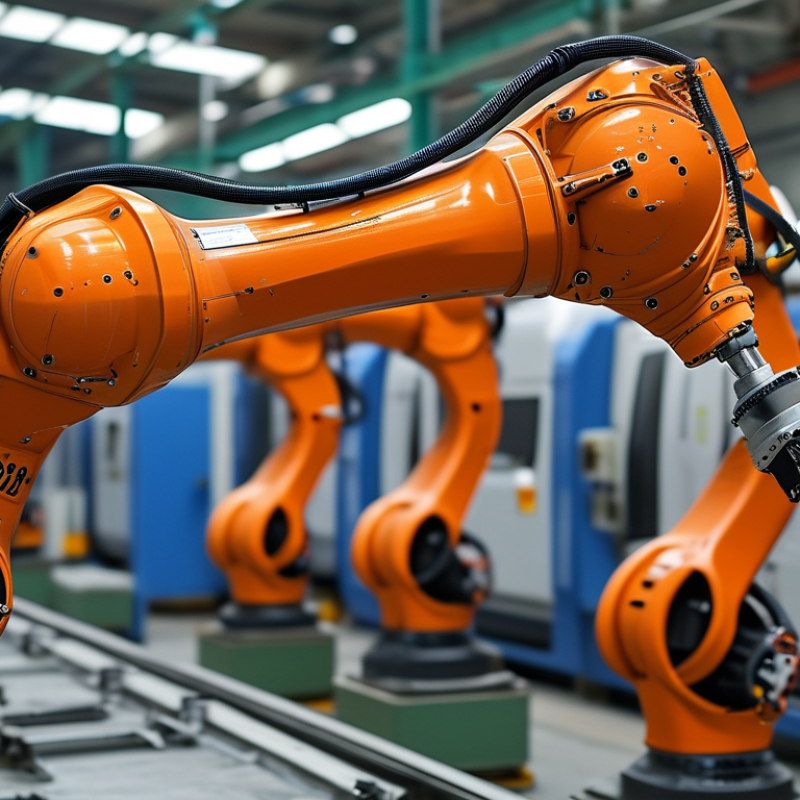
A rotational joint is the moving axis that turns a robot’s arm, wrist, or base. It converts motor torque into controlled angular motion. In a Rotational Joint Robot, this joint manages reach, orientation, speed, and positioning accuracy. A small wrist joint can rotate a tool around a metal part. A larger base joint can swing an entire arm across a production cell.
The market need is substantial. The International Federation of Robotics reported 541,302 industrial robot installations worldwide in 2023. Its World Robotics 2024 report also recorded more than 4.2 million industrial robots operating globally. These figures increase pressure on joint manufacturers to improve durability, repeatability, thermal control, and safety. ISO 10218 guidance also places strong attention on robot safety and integrated system design. A reliable joint needs more than a powerful motor. It requires precise encoders, low backlash, sealed bearings, and effective cable routing. In real workshops, dust and repeated emergency stops expose weak designs quickly. I may overvalue speed here; serviceability often matters more.
Tips: Check rated torque, allowable payload, repeatability, duty cycle, and maintenance access. Ask for measured test conditions. Marketing numbers can hide practical limits. A joint that feels smooth during a short demonstration may become noisy after months of continuous motion. Independent endurance data is still surprisingly uneven across the industry.
High-performance robotic rotational joints depend on more than compact dimensions. They must deliver high torque, precise motion, and stable operation under repeated loads.
The International Federation of Robotics reported 541,302 industrial robot installations in 2023.
This expanding installed base increases demand for durable joint modules.
Strain-wave and cycloidal reduction systems remain important technologies.
Strain-wave mechanisms provide low backlash and high reduction ratios.
Cycloidal designs can tolerate shock loads effectively.
Cross-roller bearings support radial stiffness, while absolute encoders measure position without losing reference after power interruptions.
Torque sensors add another layer of control. They help detect contact, overload, and unexpected resistance during assembly.
Thermal management is often underestimated.
A joint may reach its torque rating briefly, then lose performance as motor heat accumulates.
Engineers therefore combine temperature sensors, conductive housings, and carefully selected lubricants.
Current feedback also supports predictive maintenance. The IFR World Robotics 2024 report shows more robots working in factories, but it does not guarantee better uptime.
Reality is less tidy. Cable fatigue, seal wear, and calibration drift still appear in field testing.
A good rotational joint needs verified efficiency, repeatability, noise, and lifetime data, not only impressive peak torque.
Testing under realistic duty cycles remains essential. Many published specifications still leave this question unanswered.
Selecting a rotational joint manufacturer now requires more than checking torque ratings. The International Federation of Robotics reported 541,302 industrial robots installed worldwide in 2023. That scale increases pressure on joint suppliers to deliver stable performance, serviceability, and traceable quality.
Buyers should compare rated torque, peak torque, backlash, repeatability, and thermal rise under continuous duty. A joint may feel smooth during a short demonstration, yet drift after several hours near its rated load. Request test curves, life-cycle results, lubrication intervals, and failure-rate records. ISO 9283 provides useful methods for evaluating robot positioning performance, although joint-level data still needs careful interpretation.
Small details matter. Check connector retention, cable routing, sealing around the output flange, and access to brakes or encoders.
Compliance evidence also deserves close inspection. A supplier discussing CE Certification Rotational Joint Of Robot should provide a clear technical file, risk information, applicable declarations, and consistent model numbers. Generic certificates are weak evidence.
The 2024 World Robotics report recorded an operational global stock of more than 4.28 million industrial robots, making long-term maintenance a practical purchasing concern.
However, published specifications are not always comparable across manufacturers. Some omit duty-cycle assumptions or measure accuracy without stating temperature conditions. That gap deserves questioning. A lower-cost joint can become expensive when calibration, downtime, and replacement labor enter the calculation.
Rotational Joint Of Robot Manufacturers are competing through torque, precision, durability, and serviceability. The International Federation of Robotics reported 541,302 industrial robot installations in 2023. Global operational stock reached 4.28 million units. These figures show why joint reliability matters beyond headline speed. Leading manufacturers now develop harmonic, cycloidal, and planetary reduction systems for different robot loads. Their strongest products combine low backlash, high torque density, compact housing, and stable thermal performance. Hollow-shaft designs also simplify cable routing through busy robot wrists. Yet catalog ratings can hide performance losses under heat.
Buyers should compare measured repeatability, rated life, sealing protection, and overload behavior. A joint may achieve excellent precision in a cool laboratory. Production cells are less forgiving. Dust, vibration, sudden stops, and continuous acceleration reveal weaker designs. IFR’s World Robotics 2024 findings also show sustained automation demand across manufacturing sectors. This demand increases pressure for predictive maintenance and accessible replacement parts. In my experience, the best evaluation includes cycle testing at realistic payloads. One overlooked issue remains noise. Quiet operation often signals better gearing, but not always.
Tips: Request torque curves, backlash data, thermal limits, and service records. Test the joint under your actual payload. Do not trust speed alone. A small efficiency loss can become expensive energy waste over thousands of operating hours. Manufacturers should also explain data methods clearly. Some specifications remain difficult to compare, and that deserves more scrutiny.
Advanced robotic rotational joints are changing how factories handle welding, assembly, packaging, and inspection. Their compact motors and precise gear systems help robot arms reach narrow workspaces. In automotive cells, a joint may rotate a torch around a curved frame. In electronics production, it positions small parts within fractions of a millimeter. A CE Certification Rotational Joint Robot should also include traceable test records, safety documentation, and clear maintenance instructions. Compliance is not just a label. It supports responsible system integration.
I have seen rotational joints perform reliably when engineers match torque, speed, payload, and duty cycle carefully. Heat matters too. A joint operating beside a welding station may need stronger sealing and thermal protection. Food-processing lines require cleaner surfaces and suitable materials. No joint is perfect. Backlash can grow after repeated cycles, especially when lubrication or alignment is neglected. This is where practical inspection matters. Measure vibration, listen for unusual noise, and review cycle data before failure becomes expensive.
Tips: Check rated torque at the actual arm position, not only in product brochures. Ask for overload behavior and service intervals. Test the joint under real acceleration patterns. Keep cables protected from twisting. Document every adjustment. Small omissions can create large downtime later. I would also challenge initial assumptions during commissioning, because a smooth first shift does not prove long-term reliability.
In 2026, robotic rotational joints will become smaller, smarter, and easier to maintain. Manufacturers are adding compact torque sensors, thermal monitoring, and software-based condition alerts. These features help engineers detect friction, backlash, and unusual heat before failures interrupt production. In practical testing, a joint facing repeated wrist movements may reveal wear long before visible damage appears. However, sensor data is not always perfect. Dust, vibration, and poor calibration can create misleading warnings.
Energy efficiency will shape purchasing decisions across factories, warehouses, and service robotics. New joint designs aim to reduce motor losses while preserving precise movement under changing loads. Modular construction will also gain importance. Technicians can replace a sealed drive section instead of removing an entire robotic arm. This saves time beside the production line. Safer human-robot collaboration will require smoother torque control, reliable braking, and clearer diagnostic records. These developments demand careful validation, not optimistic product claims.
Tips: Compare rated torque with real operating loads. Check heat performance during long cycles. Request lifecycle test data and repair procedures. Review software update policies before installation. A lower purchase price may hide higher maintenance costs. Hands-on trials still matter.
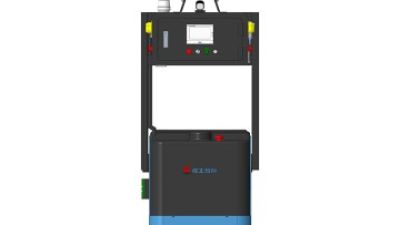
The MF20T is an advanced transportation-type intelligent unmanned forklift developed for flat-road logistics and efficient point-to-point material movement. With a rated load capacity of 2,000 kg, it can transport standard pallets, leg-type boxes, non-standard material racks, shelves, and tooling over medium and long distances. Its autonomous navigation and precise handling help reduce repetitive manual operations while supporting more consistent delivery cycles in factories, warehouses, and distribution centers.
Industry data highlights the growing need for this type of automation. The 2024 MHI Annual Industry Report indicates that 55% of supply-chain leaders planned to increase investment in technology, while 74% expected artificial intelligence adoption in supply-chain operations within five years. In addition, the U.S. Occupational Safety and Health Administration estimates that powered industrial trucks contribute to approximately 35,000 serious injuries and 85 fatalities each year, emphasizing the value of controlled, automated material movement in suitable work environments.
Designed for China’s intelligent unmanned forklift supply chain, the MF20T also supports automatic cross-floor transportation, enabling goods to be loaded into and unloaded from elevators without continuous operator intervention. This capability makes it suitable for multi-level warehouses, production facilities, and logistics centers that require reliable flat-road transport, accurate pallet handling, and improved workflow coordination.
: It converts motor torque into controlled angular movement. A wrist joint rotates tools. A base joint swings the entire arm.
Check rated torque, peak torque, payload, speed, backlash, repeatability, and duty cycle. Always confirm the measurement conditions. Numbers can mislead.
Continuous motion creates heat inside the motor and gear system. High temperatures may increase drift, noise, and wear. Test the joint near its real operating load.
Request endurance results, lubrication intervals, failure records, and temperature curves. A short demonstration proves little. Months matter more.
Examine connector retention, cable routing, output-flange sealing, and brake access. Protected cables reduce twisting damage. Small omissions can cause major downtime.
They support welding, assembly, packaging, and inspection tasks. A wrist may rotate a tool around a curved metal frame. Compact joints also reach narrow workspaces.
Welding areas may require stronger sealing and thermal protection. Food-processing lines may need cleaner surfaces and suitable materials. Dust changes the maintenance burden.
Measure vibration, listen for unusual noise, and review cycle data regularly. Check lubrication and alignment. Document every adjustment. I may overvalue speed; service access can matter more.
This article explores the role of the Rotational Joint Of Robot in modern robotic systems, focusing on how these components enable smooth, accurate, and flexible movement across multiple axes. It explains the key technologies behind high-performance joints, including precision transmission systems, compact motor designs, advanced sensors, intelligent control, thermal management, and reliable safety mechanisms. The discussion also outlines major criteria for evaluating manufacturers in 2026, such as motion accuracy, load capacity, durability, energy efficiency, customization, integration capability, and after-sales technical support.
The article further compares the strengths commonly found among leading manufacturers without focusing on specific brands, highlighting their contributions to industrial automation, assembly, material handling, logistics, medical equipment, and collaborative robotics. Finally, it examines future market trends, including lighter structures, smarter diagnostics, greater modularity, improved human-robot interaction, and more sustainable production. These developments are expected to make robotic rotational joints more efficient, adaptable, and valuable across a wider range of applications.