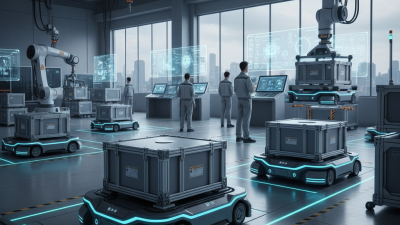
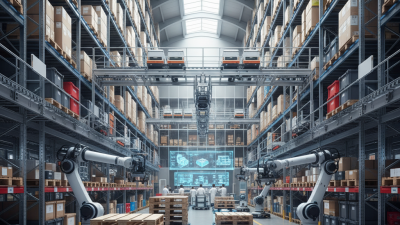
An Automated Forklift System isn’t just one single machine. Instead, it’s more like a family of different mobile equipment designed to move pallets, often with little to no direct human control. Figuring out which one is right really depends on your warehouse layout, the size of loads, how far they need to travel, and how your work shifts are set up. You know that famous quote from AI researcher Andrew Ng—“AI is the new electricity”—it’s a good way to see how digital tools in general, including automation, can totally change the way warehouses operate. Sure, it’s not just about forklifts, but it really drives home why paying attention to automation is so important these days.
In this guide, I’ll break down the main types—think automated Guided Vehicles, autonomous mobile robots, automated pallet trucks, and robotic forklifts built for lifting and stacking. You’ll notice the differences clearly once you’re on the floor. For example, guided vehicles usually follow a set route between conveyor points, while autonomous mobile robots can navigate around obstacles and adapt a bit better. Pallet trucks are more for short-distance, lower-level moves, whereas robotic forklifts can handle putting loads up on higher racks. Those little differences really do add up.
For managers out there, the smarter question isn’t just, “Which system is the most high-tech?” Instead, it’s more about whether the machine can actually handle the specific aisle widths, the condition of the pallets, shift timings, and how the handoff process works in your operation. A fancy demo might make things look awesome, but it can hide some tricky edge cases that only show up once the system’s running in real life. Even the best-planned setup might need some tweaks after actual daily traffic shows where bottlenecks pop up.
So, in this overview, I’ll go through each option—highlighting their usual strengths and the trade-offs you should consider before you decide. And let’s not forget, human oversight and solid system integration are still super important to keep everything running smoothly.
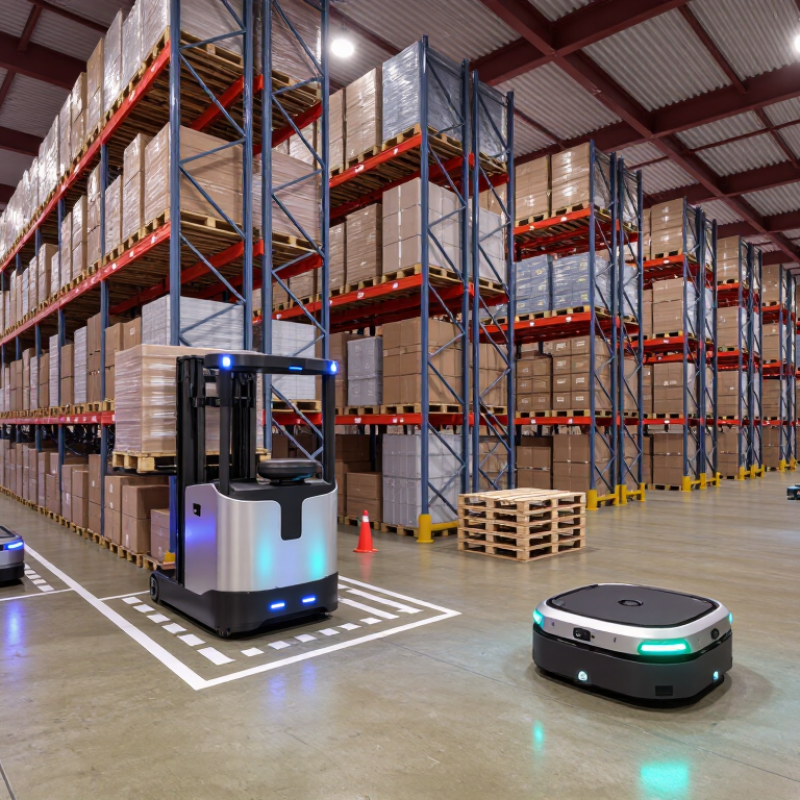
Automated Forklift systems are classified by navigation, load-handling design, and operating environment. Navigation may use fixed routes, such as floor markers or wires, or natural-feature mapping that lets vehicles adjust their paths. Fixed guidance can be predictable. Mapping offers flexibility, but changing layouts still require careful validation.
Not just the truck.
A second axis is the job performed. Automated pallet trucks move loads close to the floor; counterbalance forklifts lift pallets from the front; reach trucks serve higher storage positions. These designs are not interchangeable. A narrow aisle, uneven floor, or tall rack can change which system fits safely. Classification by autonomy also matters: some vehicles follow set missions, while others coordinate routes and traffic with warehouse software.
Industry context helps explain the range. The International Federation of Robotics’ World Robotics 2024 report recorded over 113,000 professional service robots sold for transportation and logistics in 2023, a 35% year-on-year rise. This category includes more than forklifts, so it is not a forklift sales count. That distinction matters. A useful assessment compares navigation, lifting task, site conditions, and human interaction—not labels alone. In practice, warehouses often combine categories, and the clean taxonomy can blur once real traffic begins.
Automated guided forklifts suit facilities where loads repeatedly travel between fixed points, such as a pallet pickup bay and a production line. They follow mapped routes using navigation sensors, floor markers, or infrastructure-based guidance. The International Federation of Robotics reported about 86,000 professional service robots for transportation and logistics sold in 2022, up 44% year over year. This signals growing automation demand, but it does not mean every warehouse needs a fixed-route system.
A practical installation starts with a route walk-through. Check aisle widths, blind corners, pedestrian crossings, floor transitions, and pickup alignment. A forklift that stops reliably at a marked transfer point can reduce repetitive driving, but fixed routes may struggle when storage layouts change. That trade-off is easy to underestimate. Measure completed trips, blocked-route recovery time, and manual interventions during a pilot. For searches involving “CE Certification Automated Forklift System,” verify applicable conformity documents and safety features for the intended operating environment; the phrase alone does not establish suitability.
Tips: Keep routes clear and transfer points consistent. Test peak traffic, not just a quiet shift. Record every manual takeover. One overlooked bottleneck can erase expected gains.
Autonomous mobile robot forklifts navigate changing routes without relying on fixed floor tracks. They use onboard sensors to detect pallets, aisle edges, and nearby people. In a busy warehouse, that flexibility can help when temporary staging areas shift or a delivery blocks the usual path. Some units can pause, recalculate, and continue along a safer route. Still, they are not magic.
Reliable navigation depends on good site data and careful setup. Clear floor markings, stable lighting, and consistent pallet placement can all improve performance, though sensor designs vary. Operations teams should test routes with real loads, including turns near racks and transitions between floor surfaces. They should also check how the forklift behaves when a person steps into its path. A small delay may be safer than an overly quick response. Automated Forklift System Manufacturers can explain navigation limits, load-handling conditions, and maintenance needs, but facility-specific trials remain important. Flexible routing is useful, yet it can expose messy workflows rather than fix them. That detail is easy to overlook.
Automated pallet trucks handle loads close to floor level, moving pallets between receiving areas, staging lanes, and production cells. They suit repeatable routes where workers would otherwise push loads across long, busy aisles. Depending on the site, trucks may follow mapped routes or navigate around obstacles using sensors. They are not a cure-all. Narrow turns, uneven floors, and poorly positioned pallets can still interrupt flow.
The MHI 2024 Annual Industry Report, produced with Deloitte, found that 55% of surveyed supply chain professionals planned to increase investment in supply chain innovation and technology. That signals growing interest, not guaranteed savings. Before deployment, measure travel distances, peak-hour traffic, pallet quality, and handoff delays. A truck that waits behind staging congestion is automation in name only. That detail is easy to miss.
Tips: Mark clear pickup and drop-off zones. Keep loads stable and within the truck’s rated capacity. Test routes during a busy shift, not only in an empty aisle. Check sensor performance around reflective wrap and changing light. Start with one repetitive route, then review missed calls, blocked paths, and charging downtime. The first layout may need revision; real traffic rarely follows the neat diagram.
| System Type | Primary Load-Handling Role | Typical Lift Profile | Common Navigation Options | Best-Fit Applications | Key Consideration |
|---|---|---|---|---|---|
| Automated Pallet Truck | Moves palletized loads at floor level, including transport between receiving, storage, production, and shipping areas. | Low lift for raising a pallet just enough to travel; commonly used for ground-level transfers rather than rack storage. | Laser-based guidance, magnetic guidance, or natural-feature navigation, depending on the system and site. | Regular, repeatable pallet routes in warehouses, factories, and distribution areas. | Check pallet entry openings, floor condition, aisle width, route crossings, and the required load capacity. |
| Automated Counterbalance Forklift | Picks up and transports pallet loads without requiring support legs beneath the load. | Raises loads for floor stacking and, where configured, placement at lower or mid-level rack positions. | Laser, reflector-based, magnetic, or natural-feature navigation. | Sites handling varied pallet types, open-floor moves, and transfers where front-access pickup is useful. | Requires adequate turning space and careful planning around pedestrian routes and load stability. |
| Automated Reach Truck | Stores and retrieves pallet loads in racking using an extendable mast or reach mechanism. | Designed for elevated rack storage; maximum lift height depends on the truck, mast, load, and facility design. | Typically uses guided routes or mapped navigation with position references for accurate rack placement. | High-bay warehouses with pallet storage in narrow or medium-width aisles. | Rack layout, floor flatness, load dimensions, and placement tolerances must be assessed together. |
| Automated Very-Narrow-Aisle Truck | Handles pallet storage and retrieval in closely spaced rack aisles. | Provides elevated storage and retrieval, often with a lifting or load-handling arrangement suited to narrow aisles. | Usually operates with facility-specific guidance, aisle references, or mapped positioning systems. | Warehouses where storage density is a priority and aisle geometry is controlled. | Needs precise aisle alignment, compatible racking, and a suitable plan for entry, exit, and end-of-aisle transfers. |
| Automated Pallet Stacker | Transports pallets and places them at modest heights, such as floor stacks or selected low-level locations. | Higher lift than a low-lift pallet truck, but generally intended for lower stacking tasks rather than high-bay storage. | Laser-based, magnetic, or natural-feature navigation, depending on the operating environment. | Production supply, short-range storage, and operations that combine pallet transport with occasional stacking. | Confirm stack height, load center, pallet condition, and whether the required pickup points are accessible. |
| Automated Forklift with Conveyor or Transfer Interface | Moves pallets between automated vehicles and fixed equipment such as conveyors, production lines, or transfer stations. | Lift profile varies by vehicle; the interface is designed to match the height and transfer method of connected equipment. | Route guidance or mapped navigation combined with station-level positioning and transfer controls. | Production cells, shipping lines, and facilities with repeatable pallet handoffs between material-handling systems. | Transfer heights, stops, safety signals, and equipment controls must be coordinated during integration. |
Capabilities vary by configuration and site conditions. Confirm rated capacity, load dimensions, lift height, aisle requirements, floor quality, and safety integration with the system specification.
Automated counterbalance forklifts suit everyday warehouse moves: carrying palletized goods from receiving docks to storage, or feeding production lines. Their counterweight supports loads without front outriggers, making them useful where pallets need lifting from floor level. A typical shift might involve repeated trips along marked aisles, with tight turns near racking and people crossing at picking zones. These machines can follow mapped routes and pause when onboard sensors detect an obstruction. Not a cure-all.
The MHI 2024 Annual Industry Report found that 55% of surveyed supply-chain professionals planned to invest in robotics and automation. That signals growing interest, not guaranteed savings for every site. Before choosing an automated counterbalance model, measure aisle widths, turning space, floor condition, load dimensions, and peak traffic. Dock plates, reflective wrapping, and unexpected pallet overhangs can disrupt otherwise tidy routes. Small details matter.
An Automated Forklift System Manufacturer should be able to explain how the vehicle handles mixed traffic, route changes, charging, and faults, with clear test evidence. Ask for a site trial using real pallets and busy-shift conditions. Track completed moves, blocked-route alerts, and manual interventions. If workers must constantly rescue the system, the design needs another look. Automation can help, but the warehouse still has rough edges.
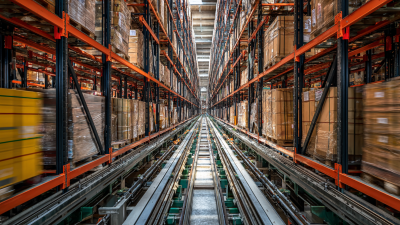
Automated reach trucks suit high-rack warehouses where narrow aisles and vertical storage make every movement matter. Their compact chassis can turn in tight spaces, while an extending mast places pallets deep within the rack. At height, small alignment errors become costly. A crooked pallet can strike a beam or delay the next putaway.
Automation depends on more than the truck. Sensors, floor condition, rack geometry, pallet quality, and traffic rules all affect reliable operation. A reach truck needs clear load data and consistent pallet positions to place goods safely. MHI and Deloitte’s 2024 Annual Industry Report found that 55% of surveyed supply-chain leaders planned to adopt robotics and automation within five years. That figure covers automation broadly, not reach trucks specifically. Useful context, not proof.
Before installation, operators should test actual aisle widths, lift heights, and load profiles. Check floor joints and lighting, too; both can affect navigation and sensing. Measure the slowest handoff, not just peak travel speed. A highly automated truck can still wait for a blocked aisle or a poorly wrapped load. And high racks are unforgiving. Teams may need to adjust procedures after observing real shifts, because simulations rarely capture every awkward pallet or last-minute replenishment.
Reach trucks and VNA turret forklifts are typically the strongest fit for high-rack storage because they are designed to handle pallets in elevated racks and narrow aisles. Ratings are qualitative comparisons based on typical equipment functions, not measured performance benchmarks; actual suitability depends on rack height, aisle width, load, and site conditions.
Automated very narrow aisle (VNA) forklifts help warehouses store more pallets within a limited floor area. Their compact turning paths and guided travel can support tall racks and tightly spaced aisles. Small clearances matter. A few centimeters can affect safe movement, so aisle width, pallet dimensions, and rack placement need careful measurement before installation.
In operation, the forklift follows a planned route and retrieves or places loads at assigned locations. Depending on the site, navigation may use sensors, reflectors, or other guidance methods. Clear floor markings and consistent pallet positions help reduce interruptions. Still, automation cannot fix poor layout data or damaged pallets. That detail is easy to overlook.
A High-Quality Automated Forklift System should match the facility’s load weights, lift heights, floor conditions, and daily traffic patterns. Teams should test representative loads and routes before expanding deployment. They also need procedures for blocked aisles, equipment faults, and safe human access. Real warehouses are rarely perfect; a misplaced pallet can expose a planning weakness. Regular reviews of travel delays, near misses, and maintenance records help reveal where adjustments are needed.
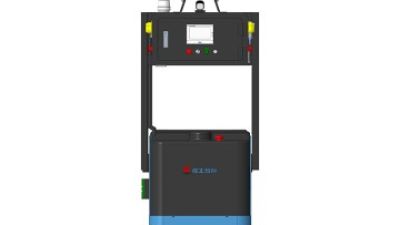
Moving materials across a factory can consume significant time when loads travel repeatedly between production, storage, and dispatch areas. The MF20T is an intelligent, unmanned forklift designed for point-to-point transportation on flat surfaces, with a rated capacity of 2,000 kg. It can carry standard pallets, leg-type boxes, and a range of non-standard material carts or shelving, making it suitable for medium- to long-distance internal routes. By automating these recurring movements, factories can make material flows more consistent and reduce the need for workers to perform repetitive transport tasks.
The International Federation of Robotics’ *World Robotics 2023* report recorded about 86,000 professional service robots sold for transportation and logistics in 2022, a 44% increase over the previous year—evidence of growing adoption of automated material handling. The MF20T also supports cross-floor goods transportation, coordinating with elevator operations to handle loading and unloading between levels. For factories seeking to connect floor-level routes with elevator transfers, this capability can help create a more continuous transport process. Its 2,000 kg capacity and compatibility with different load carriers allow the forklift to serve varied workflows while maintaining a clear, repeatable route between pickup and delivery points.
They are grouped by navigation, load-handling design, and autonomy. Site conditions and human interaction also matter. Labels alone are not enough.
They use onboard sensors and site maps to detect pallets, aisle edges, and nearby people. Some can pause and recalculate when a route is blocked. Not magic.
They move pallets close to floor level, often between receiving areas, staging lanes, and production cells. They work best on repeatable routes with clear pickup zones.
No. Pallet trucks handle ground-level loads, counterbalance forklifts lift from the front, and reach trucks serve higher storage positions. Rack height and aisle width can change the right choice.
Test routes with real loads, busy traffic, tight turns, and changes between floor surfaces. Check how the vehicle responds when a person enters its path. Test it loaded.
Uneven floors, shifting pallets, reflective wrapping, and changing light can affect performance. Stable lighting and consistent pallet placement may help, but sensor designs vary.
Measure travel distance, peak-hour traffic, handoff delays, and charging downtime. Start with one repetitive route, then review blocked paths and missed calls. The layout may need revision.
No. One 2024 survey found that 55% of respondents planned to increase technology investment. That shows interest, not guaranteed savings. A useful distinction.
Automated forklift systems are classified by how they navigate, the loads they carry, and the warehouse environments they serve. Automated guided forklifts follow set routes, making them suitable for predictable, repeated material-handling tasks. Autonomous mobile robot forklifts offer more flexible navigation, adapting their movement to changing layouts and operational needs. For ground-level loads, automated pallet trucks provide a compact way to move pallets between nearby locations.
Different forklift designs also support different storage and handling requirements. Automated counterbalance forklifts can perform general warehouse tasks, while automated reach trucks are designed to access loads stored high on racks. In dense storage areas, automated very narrow aisle forklifts operate within limited aisle space to help make better use of available floor area. Choosing an Automated Forklift System depends on factors such as route flexibility, load height, aisle width, and the types of goods being moved.