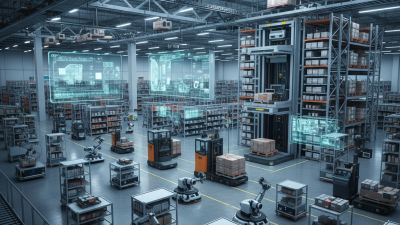
In today’s fast-evolving world of logistics, getting a good grasp of the Types Of Warehouse Robots is pretty much essential if you want your warehouse to run smoothly. I remember Dr. Emily Chen from Robotics Innovations mentioning once that “Warehouse efficiency really comes down to how well you integrate robotics.” That really drives home the point — choosing the right robotic tools for each job is a big deal.
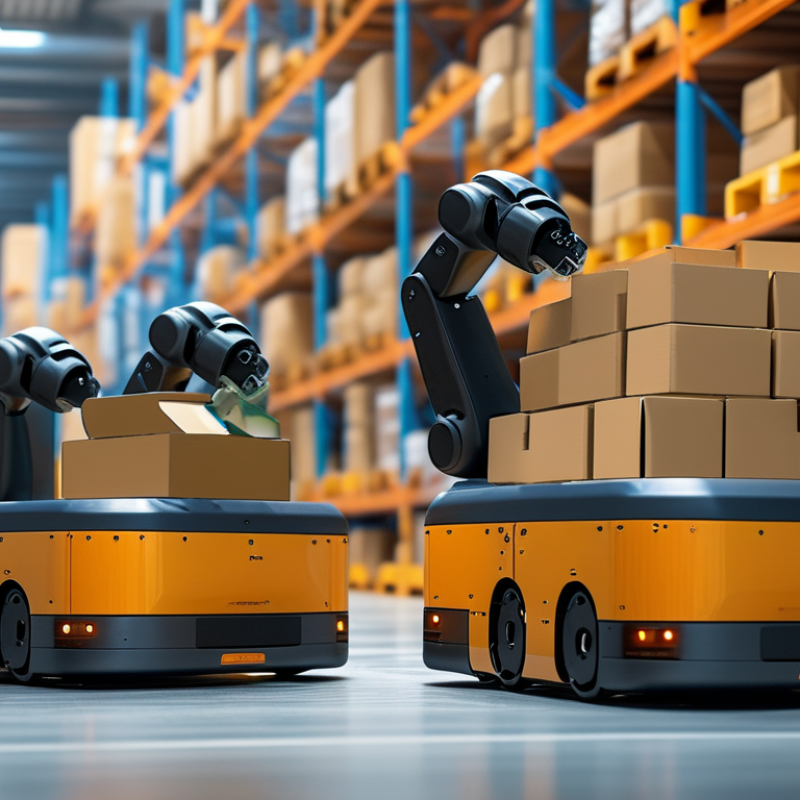
You’ve got a bunch of different robots out there, each built for specific tasks. For example, autonomous Mobile Robots (AMRs) are great at moving things around, while robotic arms are champs at picking and packing products. These techs are honestly changing the game and making workflows way more efficient. But, here’s the catch — not every robot fits every warehouse. You’ve gotta carefully think about your space and needs — a wrong move could be costly.
As companies chase after better efficiency, picking the wrong type of robot can cause more frustration and disruptions. So, really understanding the different “Types Of Warehouse Robots” — what they’re good at, what their limits are — is super important. Moving towards automation isn’t just a smooth ride; it’s also full of learning curves and little pitfalls. That’s why, when it comes to adopting robotics, making smart, informed decisions is key to avoiding headaches down the line.
Types of Warehouse Robots: An Overview of Their Functions
Warehouse robots have revolutionized supply chain management. Different types fulfill specific roles, enhancing efficiency and productivity. Understanding these robots can optimize your operations.
Mobile robots are famous for their agility. They navigate the warehouse autonomously, transporting goods from one place to another. This eliminates manual labor and minimizes time delays. Automation here can reduce human errors.
Automated Guided vehicles (AGVs) follow set paths, offering consistency in material handling. They are ideal for repetitive tasks and can operate continuously without fatigue. This consistency promotes reliability in operations.
Automated storage and retrieval systems (AS/RS) work by storing items in designated locations. These systems use robotic arms to retrieve products, improving order accuracy and speed. While effective, they require significant space and investment.
Tip: Assess your warehouse layout before choosing the robot type. Not all solutions fit all environments. User feedback can provide insight into real-world challenges and advantages. Adapting to flexible solutions is crucial as technology evolves.
Consider the human aspect too. Robots can displace some jobs, prompting a need for workforce training. Balancing automation and employment is essential for a harmonious transition. Reflect on how robots can support, rather than replace, human roles in the future.
Autonomous Mobile Robots (AMRs) for Product Transport
Autonomous Mobile Robots (AMRs) are transforming warehouse operations. These robots excel in product transport, enhancing efficiency and productivity. Unlike traditional automated systems, AMRs navigate complex environments independently. They use advanced sensors and AI to avoid obstacles and optimize routes. This agility allows for real-time adjustments to changing warehouse layouts.
Integrating AMRs into your operation can save time and labor costs. They can work alongside humans, completing repetitive tasks and allowing staff to focus on higher-value activities. However, not all warehouses may be ready for this shift. Consider existing systems and employee training needs. It’s vital to assess compatibility before integration.
Tips: Start small. Implement one or two AMRs and monitor their performance. This trial will help identify potential issues. Regular maintenance of
Autonomous Warehouse Robots is crucial. Their sensors require cleaning to function optimally. Be prepared for some initial hiccups; it’s part of the transition. Embracing AMRs means adapting processes and mindsets for long-term gains.
Automated Guided Vehicles (AGVs) in Warehouse Operations
Automated Guided Vehicles (AGVs) are transforming warehouse operations. These robots enhance efficiency, reduce labor costs, and optimize inventory management. According to a report by Deloitte, AGVs can improve operational efficiency by up to 30%. They navigate autonomously, minimizing human error and ensuring safety.
AGVs come in various types, each serving specific purposes. Forklift AGVs handle heavy loads, while unit load AGVs cater to smaller items. A survey by the Material Handling Industry Association indicates that 60% of warehouses are adopting AGVs to keep up with e-commerce demands. However, implementing AGVs is not without challenges. Integration with existing systems can be complex, and frequent updates are necessary for maximum efficiency.
Maintaining and servicing AGVs requires careful planning. Regular maintenance can prevent downtime. Additionally, staff must be trained to work alongside these robots. A 2022 study showed that poorly managed AGV systems could lead to a 15% increase in operational costs. As warehouses evolve, finding the right balance between automation and human oversight will remain crucial.
Robotic Arms for Pick-and-Pack Applications
Robotic arms are becoming essential in warehouses. They enhance efficiency in pick-and-pack applications. These automated systems can handle a variety of products, from small items to larger packages. Speed is a key advantage. They can significantly reduce the time needed for order fulfillment.
Operators need to carefully program these arms for specific tasks. It requires expertise in automation and system integration. Mistakes in programming can lead to inefficiencies. Workers must also ensure that robotic arms operate safely alongside human staff. This balance is crucial for maintaining productivity.
Training staff to work with these technologies is vital. Workers should understand robotic limitations too. Some tasks may not be suitable for robotic arms. Continuous review and adjustment of workflows can enhance performance. Adapting to changes in product types can pose challenges. However, with the right approach, robotic arms can greatly improve warehouse efficiency.
Top 5 Types of Warehouse Robots for Efficient Operations
Collaborative Robots (Cobots) Working Alongside Human Staff
Collaborative robots, or cobots, are reshaping warehouse operations. These machines are designed to work alongside human staff, enhancing efficiency without replacing them. Cobots can handle repetitive tasks, allowing human workers to focus on more complex duties. Imagine a situation where a cobot sorts packages while a person organizes inventory. This synergy creates a more dynamic workplace.
While cobots provide significant benefits, challenges also arise. Training staff to work with these robots is essential. Employees need to adapt to new technologies, and this can be daunting. Additionally, safety remains a priority. Ensuring that cobots operate safely around humans is crucial to prevent accidents. Regular assessments can help identify any areas for improvement.
The rise of cobots highlights the importance of integrating technology seamlessly. They fall under the broader category of Types Of Wheeled Mobile Robots, which are designed for various tasks. Effective collaboration can lead to a more adaptable workforce. However, constant reflection on performance and interaction remains vital. Ultimately, the goal is to create a harmonious environment that leverages both human intelligence and robotic efficiency.
Inventory Management Robots: Enhancing Stock Accuracy
Inventory management robots play a crucial role in enhancing stock accuracy within warehouses. These robots automate the process of tracking, sorting, and organizing inventory. By using advanced sensors and AI, they reduce human error in stock management. This technology allows for real-time updates, ensuring that information on stock levels is always current.
However, the implementation of such technology is not without its challenges. Companies must train staff to work alongside robots. There is also a concern about the initial investment costs. Choosing the right system can be overwhelming. A deep understanding of the different Types Of Wheeled Robots plays a significant role in optimizing warehouse operations. Some designs focus on transportation, while others excel in inventory counting. Balancing efficiency with human oversight is essential for success.
The usage of inventory management robots is increasing but needs careful consideration. Flaws in integration can lead to inaccuracies, countering their effectiveness. Continual assessment and adjustment will enhance their abilities and ensure that they meet specific needs. Robotics can revolutionize warehouse operations, but they must be applied thoughtfully.
Top 5 Types of Warehouse Robots for Efficient Operations
| Robot Type | Primary Function | Advantages | Limitations |
| Automated Guided Vehicles (AGVs) | Transport materials | Increases efficiency, reduces labor costs | Limited navigation capabilities; requires a set path |
| Autonomous Mobile Robots (AMRs) | Pick and transport items | Highly adaptable; can navigate dynamically | Higher initial investment; requires advanced software |
| Robotic Palletizers | Stack and unstack pallets | Maximizes space; enhances speed of sorting | Limited flexibility for varying pallet shapes |
| Automated Inventory Robots | Scan stock levels and verify inventory | Enhances stock accuracy; reduces human error | May require downtime for maintenance |
| Sorting Robots | Sort packages for dispatch | Improves processing time; enhances order accuracy | Complexity in programming; initial setup costs |
Sorting and Retrieval Robots for Efficient Order Fulfillment
Sorting and retrieval robots play a crucial role in modern warehouse operations. Their efficiency can simplify complex tasks. These robots navigate aisles, picking up products and transporting them seamlessly. They often rely on advanced sensors and AI algorithms to identify items. This precision reduces human error and speeds up order fulfillment.
However, not all sorting robots are perfect. Issues can arise, such as misidentified items or faulty sensors. These challenges highlight the need for continuous improvement. Warehouse managers must regularly assess robot performance and address shortcomings. It's also essential to maintain proper training protocols for human staff to work alongside these robots effectively.
With the rise of CE Certification Types Of Wheeled Mobile Robots, ensuring compliance is critical. This certification demonstrates that robots meet safety and efficiency standards. As warehouse operations evolve, investing in reliable sorting and retrieval systems becomes paramount. This ensures accuracy and enhances productivity in a highly competitive market.
Optimizing Warehouse Efficiency: Insights from the Latest Industry Reports on China's High-Speed Rail Guided Vehicle Suppliers
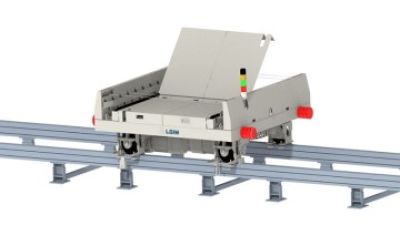
As the demand for efficient warehouse solutions continues to rise, optimizing warehouse operations is becoming increasingly crucial. The recent industry reports on China’s high-speed rail guided vehicle suppliers highlight the transformative impact of RGV (Rail Guided Vehicle) cars on warehouse efficiency. These innovative vehicles are designed for high-density storage solutions, significantly maximizing storage capacity while providing customizable passage lengths to suit different warehouse layouts.
One of the most notable advantages of RGV cars is their ability to eliminate the need for traditional forklifts to enter narrow passages during operation. This not only enhances safety within the warehouse but also streamlines the logistics process by minimizing the risk of accidents and delays. By collaborating with top suppliers that offer RGV technology, businesses can revolutionize their warehouse operations, achieving optimal space utilization and improving overall workflow efficiency. As warehouses evolve to meet modern demands, investing in such advanced vehicles is becoming essential for sustaining competitive advantage in the logistics sector.
FAQS
utomated Guided Vehicles (AGVs) used for in warehouses?
According to research, AGVs can enhance operational efficiency by up to 30%.
AGVs come in different types; forklift AGVs handle heavy loads, while unit load AGVs manage smaller items.
Integrating AGVs with existing systems can be complex and may require frequent updates.
Regular maintenance is crucial to prevent downtime and ensure effective operation of AGVs.
Cobots work alongside human staff, handling repetitive tasks and allowing humans to focus on complex duties.
Training staff to adapt to cobots can be daunting, requiring a shift in how work is done.
Regular assessments of cobots are necessary to identify safety areas needing improvement around human workers.
Effective collaboration leads to a more adaptable workforce, creating a dynamic work environment.
Continuous reflection on performance and interaction between humans and robots is vital for success.
Conclusion
The article "Top 5 Types of Warehouse Robots for Efficient Operations" provides a comprehensive overview of various Types of Warehouse Robots and their essential functions in modern logistics. Autonomous Mobile Robots (AMRs) are highlighted for their capability in efficiently transporting products, while Automated Guided Vehicles (AGVs) play a crucial role in enhancing warehouse operations through pre-defined paths. Additionally, robotic arms are discussed for their applications in pick-and-pack processes, enabling greater speed and accuracy.
Collaborative robots, or cobots, are also emphasized for their ability to work alongside human staff, improving productivity and safety in the workplace. Inventory management robots contribute to better stock accuracy, ensuring that warehouses maintain optimal levels of products. Finally, sorting and retrieval robots are showcased for their efficiency in order fulfillment, significantly reducing processing times. Overall, the integration of these Types of Warehouse Robots is pivotal to achieving seamless operations in the supply chain industry.