So, picking the best Intelligent Storage Systemin China is kind of a bigger deal than just counting robots or checking out software features. These days, warehouses in China are dealing with tighter delivery windows, more fragmented orders, and super dense urban inventory setups. A solid system isn’t just about plugging together warehouse management software, Automated Storage, robots, sensors, and humans — it’s about making sure everything works smoothly together, even during crazy peak sales events, not just fancy demos.
The stats really show why it's important to get this right. The 2024 MHI Annual Industry Report mentions that over half (55%) of supply chain leaders plan to ramp up their tech investments. And Interact Analysis is predicting that the global warehouse automation market will keep growing strong through 2027. But let’s be real — just because the numbers look good doesn’t mean every system is automatically a winner. Sometimes, a tiny warehouse can actually get way more bang for their buck from spot-on slotting and barcode discipline than from all those expensive robots.
Dwight Klappich, a VP at Gartner, nailed it when he said, “The future of supply chain is about enhancing what people do, not replacing them.” That totally rings true for how things roll in China. The ideal Intelligent Storage System should cut down on walking distances, give better insights into inventory, and help everyone make safer decisions. And hey, it should show real results — like more accurate picking and quicker replenishing. But nothing’s perfect. If your master data is garbage, even the coolest system won’t perform well. Likewise, if staff aren’t trained properly, things can get held up.
Before buying, companies should really test their actual order scenarios, check if local support is solid, and crunch the numbers on total ownership costs. Sometimes, the flashiest-looking option isn’t the most reliable one. Honestly, dependability and performance matter more than shiny features.
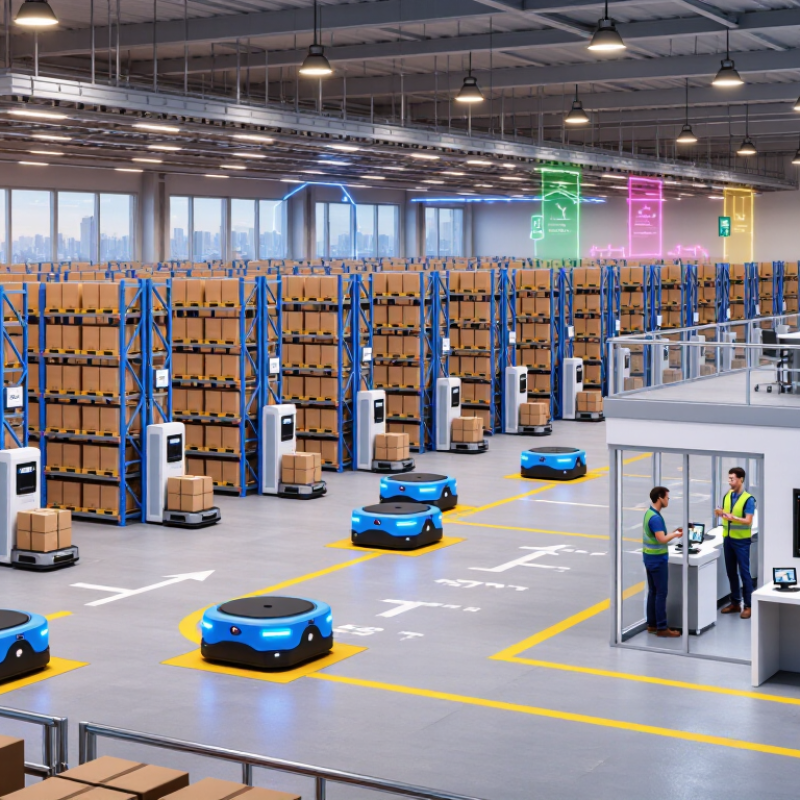
China’s intelligent storage systems combine physical equipment, control software, data networks, and operational decisions. Their purpose is not simply to store more cartons. They identify, locate, move, and retrieve inventory with limited manual handling.
In China, the scope commonly includes automated storage and Retrieval Machines, shuttle systems, conveyor lines, mobile robots, pallet racks, barcode readers, and warehouse management software. Sensors record position, weight, temperature, and movement. A warehouse control platform then coordinates tasks between equipment and workers. In a cold-storage facility, this may mean tracking a pallet through sealed doors while reducing unnecessary exposure to warm air. Small details matter.
The term CE Certification Intelligent Storage System can describe a system designed with applicable European conformity requirements in mind. However, CE marking does not replace risk assessment, machinery safety checks, electrical testing, or local compliance duties. Buyers should examine technical files, emergency-stop performance, software logs, and maintenance records. Data security also belongs within the system’s scope, especially when inventory connects with manufacturing or transport platforms.
Practical evaluation is less polished than product brochures suggest. A fast robot may still fail when cartons vary in shape. A dense rack layout may slow emergency access. Human training is often underestimated. These weaknesses do not make automation useless, but they demand careful testing with real pallets, uneven loads, peak-season orders, and power interruptions. A reliable definition must include these operating conditions.
The best system depends on warehouse size, product variety, and order speed. In practice, strong solutions begin with accurate sensing. Cameras, barcode readers, RFID devices, and weight sensors capture each movement. A warehouse management system then assigns locations according to demand, dimensions, and handling conditions. This reduces walking time and prevents avoidable picking errors.
Automated storage and retrieval equipment adds mechanical precision. Shuttle units, stacker cranes, conveyors, and mobile robots move goods through narrow aisles. Control software coordinates these devices with inventory records. Intelligent Storage System Manufacturers should also provide real-time dashboards, equipment diagnostics, and traceable operating logs. A digital twin can test traffic patterns before physical changes are made. That saves time, although simulation results are never perfect.
Human oversight remains essential. A dusty barcode, damaged carton, or unusual order can confuse an automated process. Operators need clear alerts, manual recovery procedures, and practical training. Cybersecurity protects inventory data and connected controllers from unauthorized access. Safety systems should include light curtains, emergency stops, access controls, and regular inspections. Energy monitoring can reveal idle conveyors and inefficient charging cycles. Independent testing, documented maintenance, and transparent performance data make a storage solution more reliable. Many projects still underestimate integration work. That deserves careful review.
China’s intelligent storage systems are not one-size-fits-all. The State Post Bureau recorded 132.07 billion express parcels in 2023, increasing pressure on speed, accuracy, and traceability. A suitable system must match product size, order frequency, storage height, and labor conditions.
Pallet-based automated storage and retrieval systems suit manufacturers and cold-chain warehouses. They use cranes, conveyors, and warehouse control software to store heavy loads in narrow aisles. Shuttle systems work better for dense carton or tote storage. They can handle many stock-keeping units while reducing walking distance. However, poor slotting can weaken their value. Dense storage is not always efficient storage.
Goods-to-person systems combine shuttles, lifts, and picking stations. They are useful for e-commerce orders with many small items. Autonomous mobile robots offer flexible transport between shelves, workstations, and packing areas. The China Federation of Logistics and Purchasing reported continued growth in logistics automation investment in its 2023 industry review, while labor costs and fulfillment expectations kept rising. Artificial intelligence can improve forecasting and replenishment, but it still depends on clean inventory data. That detail is often underestimated. In practice, the strongest solution usually combines AS/RS, mobile robots, and WMS-WCS integration. The best choice is therefore operational, not merely technological.
A practical comparison of widely deployed intelligent storage technologies and their typical operating characteristics
| System Type | Primary Storage Unit | Typical Capacity Range | Typical Throughput | Space Utilization | Best-Suited Goods | Main Advantages and Constraints |
|---|---|---|---|---|---|---|
| Pallet AS/RS | Standard pallets, usually 1,000–1,200 kg per pallet position | About 2,000 to more than 100,000 pallet positions; storage heights commonly 10–30 m | Approximately 20–60 pallet movements per hour per crane, depending on layout and lift height | High; narrow aisles and vertical storage can substantially reduce floor-area requirements | Finished products, raw materials, beverages, packaged food, automotive parts and general industrial goods | High storage density, accurate inventory control and good traceability. Requires significant capital investment and works best with standardized pallets and stable product profiles. |
| Mini-Load AS/RS | Totes, cartons, trays or small containers, commonly 20–100 kg per load | Several thousand to more than 100,000 tote or carton locations; storage heights commonly 6–20 m | Roughly 100–600 tote or carton movements per hour per aisle, subject to equipment configuration | High for small-item inventory; supports dense multi-level storage | Small parts, electronics, medicines, cosmetics, garments and e-commerce order lines | Fast and accurate goods-to-person picking with strong inventory visibility. Less suitable for oversized, irregular or highly variable loads. |
| Shuttle-Based Pallet Storage | Pallets stored in deep lanes and moved by radio shuttle vehicles | Typically hundreds to tens of thousands of pallet positions; lane depth often ranges from 5 to more than 30 pallets | Commonly about 30–100 pallet movements per hour per shuttle, depending on lane design and task type | Very high in high-density or cold-storage applications | High-volume products with many pallets per stock-keeping unit, including food, beverage and temperature-controlled goods | Excellent density and flexible lane depth. Selective access is lower than in single-deep storage, and strict stock-rotation rules may be needed. |
| Four-Way Shuttle System | Pallets handled by autonomous shuttles capable of moving horizontally and vertically through a rack grid | Commonly several thousand to tens of thousands of pallet positions; suitable for multi-level, deep-lane layouts | Often about 40–150 pallet movements per hour per operating zone, depending on the number of shuttles and lifts | Very high; particularly effective where land is limited or storage depth is important | Multi-SKU pallet inventory, cold chain, manufacturing materials and distribution-center buffer stock | Scalable, flexible and highly space-efficient. The control system, battery management and maintenance plan are more complex than for conventional racking. |
| Automated Guided Vehicle (AGV) Storage | Pallets, carts, racks or production containers moved by autonomous guided vehicles | Usually hundreds to several thousand storage locations, expandable by adding vehicles and stations | Typically 20–80 pallet or container missions per hour per vehicle, depending on travel distance and traffic | Medium to high; depends on navigation paths, charging areas and safety clearances | Manufacturing plants, raw-material supermarkets, line-side replenishment and mixed indoor logistics | Flexible routing, gradual deployment and limited fixed conveyor infrastructure. Floor condition, traffic control, charging and pedestrian safety must be carefully managed. |
| Autonomous Mobile Robot (AMR) Goods-to-Person System | Mobile racks, shelves, totes or cartons brought to stationary picking workstations | Usually several thousand to more than 100,000 bin or shelf locations, depending on site size | Commonly 200–1,000 order lines per hour per workstation; actual output depends on SKU profile and workforce | Medium to high; flexible layout but requires travel lanes and workstation space | E-commerce, apparel, spare parts, retail replenishment and mixed small-item orders | Quick deployment, flexible reconfiguration and reduced walking for operators. Peak performance can be affected by congestion, battery charging and picking-station capacity. |
| Vertical Lift Module | Trays or shelves automatically presented to an operator at an ergonomic access opening | Commonly 20–100 m³ per unit; storage height often 3–10 m | Approximately 100–300 tray presentations per hour per machine, depending on tray size and travel height | High in facilities with expensive floor space; uses vertical building volume efficiently | Tools, maintenance parts, electronics, medical supplies and high-value small components | Strong security, accurate stock control and ergonomic picking. Unit height, tray dimensions and item-size limits can restrict application flexibility. |
| Vertical Carousel | Rotating shelves or carriers that deliver stored items to an access window | Generally 10–60 m³ per unit; storage height commonly 2–8 m | Often 60–200 item presentations per hour per machine | High compared with conventional shelving, especially for small parts | Documents, tools, spare parts, medical items and compact component inventories | Relatively compact and easy to operate with good access control. It has lower capacity and slower replenishment than large AS/RS installations. |
| Cold-Chain Automated Storage | Pallets, totes or cartons stored in refrigerated or frozen environments | From several hundred to tens of thousands of pallet positions; storage temperature may be approximately 2–8°C or below −18°C, according to product requirements | Typically 20–100 pallet movements per hour per operating aisle or zone | Very high; automation reduces aisle volume and personnel exposure to low temperatures | Frozen food, chilled food, pharmaceuticals and temperature-sensitive materials | Improves cold-chain consistency, safety and labor efficiency. Equipment, batteries, lubricants, sensors and maintenance procedures must be rated for the operating temperature. |
Note: Capacity, height and throughput figures are representative engineering ranges rather than universal specifications. Actual performance depends on SKU dimensions, load weight, order profile, rack geometry, building height, software controls, temperature conditions and operating procedures.
A capable intelligent storage system must perform beyond a polished dashboard. Measure real throughput during peak hours, not only laboratory tests. Record completed pallet movements per hour, picking accuracy, order latency, and equipment utilization. MHI’s 2024 Annual Industry Report found that 55% of respondents planned to increase supply chain technology investment within two years. This trend raises expectations, but investment alone does not guarantee stable performance.
Reliability requires controlled stress testing. Simulate peak inbound waves, blocked aisles, network delays, and sudden equipment failures. Check whether the system reroutes tasks without creating dangerous congestion. Track mean time between failures, mean time to recovery, and backup response time. A practical test might involve 1,000 storage and retrieval commands during a busy shift. The system should maintain predictable response times, not merely a high average speed. Zebra’s 2023 Warehousing Study reported that nearly 70% of warehouse decision-makers expected greater automation use by 2028, increasing the need for dependable integration.
Human experience still matters. Operators should understand alarms within seconds and restart routine tasks without specialist support. I would not trust impressive accuracy figures without examining exception records. That is where hidden weakness appears. My own bias is to value recoverability over maximum speed. Faster is not always better. A reliable evaluation also reviews software updates, cybersecurity controls, spare-part access, training quality, and performance after six months of continuous use.
What Is the Best China Intelligent Storage System?
The best intelligent storage system depends on the industry, inventory profile, and operating environment. In manufacturing, automated racks and guided vehicles can move components between receiving, production, and dispatch areas. Real-time inventory records reduce searching and support traceability. However, a fast system cannot repair inaccurate item data. Clean master data remains essential.
Retail warehouses need flexible storage for changing product volumes and seasonal demand. Intelligent software can assign locations according to turnover, size, and handling requirements. In food distribution, temperature monitoring protects perishable goods during storage. Alerts should reach trained staff immediately. Small delays matter. Practical implementation also requires clear maintenance plans, safe pedestrian routes, and tested emergency procedures.
Healthcare facilities need controlled access, accurate batch records, and dependable retrieval. Hospitals may use compact storage for medicines, sterile supplies, and surgical materials. Audit trails help verify who handled each item and when. In electronics manufacturing, anti-static areas and careful picking procedures protect sensitive components. These details are easy to overlook. No system is perfect. A rushed layout, weak staff training, or poor network design can create new risks. Site surveys, pilot testing, and regular performance reviews make the investment more reliable. The right solution should improve measurable work, not simply add automation.
The best intelligent storage system depends on workload, facility size, and growth plans. No single configuration suits every warehouse. Purchase price is only one cost. Businesses should also measure installation, software licensing, staff training, energy use, maintenance, and downtime. A low-cost system can become expensive when spare parts arrive slowly or workers need repeated manual corrections. In warehouse evaluations, I compare the five-year total cost rather than the initial quotation. Clear service terms matter.
A High-Quality Intelligent Storage System should improve measurable daily performance. Useful indicators include picking accuracy, order cycle time, storage density, equipment availability, and labor hours per order. For example, a dashboard can reveal delays at a conveyor merge point during the afternoon peak. That detail supports a practical adjustment. Better data, fewer guesses. System integration also deserves careful testing. Inventory records must update quickly between storage equipment, warehouse software, and shipping stations.
Scalability affects both cost and operational stability. A modular system can add storage lanes, robots, or workstations without rebuilding the entire facility. However, expansion may expose network limits, floor-load problems, or insufficient electrical capacity.
A small pilot helps verify throughput before full investment. It should test real product sizes, peak orders, damaged packaging, and worker response. I would not ignore human feedback. Operators often notice awkward access points before performance reports show them. Some assumptions will fail, and the design should leave room for correction.
Choosing the best China intelligent storage system starts with your operating needs, not a catalogue image. Measure daily throughput, item sizes, storage height, and order peaks. A system that handles 500 tasks today may struggle during seasonal demand.
Ask each Intelligent Storage System Manufacturer for clear performance data and a live demonstration. Watch how goods move from receiving to picking and dispatch. Check barcode accuracy, software integration, emergency access, and recovery after a network interruption. Safety matters too. Look for guarded moving parts, clear walkways, load sensors, and documented maintenance procedures.
Total cost deserves careful attention. Include installation, training, spare parts, energy use, software updates, and future expansion. Request references from facilities with similar products and floor space. Their experience can reveal delays that brochures hide. A small pilot area is often wiser than a full rollout. It exposes weak workflows early.
No system is perfect. A fast machine may require stricter data discipline. A cheaper option may create higher service costs later. Review response times, warranty terms, technician coverage, and local compliance records. Ask difficult questions in writing. Then compare measurable results, not confident promises.
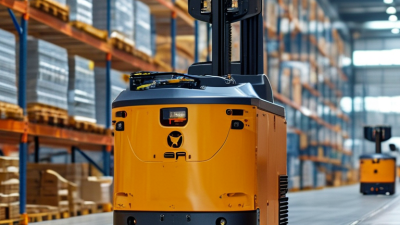
As factory logistics becomes more data-driven, insights reflected in IFR and Interact Analysis reports highlight the growing role of intelligent mobile automation in material handling. Flexible unmanned transport systems can help manufacturers improve workflow continuity, reduce unnecessary manual movement, and respond more efficiently to changing production requirements. Designed for point-to-point transportation on flat surfaces, the MF20T supports this direction with a 2,000 kg load capacity, making it suitable for medium- and long-distance movement of standard pallets, leg-type boxes, non-standard material trucks, shelves, and tooling.
The MF20T is developed for factory environments that require dependable, repeatable logistics operations. Its intelligent navigation and unmanned operation help connect storage, production, and dispatch areas while reducing reliance on routine manual transport tasks. It also supports automatic cross-floor transportation, allowing goods to be loaded and unloaded from elevators for smoother movement between different levels. For businesses seeking a practical logistics upgrade, this intelligent forklift offers a flexible solution for improving material flow, space utilization, and operational productivity.
The best system depends on workload, inventory type, facility size, and growth plans. No single design fits every warehouse. Data quality still matters.
Automated racks and guided vehicles can move components between receiving, production, and dispatch areas. Real-time records reduce searching and support traceability. Incorrect item data can still create mistakes.
Retail warehouses need flexible storage for changing volumes and seasonal demand. Software can assign locations by turnover, size, and handling needs. A rigid layout may become inefficient during peak seasons.
Temperature monitoring can protect goods during storage. Alerts should reach trained staff immediately. Small delays matter. Maintenance plans and tested emergency procedures remain necessary.
Controlled access, batch records, and dependable retrieval support healthcare operations. Audit trails can show who handled each item and when. Staff training must not be treated as optional.
Sensitive components may require anti-static areas and careful picking procedures. Workers should follow consistent handling steps. These details are easy to overlook.
Compare purchase, installation, software, training, energy, maintenance, and downtime costs. A low initial price may hide repeated manual corrections or slow spare-part delivery. Five-year cost gives a clearer view.
Measure picking accuracy, order cycle time, storage density, equipment availability, and labor hours. A dashboard might reveal afternoon delays at a conveyor merge point. Better data, fewer guesses.
Modular systems can add lanes, robots, or workstations without rebuilding everything. Expansion may expose network, floor-load, or electrical limits. A small pilot should test real products and peak orders.
Site surveys, pilot testing, and regular reviews can reveal hidden problems. Rushed layouts and weak training may create new risks. Some assumptions will fail. Human feedback deserves attention.
China’s Intelligent Storage System refers to an integrated solution that combines automated storage equipment, software platforms, data analysis, robotics, and intelligent control to improve the handling, organization, and retrieval of goods. Core technologies include warehouse management software, warehouse control systems, sensors, machine vision, automated guided vehicles, robotic arms, and real-time data connectivity. Common system types include automated warehouses, shuttle systems, stacker-crane solutions, vertical storage units, and flexible goods-to-person systems.
The best solution should be evaluated through storage capacity, throughput, accuracy, response time, safety, system stability, maintenance needs, and compatibility with existing operations. These systems are widely applied in manufacturing, retail, logistics, healthcare, food distribution, and other industries with different storage requirements. Cost, scalability, energy use, and operational efficiency are also important comparison factors. Selecting the right system requires a clear assessment of product characteristics, order volume, facility space, future growth, budget, integration capability, and service support, ensuring that the investment delivers reliable and sustainable performance.