
Leave Your Message
Double Column Tunnel Stacker Crane from China Suppliers - Efficient Narrow-Aisle Warehouse Equipment from Factory
Hot Products

Double Column Tunnel Stacker Crane from China Suppliers - Efficient Narrow-Aisle Warehouse Equipment from Factory

The double-column narrow-aisle stacker is an essential piece of equipment for efficient storage and handling in the warehousing and logistics industry. Manufactured in China, this stacker features a robust double-column design that allows for effective stacking and retrieval of goods in narrow aisles, thus maximizing warehouse space utilization. As a leading supplier in the market, our factory ensures that the double-column narrow-aisle stacker comes with adjustable height settings and a strong load-bearing capacity, making it ideal for accommodating various goods with different specifications and weights. Enhance your storage solutions with our reliable and flexible narrow-aisle stacker, designed to meet the diverse needs of your business

    Description

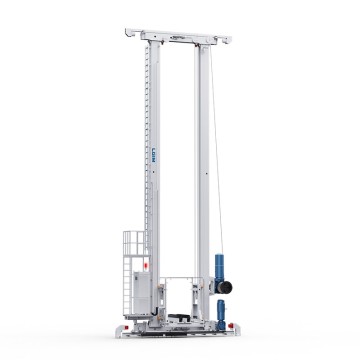
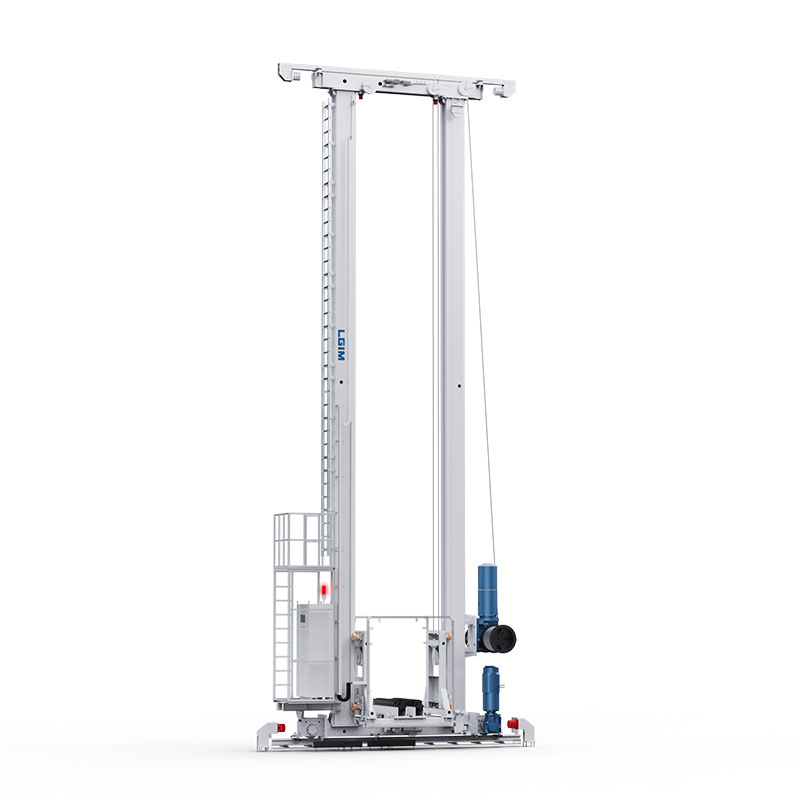
    As a key component of the automated three-dimensional warehouse, the double-column stacker is different from the frame structure of the single-column stacker. The double-column stacker consists of two columns, an upper beam, and a lower beam to form a rectangular frame. It has excellent structural strength and is suitable for warehouses with various lifting heights. Typically, the lifting capacity is up to 5 tons and can be increased as needed.
    The double-column narrow-aisle stacker is suitable for various types of goods, including boxed goods and palletized goods, and is widely used in warehousing environments in electronics, automobiles, food, medicine and other industries. Its efficient stacking and retrieval capabilities significantly increase warehouse storage density and operational efficiency, reducing labor and storage costs.

    Advantage

    double-uph
    • 1 Strong and reliable, suitable for multiple tasks.
    • 2 Accurate and stable, realtime monitoring.
    • 3 Structural optimization and stable stiffness.
    • 4 Efficient and secure, with multiple protections.

    Parameters

    Effective height 6-24m
    Rated Load Capacity Rated Load Capacity
    Walking speed Max.180m/min
    Walking acceleration 0.3m/s²
    Walking positioning accuracy ±3mm
    Lifting speed 40m/min
    Forking speed 40/60m/min
    Noise ≤75dB

    Application

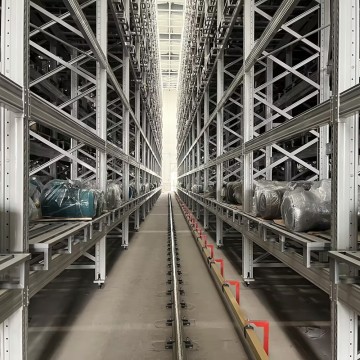
    Lane stacker crane is a powerful and practical lifting equipment. Lane stacker crane is mainly used in various large warehouses, logistics parks and other narrow spaces, such as food warehouses, cold chain warehouses, chemical warehouses and other industries, providing broad development space for the global logistics industry.

    Frequently Asked Questions

    What is a double-column stacker crane?

    A double-column stacker crane is a key component of automated three-dimensional warehouses. Unlike single-column structures, it features two columns connected by upper and lower beams to form a rigid rectangular frame, providing superior structural strength for lifting heavy loads.

    What is the typical lifting capacity of this equipment?

    The double-column stacker crane typically supports a rated load capacity of up to 5 tons. However, this lifting capacity can be customized and increased based on specific warehouse operational requirements.

    Which industries are suitable for using double-column narrow-aisle stackers?

    They are widely applied in narrow-aisle warehousing environments across various sectors, including electronics, automotive, food and beverage, pharmaceuticals, cold chain storage, and chemical industries.

    What are the speed specifications of the stacker crane?

    The stacker crane operates at a maximum walking speed of 180m/min, a lifting speed of 40m/min, and a forking speed ranging between 40m/min to 60m/min, ensuring high-efficiency retrieval processes.

    How does the stacker crane improve warehouse efficiency?

    By utilizing vertical space and operating accurately in narrow aisles, it significantly maximizes warehouse storage density, automates the retrieval process, and reduces labor and overall storage costs.