

Smart Intralogistics for Automotive Engine Manufacturing
With a wide range of components, heavy and bulky parts, and demanding production cycles, intralogistics efficiency has a direct impact on production capacity, manufacturing costs and overall operational continuity.
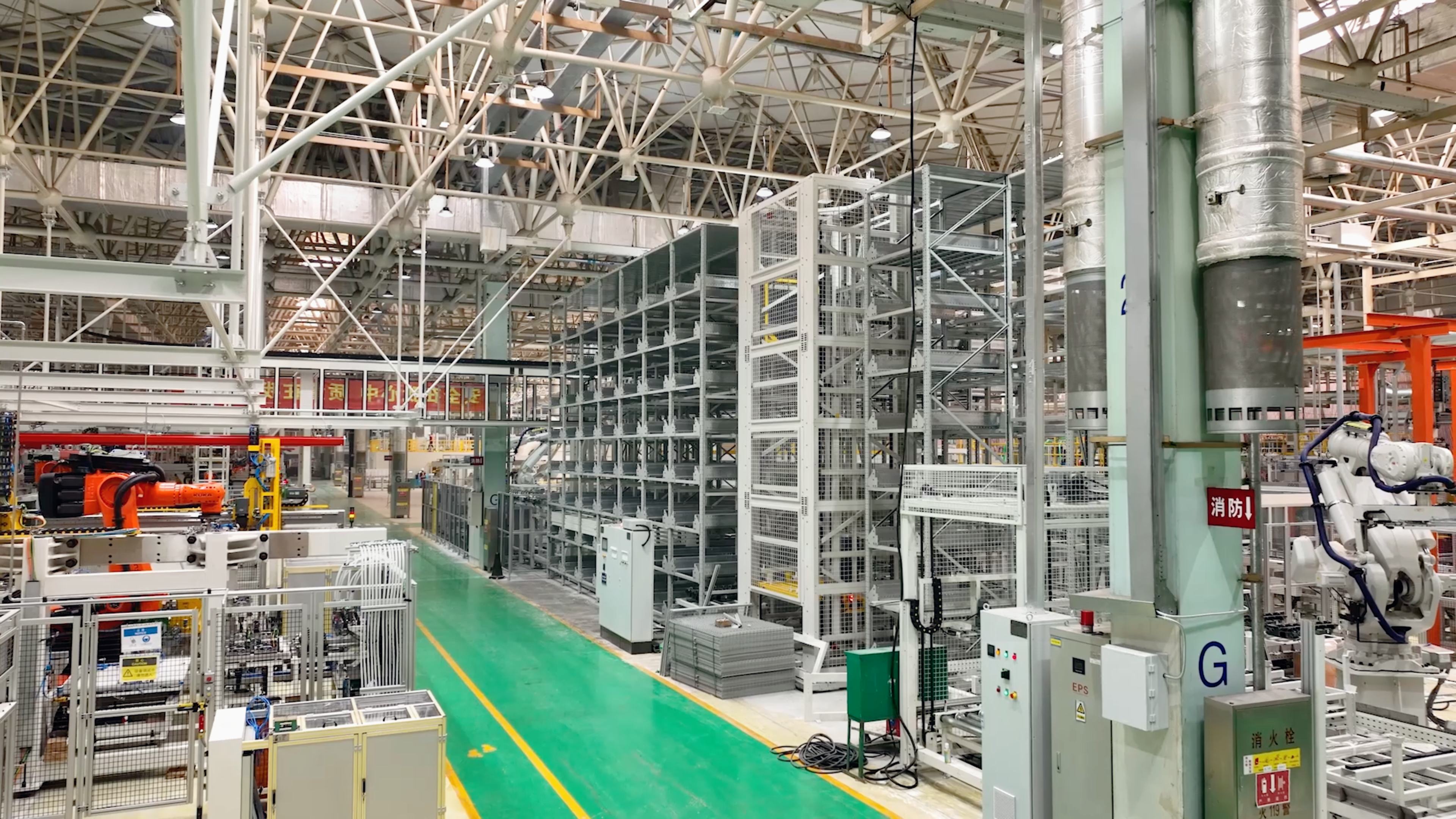
For a leading engine manufacturer, LGIM developed an integrated intralogistics solution built around customised AGVs, AS/RS, and multi-station robotic systems. The solution connects machining, buffering, storage, handling, cleaning and final assembly into a highly automated material flow.
The Challenges
Overcoming Intralogistics Bottlenecks in Engine Manufacturing
Engine assembly involves a large number of critical components, including engine blocks, cylinder heads, crankshafts and pistons. With high production volumes and demanding takt times, conventional logistics processes face several challenges.
Multiple Process Steps, Increasing WIP
The material flow from machining to buffering, handling, cleaning, line-side delivery and final assembly creates a long logistics chain. Without effective coordination, work-in-process materials can accumulate between processes.
Limited Space, Complex Material Management
Engine blocks and cylinder heads are both large and heavy. Temporary storage on the shop floor consumes valuable production space while making material identification, retrieval and turnover more difficult.
Limited Flexibility for Mixed-Model Production
Conventional fixed conveyor systems are often difficult to adapt to mixed-model production. Changes to production layouts or product models can require significant modification time and investment.
The Solution
Connecting Machining, Buffering and Assembly into One Automated Flow
To address these challenges, LGIM integrated automated handling, Intelligent Storage and flexible assembly into a unified intralogistics system.
Flexible Material Flow Along the Assembly Process
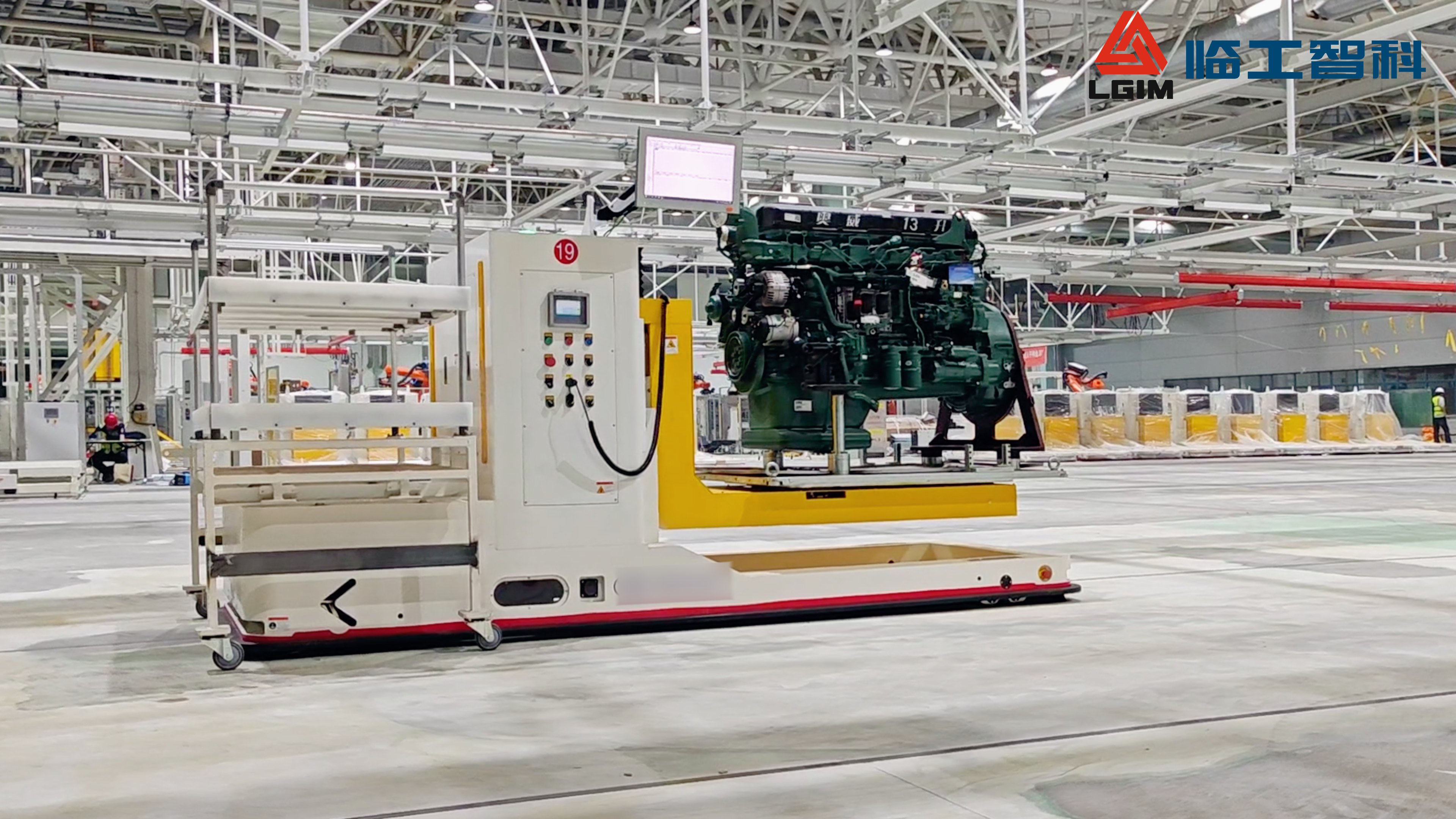
At the final assembly stage, multiple 2-tonne customised assembly AGVs form a flexible production line, replacing conventional fixed workstations.
Automated material delivery
The AGVs automatically connect with SPS material carts for parts collection, line-side delivery and empty-cart return. Operators can access the required materials directly at the workstation without leaving the assembly area.
Ergonomic height adjustment
The customised lifting function allows the engine height to be adjusted according to the assembly operation, reducing bending and overhead handling while improving working conditions and assembly stability.
Flexible model changeover
Combined with automated workstations, the AGV-based line can accommodate different engine models and support flexible mixed-model production.
Automated Storage with Four-Way Shuttle System
Making Better Use of Vertical Space
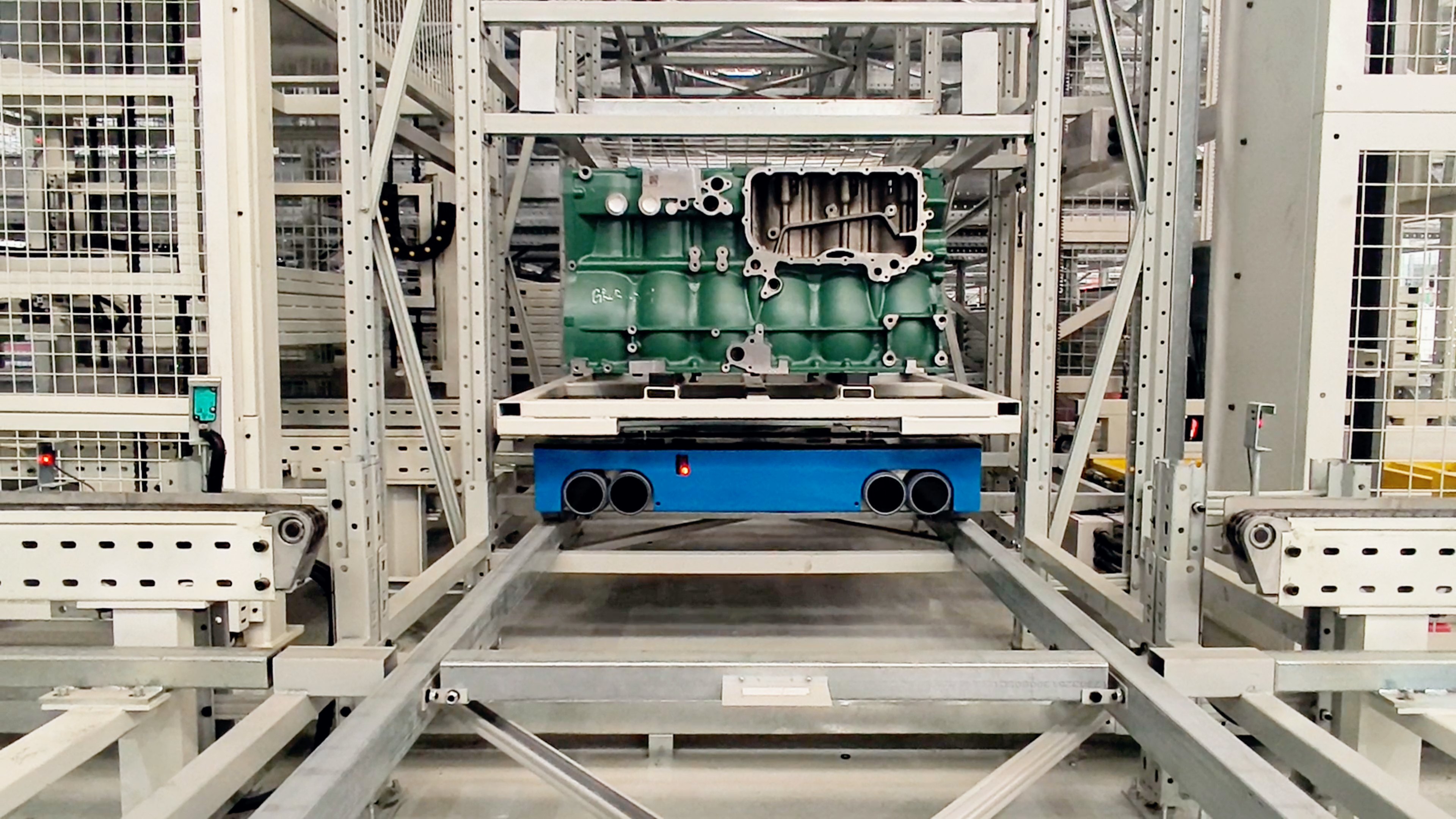
While AGVs address the challenge of moving materials efficiently, Automated Storage addresses the need tostore and buffer materials systematically.
The project includes dedicated automated storage systems for engine blocks and cylinder heads, respectively. Four-way shuttle vehicles are used for internal storage and retrieval, supported by automated pallet infeed, outfeed and sorting robots.
The system provides:
Seamless process integration
Finished components from machining can be buffered automatically, creating a continuous logistics connection between machining and final assembly.
Automated warehouse operations
Inbound storage, inventory handling, retrieval and sorting are automated, improving space utilisation while reducing manual intervention.
Accurate and controlled material flow
Automated handling and storage improve the accuracy and stability of component movement, supporting more coordinated production logistics.
Robotic Handling and Automated Process Integration
Automating the Critical Interfaces Between Processes
In addition to AGVs and automated storage, the project incorporates multiple robots and automated equipment across key production processes.
- Automated loading and handling robots enable the automatic transfer of components from machining-line operations to finished-part storage.
- Automated tightening equipment and gantry robots support precise and efficient assembly and material handling.
- An automated robotic cleaning station provides automated coverage of the component cleaning process.
Together, these systems close the gaps between individual production processes and establish a continuous, automated material flow.
The Results
Greater Efficiency, Better Space Utilisation and More Responsive Production Logistics
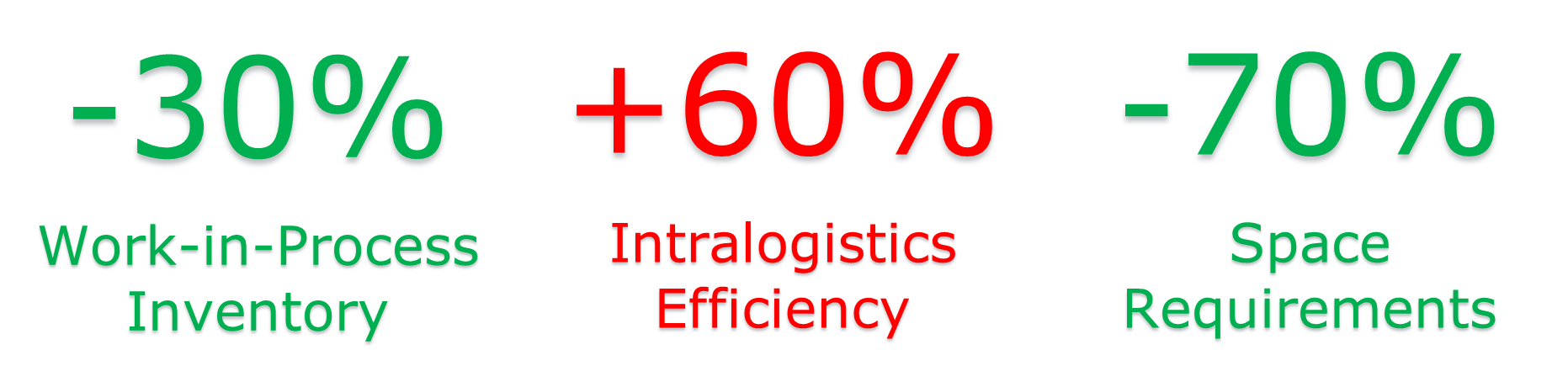
By integrating automated storage, demand-driven AGV delivery and robotic identification and handling, LGIM enables closer coordination between upstream and downstream processes.
Materials can be delivered according to production requirements, allowing the logistics system to respond more dynamically to the production takt rather than relying on manual material movement or fixed delivery routines.
From Material Handling to Manufacturing Infrastructure
In a smart factory, intralogistics is no longer simply about moving materials from one location to another. It connects production, storage, material availability, quality and order fulfilment, becoming an essential infrastructure for maintaining production continuity and improving operational efficiency.
From customised AGVs on the final assembly line, to automated storage between machining and assembly, and robotic coordination across key processes, LGIM transforms some of the most demanding material-handling operations in engine manufacturing into a fully automated and flexible intralogistics system.
With materials delivered precisely where they are needed and production processes connected seamlessly, intralogistics becomes an integral part of the smart manufacturing system—supporting more efficient, stable and responsive production.